
Trimmer Routers

Pay in 3 interest-free payments on purchases from £20-£3000 with  . Learn more.
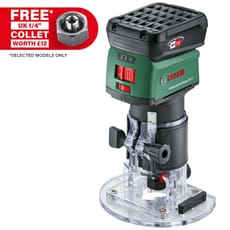
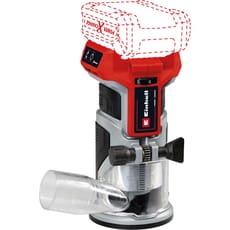
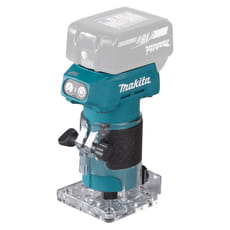
Einhell Professional TP-ET 18 Li BL 18v Cordless Brushless Trim Router
in stock
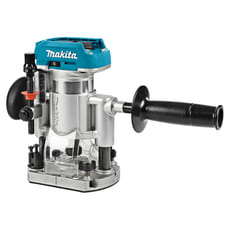
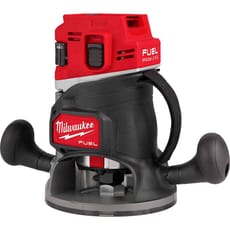
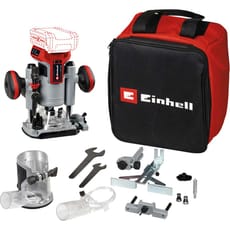
Einhell Professional TP-RO 18 Li BL 18v Cordless Brushless Plunge and Trim Router Kit
in stock
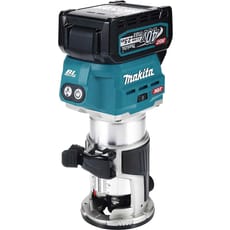
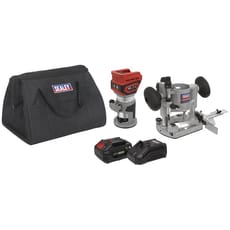
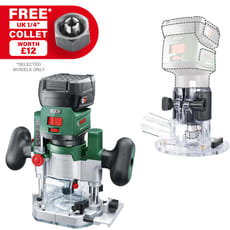
Bosch ADVANCEDTRIMROUTER 18V-8 P4A 18v Cordless Trim Router with Plunge Attachment
in stock
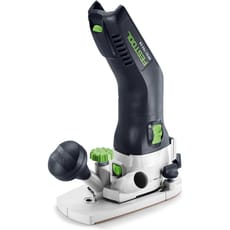
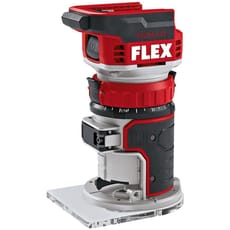
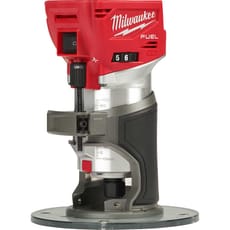
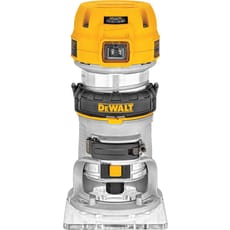
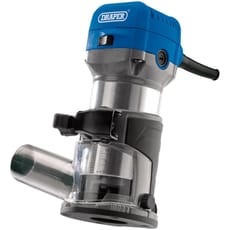
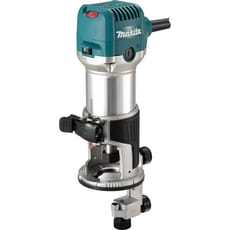
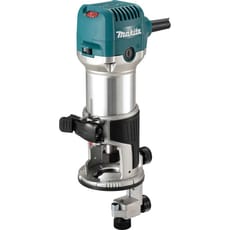
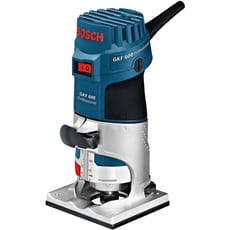
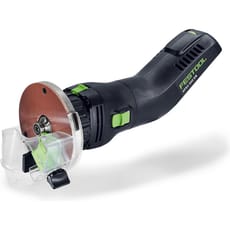
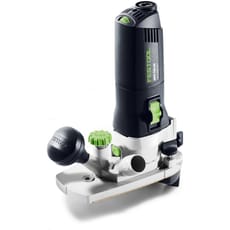
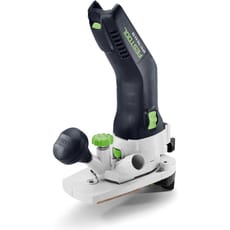
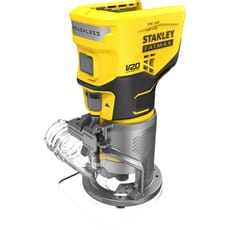
Stanley Fatmax V20 SFMCW400 18v Cordless Brushless 1/4" Trim Router
coming soon
 Loading...
End of content
Error - No more pages to load
About Trimmer Routers
Trimmer routers, also known as palm routers or compact routers, are lightweight single-handed routing tools designed for precision work where full-sized routers would be too cumbersome. Weighing typically between 1-2kg and accepting 1/4" shank router bits, these versatile power tools excel at edge profiling, hinge recessing, laminate trimming, inlay work, and shallow routing tasks. MyToolShed.co.uk stocks trimmer routers from leading manufacturers including Makita, Festool, Milwaukee, Bosch, and DeWalt, offering both corded 240v models and cordless options across 18v and 40v battery platforms.
Modern trimmer routers feature variable speed control (typically 10,000-30,000rpm), plunge base compatibility, and transparent sub-bases for improved visibility. Professional-grade models incorporate brushless motors for enhanced efficiency and runtime, whilst premium systems from Festool offer modular designs with systematic accessory integration. Whether you need a compact fixed-base router for edge work or a versatile plunge-capable system for stopped cuts and template routing, MyToolShed stocks trimmer routers suitable for professional tradespeople and serious DIY enthusiasts alike.
Applications
Trimmer routers are essential tools across numerous trades and applications:
- Joiners and carpenters use them for hinge recessing, door hanging, edge profiling, and template work on site installations
- Kitchen fitters rely on them for worktop trimming, cutting hob and sink apertures with template guides, and breakfast bar installations
- Cabinet makers and furniture makers employ them for inlay work, edge detailing, binding channels, and precise joinery tasks
- Shopfitters use compact routers for on-site modifications and fitting work in restricted spaces
- General builders keep one for door adjustments, frame modifications, and trim work
- Signmakers utilise them with templates for letter routing and dimensional signage
- DIY enthusiasts find them ideal for home improvement projects, furniture restoration, and woodworking hobbies
Choosing The Right Trimmer Routers
Power source: Corded 240v models like the Bosch GKF 600 deliver constant power and unlimited runtime, ideal for workshop use. Cordless options such as Makita 18v LXT or Milwaukee M18 models offer unparalleled convenience for site work—consider battery compatibility with your existing tool platform and opt for minimum 4.0Ah capacity.
Motor power and features: Entry-level trimmers offer 400-600W (corded) or basic brushless motors, sufficient for light trimming. Professional users should consider 700W+ corded models or premium brushless cordless systems with electronic speed control. Variable speed is essential for working with different materials and cutter sizes.
Base configuration: Fixed-base models suit edge work and template routing. For versatility, consider models with optional plunge bases (like the Makita DRT50) or modular systems such as Festool's range that accommodate multiple configurations. Transparent sub-bases improve cutting line visibility.
Build quality: Budget models (£50-100) suit occasional DIY use. Mid-range options (£100-200) from Bosch, DeWalt, and Makita offer excellent value with good ergonomics. Premium tools (£200-500+) from Festool justify their cost through superior dust extraction, systematic accessories, and professional-grade precision.
Safety Information
Router safety requires careful attention due to high-speed rotating cutters:
- Eye and hearing protection: Safety glasses are mandatory—bits spin at up to 30,000rpm and eject chips at high velocity. Wear ear defenders for extended use to comply with HSE noise exposure guidelines
- Dust control: Use extraction wherever possible and wear appropriate dust masks (minimum FFP2) in line with COSHH regulations
- Secure workpieces: Always clamp work firmly—never hold small pieces by hand whilst routing
- Correct feed direction: Feed against the bit's rotation (typically left to right on outside edges) to maintain control
- Electrical safety: Ensure 240v corded models are PAT tested regularly on professional sites and check cables before each use
Frequently Asked Questions
What's the difference between a trimmer router and a full-size router?
Trimmer routers are designed for single-handed operation, accepting 1/4" shank bits and excelling at lighter-duty work like edge profiling and shallow cuts. Full-size routers offer more power (typically 1200W+), accept larger 1/2" shank bits, and handle heavier cutting tasks but require two-handed control. For fine detail work and hinge recessing, a trimmer router's manoeuvrability is actually advantageous.
Should I choose a corded or cordless trimmer router?
Corded 240v models provide unlimited runtime and consistent power, ideal for workshop use. Cordless models excel for site work and kitchen installations where trailing cables are impractical. Modern 18v brushless models from Makita, Festool, and Milwaukee offer genuinely professional performance. If you already have batteries in a particular system, choosing a compatible trimmer router makes economic sense.
Do I need a plunge base for my trimmer router?
It depends on your applications. If you're only doing edge profiling and laminate trimming, a fixed base is adequate. However, if you need to rout stopped grooves, cut mortises, or make internal cuts away from edges, a plunge base becomes essential. Some models include both bases, whilst others offer plunge bases as optional accessories.