
Trolley Jacks

Pay in 3 interest-free payments on purchases from £20-£3000 with  . Learn more.
Loading...
End of content
Error - No more pages to load
About Trolley Jacks
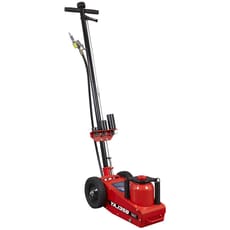
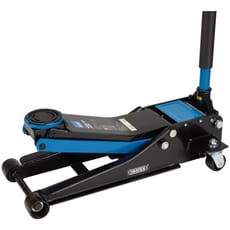
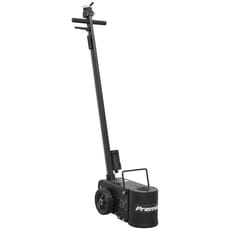
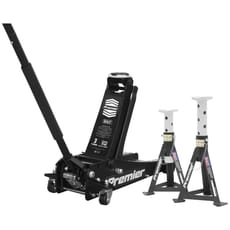
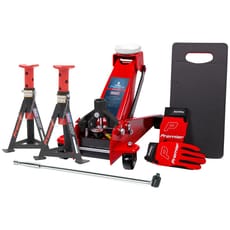
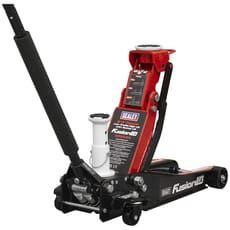
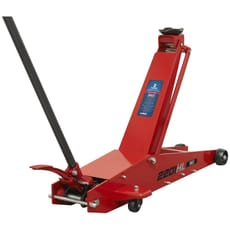
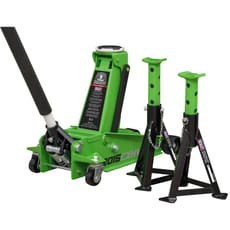
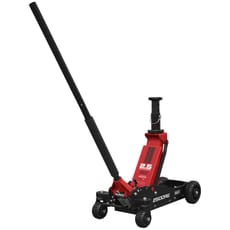
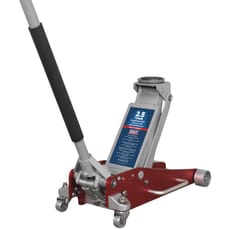
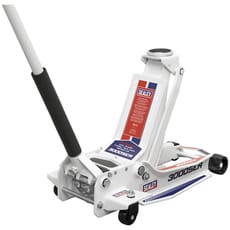
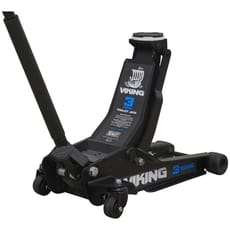
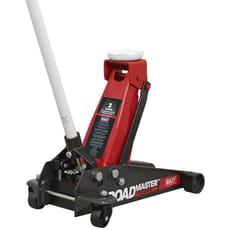
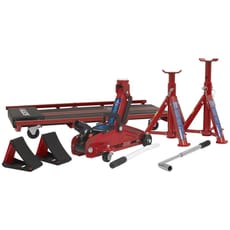
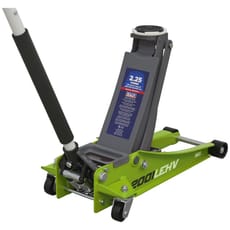
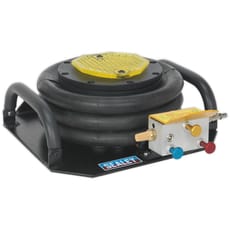
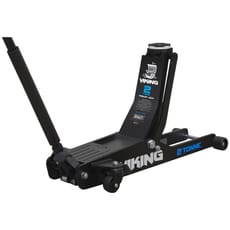
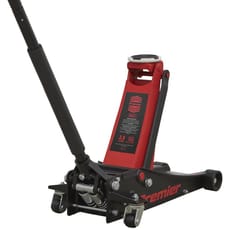
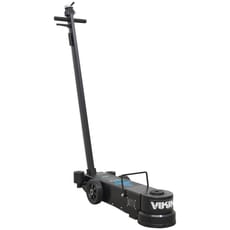
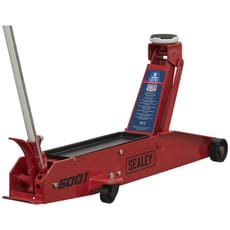
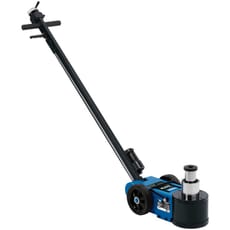
Trolley jacks are essential hydraulic lifting equipment designed to safely raise vehicles for maintenance, repairs, and tyre changes. Featuring a wheeled chassis for easy positioning and powerful hydraulic mechanisms for smooth, controlled lifting, these jacks are indispensable tools for professional mechanics and DIY enthusiasts alike. MyToolShed.co.uk stocks a comprehensive range from trusted brands including Draper, Sealey, Bahco, and Faithfull, with capacities from 2-tonne light-duty models for smaller vehicles through to heavy-duty 3-tonne garage jacks and specialist pneumatic designs for commercial workshops.
Whether you need a compact jack for occasional home use, a low-profile model for sports cars with minimal ground clearance, or a professional pneumatic jack for fast-paced workshop environments, MyToolShed.co.uk offers trolley jacks to suit every application. Modern designs incorporate safety features such as quick-lift mechanisms, overload protection valves, and robust steel or aluminium construction to ensure reliable performance under demanding conditions.
Applications
- Professional mechanics and motor technicians – daily vehicle servicing, brake work, and general maintenance in garages and workshops
- Mobile mechanics – portable lifting equipment for on-site vehicle repairs
- MOT testing stations – quick vehicle positioning during statutory inspections
- Tyre and exhaust fitters – wheel removal and underside access in fast-fit centres
- Fleet maintenance engineers – maintaining commercial vehicles, vans, and company cars
- Car enthusiasts and home mechanics – DIY servicing, modifications, and vehicle maintenance
- Classic car restorers – specialist jacks for vehicles with non-standard ground clearance
- Motorsport professionals – racing jacks for quick pit work and vehicle preparation
Choosing The Right Trolley Jacks
Start by selecting the correct weight capacity for your vehicle. Check your vehicle's kerb weight and choose a jack rated above this figure—2-tonne models suit most family cars, whilst heavier vehicles, 4x4s, and vans require 3-tonne capacity for safe operation.
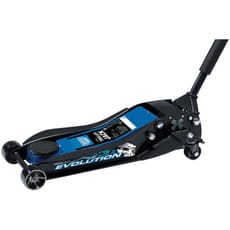
Consider the minimum lifting height if working with lowered vehicles or sports cars. Low-profile models with 75-100mm entry heights can slip beneath vehicles where standard jacks cannot fit. Equally important is maximum lift height, which determines the working space available beneath raised vehicles.
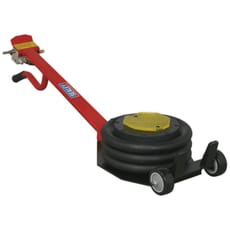
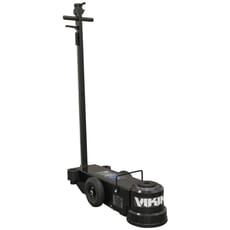
For professional workshops, invest in heavy-duty garage jacks with reinforced construction and quick-lift mechanisms that reduce pumping strokes, saving time on repetitive tasks. Pneumatic jacks eliminate manual pumping entirely, offering effortless operation via compressed air—ideal for busy commercial garages performing multiple daily lifts.
Assess manoeuvrability requirements based on your workspace. Compact designs suit smaller home garages, whilst long-chassis models provide extended reach for larger vehicles despite requiring more storage space.
Safety Information
Critical: Never work beneath a vehicle supported only by a trolley jack. Always use correctly-rated axle stands positioned at secure jacking points immediately after lifting. Trolley jacks are designed for lifting only—not for supporting vehicles during work.
Inspect jacks before each use for hydraulic leaks, damaged castors, or worn components. Position jacks on firm, level ground and centre the saddle on designated jacking points as specified in your vehicle's manual. Never exceed the jack's rated capacity, and always apply the handbrake and use wheel chocks on remaining wheels. Store jacks with the release valve open to protect internal seals when not in use.
Frequently Asked Questions
What tonne rating do I need for my vehicle?
Check your vehicle's kerb weight in the owner's manual. For most family cars up to 1500kg, a 2-tonne jack provides adequate capacity with a safety margin. Larger vehicles, estate cars, and small vans typically require 2.5-tonne jacks, whilst 4x4s and commercial vehicles need 3-tonne capacity or greater.
What's the difference between low-profile and standard trolley jacks?
Low-profile jacks have a minimum height of 75-100mm when fully lowered, allowing them to fit beneath sports cars, lowered vehicles, and cars with minimal ground clearance. Standard jacks typically start at 130-150mm, which won't fit under modified or low-slung vehicles.
Do I need a pneumatic jack or will a manual one suffice?
Manual trolley jacks are perfectly adequate for home workshops and occasional vehicle maintenance. However, pneumatic jacks dramatically reduce physical effort and save considerable time in busy commercial environments where mechanics perform numerous lifts daily, making them worthwhile investments for professional workshops with compressed air available.