
Nuts

Pay in 3 interest-free payments on purchases from £20-£3000 with  . Learn more.


 Loading...
End of content
Error - No more pages to load
About Nuts
Nuts are essential fastening components used across countless applications in construction, manufacturing, automotive work, and general repairs. MyToolShed.co.uk stocks a comprehensive range of nuts in various styles and materials, from standard full nuts and nylon lock nuts to specialised variants like serrated flange nuts, wing nuts, and pronged tee nuts. Available in steel, stainless steel, brass, and nylon finishes, our nut selection caters to both professional tradespeople and DIY enthusiasts requiring reliable threaded fasteners for securing bolted connections.
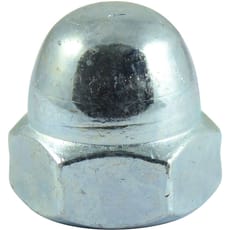
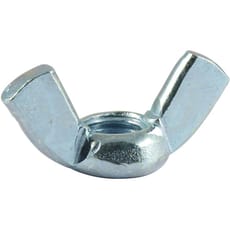
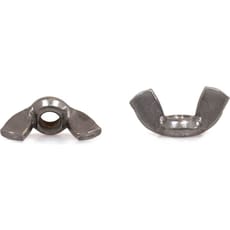
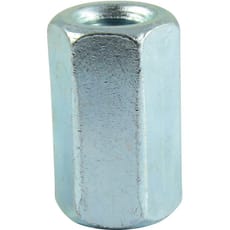
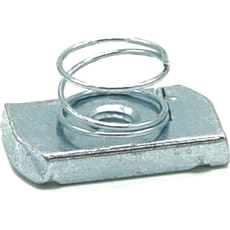
Each nut type serves specific purposes: dome nuts provide a finished appearance while protecting thread ends, channel nuts offer quick installation in slotted systems, connector nuts join threaded rods, and wing nuts enable tool-free hand tightening. Whether you're working on electrical installations, structural steelwork, machinery assembly, or furniture construction, MyToolShed.co.uk provides the right nut for your fastening requirements, including convenient assorted nut packs for versatile applications.
Applications
- Electricians: Securing junction boxes, cable management systems, and panel mounting using channel nuts and serrated flange nuts
- Construction and structural steelwork: Heavy-duty bolted connections with full nuts and lock nuts
- Automotive and mechanics: Engine assembly, chassis work, and bodywork repairs requiring various nut types
- Plumbers: Fixing pipework brackets, valve assemblies, and mounting hardware
- Carpenters and joiners: Furniture assembly, wooden framework, and decorative applications with dome nuts
- HVAC installers: Ductwork supports and equipment mounting with vibration-resistant serrated flange nuts
- Maintenance engineers: Machinery repairs and equipment assembly across industrial settings
- DIY enthusiasts: Home improvements, repairs, and project work requiring reliable fastening solutions
Choosing The Right Nuts
Selecting the appropriate nut depends on several key factors. First, ensure the thread size and pitch match your bolt – metric sizes (M6, M8, M10) are standard in the UK. Consider the material: steel offers strength and economy, stainless steel provides corrosion resistance for outdoor or marine environments, brass suits decorative applications, and nylon prevents loosening through vibration whilst offering electrical insulation.
The nut type matters significantly for your application. Full nuts provide maximum thread engagement for structural loads, while nylon lock nuts prevent loosening in vibrating machinery. Wing nuts allow quick hand-adjustment without tools, dome nuts create a finished appearance and protect exposed threads, and serrated flange nuts grip surfaces to resist rotation. For installations requiring nuts to slide into channel systems, channel nuts offer rapid fitting. Always verify the nut's load rating matches your application requirements, and consider using assorted nut packs for varied project work to ensure you have the right fastener on hand.
Frequently Asked Questions
What's the difference between a full nut and a nylon lock nut?
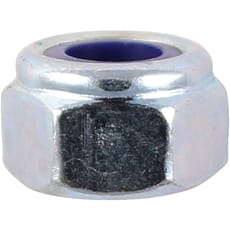
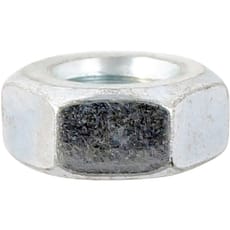
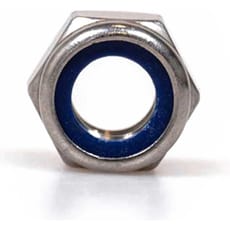
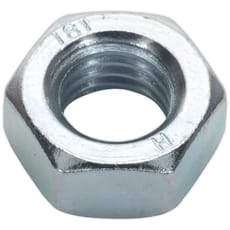
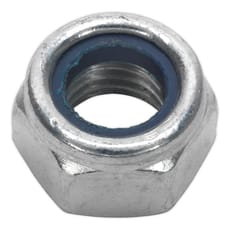
A full nut is a standard hexagonal nut providing complete thread engagement, suitable for most general applications. A nylon lock nut contains a nylon insert that grips the bolt threads, creating friction to prevent loosening from vibration – ideal for machinery, automotive work, and applications subject to movement or dynamic loads.
Which material nut should I use for outdoor applications?
For outdoor or exposed applications, stainless steel nuts (typically A2 or A4 grade) offer superior corrosion resistance against moisture and weathering. Hot-dip galvanised steel nuts provide cost-effective protection for structural applications, while brass nuts suit decorative outdoor fixtures and marine environments where non-magnetic properties are beneficial.
How do I determine the correct nut size for my bolt?
The nut size must match both the bolt's thread diameter and pitch. Metric bolts are marked with their diameter (e.g., M8 = 8mm diameter). Check the thread pitch – coarse pitch is standard, but fine pitch exists for specific applications. Test fit the nut onto the bolt; it should thread smoothly without forcing and sit flush when tightened.