
Waste & Disposal

Pay in 3 interest-free payments on purchases from £20-£3000 with  . Learn more.
 Loading...
End of content
Error - No more pages to load
About Waste & Disposal
Professional waste and disposal equipment is essential for workshops, garages, and industrial facilities handling hazardous materials like used oil filters and contaminated rags. MyToolShed.co.uk supplies specialist waste management solutions including oil filter crushers and oily waste cans designed to meet UK HSE and COSHH regulations. These products help tradespeople safely contain, process, and dispose of oily waste whilst reducing fire risks and environmental impact.
From hydraulic filter crushers that recover valuable oil and reduce waste volume by up to 80%, to FM-approved oily waste cans with self-closing lids that prevent spontaneous combustion, proper disposal equipment protects your workspace and ensures regulatory compliance. Built with robust galvanised steel construction and fire-resistant materials, the waste and disposal range at MyToolShed.co.uk delivers the durability and safety features demanded by professional environments across the UK.
Applications
Waste and disposal equipment serves a wide range of professional users including:
- Motor mechanics and automotive technicians handling used oil filters, contaminated rags, and oily waste from vehicle servicing
- Commercial garage owners maintaining HSE-compliant waste disposal systems across their facilities
- HGV and fleet maintenance workshops processing large volumes of filters and oily waste from heavy vehicles
- Plant machinery operators servicing construction equipment, agricultural machinery, and industrial plant
- Manufacturing facilities with machinery requiring regular maintenance and oil changes
- Agricultural contractors maintaining tractors, harvesters, and farming equipment
- MOT testing stations requiring compliant waste disposal as part of operational requirements
- Industrial maintenance departments across factories, warehouses, and production facilities
Choosing The Right Waste & Disposal
Assess your waste volume: Determine daily or weekly waste generation to select appropriate container sizes. High-volume garages typically require 40-80 litre oily waste cans, whilst smaller workshops can use more compact options.
Ensure regulatory compliance: Choose equipment meeting UK HSE requirements and COSHH regulations. Look for BS EN standards compliance and FM approval for fire safety, particularly crucial for oily waste cans.
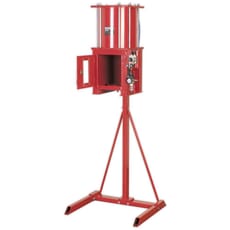
Consider crusher type: Manual oil filter crushers suit lower volumes and require no power source. Pneumatic models (requiring 6-8 bar compressed air) offer faster operation for medium volumes, whilst hydraulic crushers provide maximum crushing force with minimal effort for high-volume operations processing numerous filters daily.
Construction quality: Professional-grade containers need galvanised steel or heavy-duty painted steel construction to resist corrosion from oils and chemicals. Self-closing lids are essential for fire safety and odour control.
Space and placement: Position waste containers conveniently near work areas without obstructing workflows. Consider wall-mounted options for smaller workshops or mobile containers with castors for larger facilities.
Safety Information
Fire prevention: Oily rags can spontaneously combust through oxidation without an ignition source. Always use approved oily waste cans with self-closing lids and position containers away from heat sources. Never leave contaminated materials in open bins.
Environmental responsibility: It's illegal to dispose of oil filters and contaminated materials with general refuse. Used filters must be crushed or drained for at least 12 hours before disposal, and recovered oil collected by licensed waste carriers.
Personal protection: Wear nitrile or chemical-resistant gloves when handling oily waste, as used oil contains harmful contaminants including heavy metals and carcinogens. Ensure proper handwashing facilities are available.
Equipment operation: Train operators in safe crusher usage procedures. Hydraulic crushers generate substantial force—never place hands near crushing areas during operation. Wear safety glasses to protect against oil spray.
Frequently Asked Questions
Why do I need a special oily waste can instead of a regular bin?
Oily rags and materials soaked with petroleum products can spontaneously combust through oxidation, even without a spark. Purpose-designed oily waste cans feature self-closing, fire-resistant lids that limit oxygen supply and contain combustion. They're required under UK health and safety regulations and essential for preventing potentially catastrophic workshop fires that regular bins cannot prevent.
Is crushing oil filters really necessary?
Yes—under UK environmental regulations, used oil filters cannot be disposed of in general waste because they contain residual oil (typically 100-200ml per filter) that contaminates landfill and groundwater. Crushing recovers up to 95% of this oil for recycling whilst reducing filter volume by approximately 80%, lowering disposal costs. Most waste contractors require filters crushed or drained for at least 12 hours, and improper disposal can result in significant fines.
How often should oily waste cans be emptied?
Empty oily waste cans before reaching capacity—typically when two-thirds to three-quarters full. Overfilling reduces self-closing lid effectiveness and increases fire risk. Depending on waste generation, this might mean daily, weekly, or monthly emptying. Contents must be disposed of through licensed waste carriers—never in regular refuse collections.