

Ventilators
Pay in 3 interest-free payments on purchases from £30-2000 with  . Learn more.
 Loading...
End of content
Error - No more pages to load
About Ventilators
Industrial and portable ventilators are essential equipment for maintaining proper air circulation and ventilation in enclosed or poorly ventilated spaces. These powerful air movers extract stale air, fumes, dust, and contaminants whilst drawing in fresh air to create a safer, more comfortable working environment. Whether working in confined spaces, conducting paint spraying operations, or improving airflow on construction sites, a quality ventilator is indispensable for protecting health and ensuring compliance with workplace safety regulations.
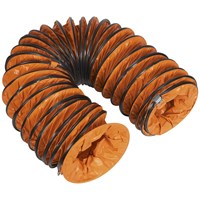
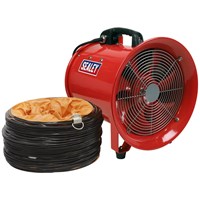
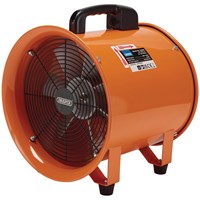
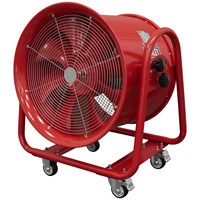
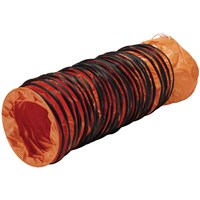
MyToolShed.co.uk stocks portable air ventilators from trusted manufacturers including Sealey and Draper, designed to deliver high-volume airflow where it's needed most. These units are built for professional use, offering robust construction and reliable performance in demanding site conditions. Many models feature wheeled bases for easy transportation, whilst compact designs ensure effective positioning even in tighter spaces. Complementing the ventilators themselves, flexible ducting and PVC ventilation hoses allow you to direct airflow precisely where required, extending the reach and versatility of your ventilation system.
Applications
Portable ventilators serve a wide range of professional trades and applications:
- Painters and Decorators: Removing solvent fumes during spray painting operations and maintaining air quality in enclosed painting areas
- Welders and Fabricators: Extracting welding fumes and maintaining safe oxygen levels in metalworking environments
- Construction Workers: Ventilating confined spaces, basements, trenches, and newly constructed buildings before occupancy
- Facilities Managers: Maintaining air quality in commercial buildings during refurbishment or maintenance work
- Groundworkers: Ventilating manholes, excavations, and underground chambers before and during entry
- Restoration Specialists: Drying out flood-damaged properties and improving air circulation during renovation projects
- Manufacturing and Industrial: Maintaining air quality in warehouses, factories, and production facilities
- DIY Enthusiasts: Home renovation projects involving paint stripping, garage workshops, or cellar conversions
Choosing The Right Ventilators
Airflow Capacity: Consider the size of the space you need to ventilate. Larger areas or those with higher contamination levels require ventilators with greater CFM (Cubic Feet per Minute) ratings. For confined space work, calculate the volume and choose a ventilator capable of providing multiple air changes per hour as recommended by HSE guidance.
Portability Requirements: If moving the ventilator between locations regularly, look for models with ergonomic carrying handles or wheeled bases. Compact designs are advantageous for sites with limited space or where equipment needs to be transported in vans alongside other tools.
Power Supply: Most portable ventilators at MyToolShed.co.uk operate on standard 240v mains power. Check the power consumption and ensure your site electrical supply can accommodate the unit, using appropriately rated extension leads if needed.
Ducting Compatibility: If directing airflow over distances, ensure you select compatible flexible ducting. Check diameter specifications of your chosen ventilator—common sizes include 200mm, 250mm, and 300mm—and purchase matching ducting in appropriate lengths.
Safety Information
When using ventilators for confined space work, ensure compliance with the Confined Spaces Regulations 1997. Never rely solely on ventilation to make a space safe—always conduct proper atmospheric testing before entry and maintain continuous monitoring throughout the work period. Ensure all ventilators are connected to properly earthed electrical supplies with RCD protection, particularly in damp environments. Ventilators are not explosion-proof unless specifically certified—never use standard units in atmospheres containing flammable gases or vapours. Ventilation systems supplement but don't replace appropriate PPE and respiratory protection as required by COSHH assessments.
Frequently Asked Questions
How do I calculate what size ventilator I need?
Calculate the volume of your space (length × width × height in metres), then multiply by the required air changes per hour (typically 6-20 depending on contamination levels). Divide by 60 to get the required CFM rating. For example, a 3m × 3m × 2.5m space (22.5m³) requiring 10 air changes per hour needs approximately 132 CFM. Always round up and allow a safety margin.
What's the difference between a ventilator and a standard fan?
Whilst both move air, ventilators are specifically designed for air exchange in enclosed spaces and deliver higher volumes at greater pressures. They're built for ducting compatibility, continuous operation, and industrial environments, whereas standard fans are typically designed for comfort cooling and aren't suitable for safety-critical ventilation applications.
How long should I ventilate a space before entering?
This depends on contamination level and space characteristics. HSE guidance requires atmospheric testing to verify safety rather than relying on arbitrary time periods. As a general rule, allow at least 5-10 complete air changes before conducting gas tests, and continue ventilation throughout occupancy with continuous monitoring.