
Transmission Jacks

Pay in 3 interest-free payments on purchases from £20-£3000 with  . Learn more.
 Loading...
End of content
Error - No more pages to load
About Transmission Jacks
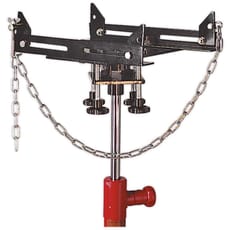
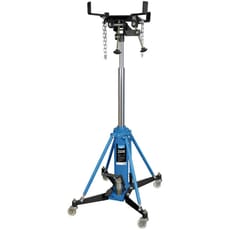
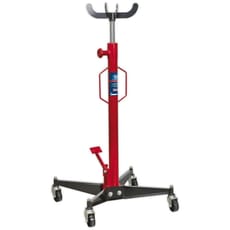
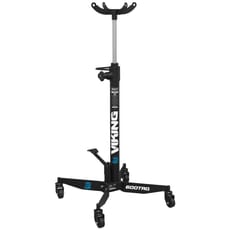
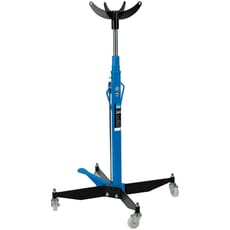
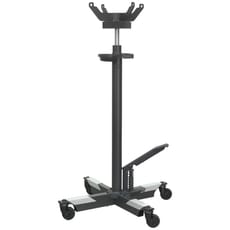
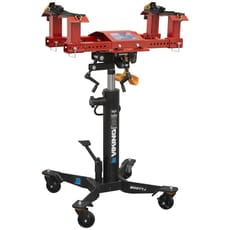
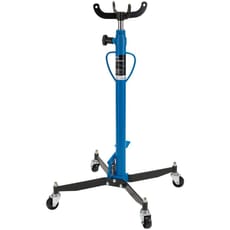
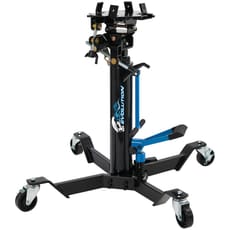
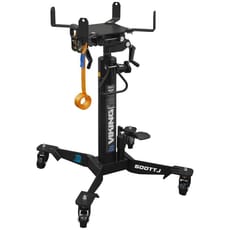
Transmission jacks are specialised lifting equipment designed for the safe removal, installation, and positioning of vehicle transmissions and gearboxes. These essential workshop tools feature adjustable saddles or cradles that securely support transmissions during service work, preventing damage to expensive components whilst reducing physical strain on mechanics. MyToolShed.co.uk stocks both vertical and floor transmission jacks from leading professional brands including Sealey and Draper, with lifting capacities ranging from 150kg to 600kg to suit everything from light vehicles to heavy-duty commercial trucks.
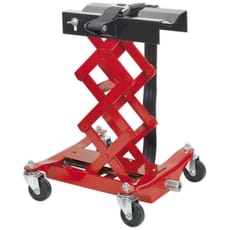
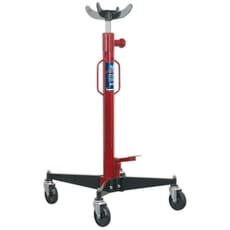
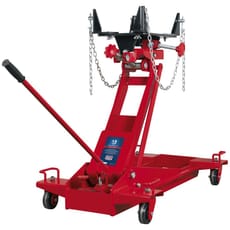
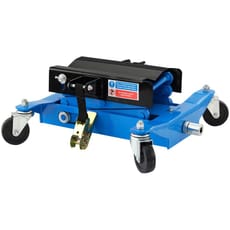
Vertical transmission jacks are particularly popular in professional garages due to their compact footprint and ability to manoeuvre in tight spaces under vehicles on ramps or lifts, typically reaching heights of 1.5-2 metres. Floor transmission jacks, also known as low-profile models, are ideal for use with vehicles on axle stands where clearance is more limited. Modern transmission jacks incorporate safety features such as quick-lift hydraulic systems, multi-directional tilting mechanisms, safety chains, and heavy-duty castors with foot-operated brakes for precise positioning.
Applications
Transmission jacks are essential equipment for a wide range of automotive professionals and applications:
- Motor Vehicle Technicians - Professional mechanics in independent garages and main dealer workshops servicing clutches, gearboxes, and drivetrains
- Transmission Specialists - Technicians focused on gearbox repairs, rebuilds, and replacements
- MOT Testing Stations - Workshops requiring access to transmissions for inspection and repair work
- HGV and Commercial Vehicle Workshops - Facilities maintaining lorries, buses, and heavy goods vehicles requiring high-capacity jacks
- Agricultural and Plant Mechanics - Servicing heavy machinery, tractors, and commercial vehicles
- Fleet Maintenance Departments - In-house workshops managing commercial vehicle fleets
- Automotive Restoration Specialists - Professionals and enthusiasts restoring classic and vintage vehicles
- Advanced DIY Enthusiasts - Home mechanics with proper workshop facilities undertaking major drivetrain repairs
Choosing The Right Transmission Jacks
Weight Capacity: Select a jack with capacity well above the heaviest transmission you'll handle. Light vehicle gearboxes typically weigh 50-100kg, whilst commercial vehicle transmissions can exceed 400kg. MyToolShed.co.uk offers models ranging from 150kg to 600kg capacity.
Vertical vs Floor Design: Vertical transmission jacks are essential for vehicles on lifts or ramps, extending to greater heights with a compact footprint. Floor transmission jacks work better with vehicles on axle stands where headroom is limited but floor space is available.
Lift Range: Consider both minimum and maximum height requirements. Vertical models typically offer 1.5-2 metres of lift, whilst floor models focus on lower working heights. Ensure the collapsed height fits your typical working scenarios.
Adjustment Features: Quality transmission jacks should offer multi-directional tilting (typically 360° rotation and 20-30° tilt angle) for proper alignment during installation. Quick-release mechanisms and fine adjustment controls make positioning significantly easier.
Safety Features: Essential elements include safety chains, ratchet safety bars to prevent accidental lowering, and overload protection—often required to meet HSE workplace safety standards.
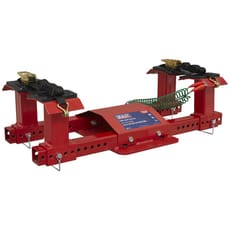
Adaptability: Consider jacks that accept additional adaptors for fuel tanks, subframes, or differential work, maximising versatility in your workshop.
Safety Information
Never work under a vehicle supported only by a transmission jack. Always use appropriate axle stands, ramps, or vehicle lifts to support the vehicle's weight—the transmission jack should only support the transmission itself. Ensure the jack is positioned on level, solid ground and engage all castor brakes before raising or lowering loads.
Always verify that the jack's capacity exceeds the component weight being lifted, and use the safety chain to secure the transmission to the saddle before moving or adjusting height. Wear appropriate PPE including steel-toe-capped safety boots, protective gloves, and safety glasses. Regularly inspect hydraulic jacks for fluid leaks, damaged castors, bent frames, or worn mechanisms, and remove damaged equipment from service immediately.
Frequently Asked Questions
What's the difference between a vertical and floor transmission jack?
Vertical transmission jacks have a tall, narrow design ideal for vehicles on lifts or ramps, typically reaching heights of 1.5-2 metres with a small footprint. Floor transmission jacks are low-profile units designed for vehicles on axle stands, trading height for greater stability and easier positioning in restricted spaces. Vertical models are preferred in professional workshops with vehicle lifts, whilst floor jacks suit home garages and smaller facilities.
What capacity transmission jack do I need for a standard car?
Most passenger car transmissions weigh between 50-100kg, so a jack with 150-300kg capacity is generally sufficient. However, larger vehicles, 4x4s, and commercial vehicles require higher capacities—often 500-600kg. Choose a capacity well above your typical requirements to provide a safety margin and accommodate heavier units should your work expand.
Can I use a transmission jack for removing fuel tanks or subframes?
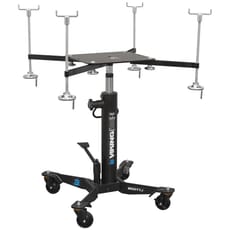
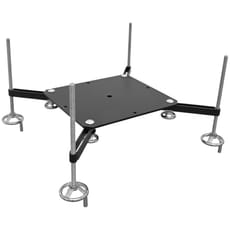
Yes, many transmission jacks accept specialist adaptors for fuel tank removal, subframe servicing, and differential work. Brands like Sealey offer dedicated cradles and mounting plates available at MyToolShed.co.uk that transform your transmission jack into a versatile lifting tool. Always verify that the adaptor is designed for your specific jack model and that the combined weight doesn't exceed the jack's rated capacity.