

Trailing Sockets
Pay in 3 interest-free payments on purchases from £30-2000 with  . Learn more.

 Loading...
End of content
Error - No more pages to load
About Trailing Sockets
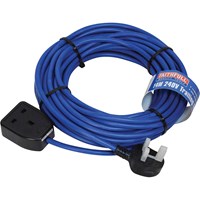
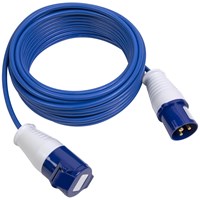
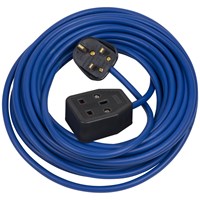
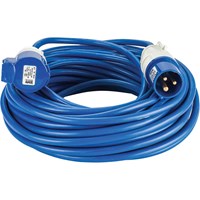
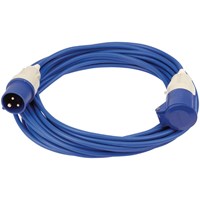
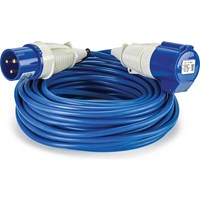
Trailing sockets are essential portable power distribution solutions that enable tradespeople and DIY enthusiasts to extend mains power safely to work areas. These heavy-duty extension leads feature robust blue industrial-style cables with either single or multiple socket outlets, designed specifically for demanding site conditions and workshop environments. MyToolShed.co.uk stocks a comprehensive range of trailing sockets from trusted brands including Sealey, Defender, Draper, SMJ and Faithfull.
Available in various amperage ratings from 13A domestic specification through to 16A and 32A industrial configurations, these trailing leads utilise 1.5mm or 2.5mm cable depending on the current rating. The distinctive blue 240v extension cables feature weather-resistant construction with rubber or impact-resistant plastic housings, making them ideal for construction sites, outdoor events, workshops and maintenance applications where reliable temporary power is required.
Applications
Trailing sockets from MyToolShed.co.uk serve numerous trades and industries:
- Electricians and sparkies requiring temporary power distribution during installations and testing
- Builders and construction workers powering tools across large sites without fixed mains access
- Maintenance engineers needing portable power for equipment servicing in industrial facilities
- Groundskeepers and landscapers operating outdoor power tools and equipment
- Event technicians distributing power to lighting, audio and staging equipment
- Workshop and garage mechanics extending power to different work bays
- DIY enthusiasts undertaking home improvement projects requiring flexible power access
- Site managers providing compliant temporary electrical installations on construction sites
Choosing The Right Trailing Sockets
When selecting trailing sockets at MyToolShed.co.uk, consider these essential factors:
Current Rating: Match the amperage to your requirements - 13A leads suit standard power tools and domestic use, whilst 16A and 32A variants accommodate heavier industrial equipment and higher power demands. Always check the combined load of connected devices doesn't exceed the cable rating.
Cable Specification: The cable thickness matters significantly for safety and performance. 1.5mm cable suits lighter duty 13A applications, whereas 2.5mm cable is necessary for 16A and 32A ratings, offering lower voltage drop over longer distances and improved heat dissipation under sustained loads.
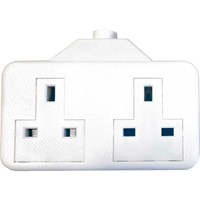
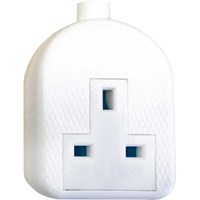
Socket Configuration: Choose between single or double trailing sockets based on how many devices you need to power simultaneously. Twin socket variants offer greater flexibility but remember the total load must still respect the cable's amperage limit.
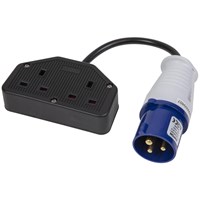
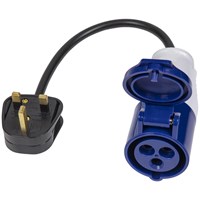
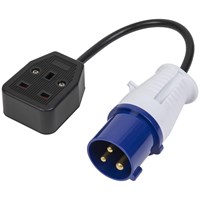
Plug and Socket Types: Ensure compatibility between domestic 13A and industrial 16A/32A commando-style connectors. Some leads feature adaptor configurations with different plug and socket ratings for versatile connectivity options.
Safety Information
Always fully unwind trailing socket cables before use to prevent heat build-up which can damage insulation or cause fire hazards. Inspect cables regularly for cuts, abrasions or damage to outer sheathing, and never use damaged leads. Ensure trailing sockets are suitable for the environment - whilst many feature weather-resistant construction, they shouldn't be submerged in water. Never overload circuits by exceeding the stated amperage rating, and use appropriate RCD protection when operating power tools outdoors or in damp conditions. Store trailing leads properly when not in use, avoiding tight kinks that can damage internal conductors.
Frequently Asked Questions
What's the difference between 13A and 16A trailing sockets?
13A trailing sockets use standard UK domestic three-pin plugs and are rated for household mains circuits, suitable for most portable power tools. 16A variants feature blue industrial commando-style connectors with 2.5mm thicker cable, designed for higher power loads and continuous heavy-duty use on construction sites and workshops.
Can I connect multiple trailing sockets together?
Whilst technically possible, daisy-chaining multiple extension leads isn't recommended as it increases resistance, potential voltage drop and overheating risks. Always use a single appropriately-rated trailing socket of sufficient length, or consider a multi-outlet distribution unit for powering several devices safely.
Do trailing sockets need to be fully unwound?
Yes, always fully unwind cable reels and trailing leads before use. Coiled cables carrying current generate heat which cannot dissipate effectively when wound, potentially melting insulation and creating serious fire hazards, particularly under sustained or high-current loads.