
Spot Welders

Pay in 3 interest-free payments on purchases from £20-£3000 with  . Learn more.
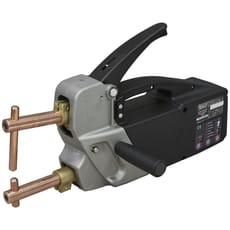
About Spot Welders
Spot welders are specialised resistance welding machines designed to join sheet metal by applying concentrated heat and pressure at specific points. These professional tools pass high electrical current through overlapping metal panels, creating strong, permanent welds without the need for welding wire, gas, or additional fasteners. Spot welding is the preferred method for automotive panel repairs and sheet metal fabrication, producing clean, factory-style welds with minimal heat distortion.
MyToolShed.co.uk stocks professional-grade spot welding equipment from trusted manufacturers including Sealey. Whether you're working in automotive body repair, vehicle restoration, or metal fabrication, a quality spot welder delivers the precision and power needed for structural repairs and panel replacement work. Most machines operate on standard UK 240v single-phase supply, making them suitable for workshops and garages without requiring industrial three-phase power.
Applications
Spot welders are essential equipment across various trades and industries:
- Automotive Body Repair Technicians – Panel replacement, accident repair, and structural bodywork on cars and vans
- Vehicle Restorers – Classic car restoration, replacing corroded panels using original manufacturing techniques
- Sheet Metal Fabricators – Creating enclosures, cabinets, ducting, and custom metalwork projects
- Motor Sport Engineers – Roll cage fabrication, chassis repairs, and lightweight panel construction
- MOT Testing Stations – Structural repairs to meet safety standards and compliance requirements
- Agricultural Engineers – Repairing farm machinery, trailers, and metal structures
- Serious DIY Enthusiasts – Home vehicle restoration projects and metalworking hobbies
Choosing The Right Spot Welders
Power Supply and Capacity: Most workshop spot welders operate on single-phase 240v UK mains supply. Check the amperage requirements match your available circuit capacity. Higher-capacity machines deliver greater weld penetration and handle thicker materials, typically welding mild steel from 0.6mm up to 3mm per panel.
Throat Depth: This determines how far you can reach into panels when welding. For automotive work, particularly door skins and larger panels, look for throat depths of 300-500mm for maximum versatility.
Adjustability: Variable power settings allow you to fine-tune weld intensity for different metal thicknesses. Adjustable timer controls ensure consistent weld quality, whilst movable electrode arms accommodate various panel configurations and angles.
Build Quality and Duty Cycle: Professional-grade machines feature robust construction with copper electrode arms and quality transformers. A higher duty cycle enables more continuous operation without overheating, essential for larger projects or production work.
Safety Information
Spot welding involves high electrical currents and hot metal, requiring proper precautions. Ensure your machine is correctly earthed and connected to an appropriately rated circuit. Always wear safety glasses or a face shield to protect against sparks and bright flashes, along with heat-resistant welding gloves. Operate in well-ventilated areas as welding produces fumes, particularly with galvanised materials. Keep flammable materials away from the welding area and maintain appropriate fire extinguishing equipment nearby. Follow HSE guidelines for workplace safety.
Frequently Asked Questions
What thickness of metal can a spot welder join?
Most professional spot welders can effectively weld mild steel from 0.6mm up to approximately 3mm per panel, making them ideal for automotive body panels and sheet metal fabrication. The combined thickness of overlapping panels should not exceed the manufacturer's specified maximum for optimal results.
How often do electrode tips need replacing?
Electrode tip lifespan depends on usage frequency. With regular use, tips may require dressing (reshaping) after every 200-300 welds and complete replacement after 1,000-2,000 welds. Signs requiring attention include inconsistent weld quality, increased spatter, or visible flattening of the tip profile.
What's the difference between spot welding and MIG welding for panel work?
Spot welding creates discrete weld points similar to factory assembly methods, producing minimal heat distortion without continuous seams. MIG welding creates continuous beaded seams and requires welding wire and shielding gas. Spot welding is faster for panel replacement work and produces cleaner results on visible surfaces, whilst MIG welding offers more versatility for structural repairs and fabrication work.