
Sound Meters

Pay in 3 interest-free payments on purchases from £20-£3000 with  . Learn more.
Loading...
End of content
Error - No more pages to load
About Sound Meters
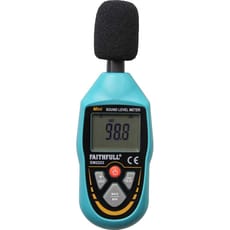
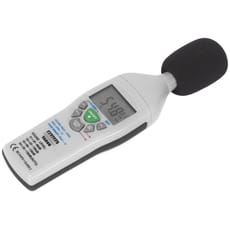
Sound meters, also known as sound level meters or decibel meters, are precision measuring instruments that accurately measure noise levels in decibels (dB). MyToolShed.co.uk stocks professional sound meters from trusted brands including Faithfull and Sealey, designed for workplace noise assessments, HSE compliance monitoring, and environmental noise surveys. These digital instruments convert sound pressure into clear readings on LCD displays, making them essential for health and safety officers, construction site managers, and anyone needing to monitor noise exposure under the Control of Noise at Work Regulations 2005.
Modern sound level meters feature A-weighting filters that match human hearing sensitivity, measurement ranges typically from 30dB to 130dB, and functions like max hold and fast/slow response settings. Whether you're conducting workplace risk assessments, investigating noise complaints, or ensuring compliance with local authority restrictions, a reliable sound meter from MyToolShed provides objective, accurate measurements that help protect hearing and maintain safe working environments across construction sites, factories, workshops, and commercial premises.
Applications
- Health and safety officers conducting workplace noise assessments and HSE compliance documentation
- Construction site managers monitoring noise levels to meet planning conditions and local authority limits
- Environmental health professionals investigating noise complaints and pollution issues
- Facilities managers assessing HVAC systems, building services equipment, and ventilation noise
- Maintenance engineers using sound levels for predictive maintenance and diagnosing bearing wear
- Electricians testing transformer hum and electrical equipment noise emissions
- Manufacturing supervisors identifying areas requiring hearing protection PPE
- Landlords and property managers objectively measuring tenant noise disputes
- Event organisers ensuring compliance with venue noise restrictions
- Acoustic consultants performing detailed noise surveys and impact assessments
Choosing The Right Sound Meters
Measurement Range: Select a meter covering the noise levels you'll encounter. Construction and industrial environments typically require 30-130dB capability, whilst office or residential monitoring may only need 30-80dB ranges.
Accuracy Standards: For official HSE compliance documentation, choose meters meeting IEC 61672 Class 2 standards (Class 1 for more precise work). Consider whether calibration certificates are needed for regulatory purposes.
Weighting Functions: A-weighting (dBA) is essential for UK workplace assessments as specified by HSE guidance. Some models also offer C-weighting for peak level measurements and low-frequency noise analysis.
Display and Usability: Look for clear, backlit LCD displays visible in poor lighting conditions common on building sites. Simple controls mean quick measurements without constantly consulting manuals.
Build Quality: For regular site work, choose robust models with protective rubber holsters that withstand drops, dust, and the rigours of professional use in demanding environments.
Safety Information
Under the Control of Noise at Work Regulations 2005, UK employers must assess and manage workplace noise exposure. When daily noise exposure reaches 80dB, employees must be informed and provided with hearing protection. At 85dB, hearing protection becomes mandatory and exposure must be reduced as far as reasonably practicable. When conducting measurements in suspected high-noise areas, always wear appropriate hearing protection yourself. Remember that hearing damage is permanent and cumulative—accurate noise assessment is essential for protecting workers' long-term health.
Frequently Asked Questions
Do sound meters need calibrating?
Yes, regular calibration ensures accuracy, particularly for HSE compliance or legal purposes. Professional meters should be calibrated annually by accredited laboratories. Basic models used for general monitoring should be checked periodically against known references.
What's the difference between dB and dBA?
dB measures sound pressure level, whilst dBA indicates A-weighted decibels that reflect how human ears perceive different frequencies. For UK workplace noise assessments, HSE guidance requires A-weighted measurements (dBA), making this the most important scale for occupational health applications.
Can I use a smartphone app instead of a proper sound meter?
Smartphone apps provide approximate indications but aren't suitable for official HSE assessments or compliance documentation. Phone microphones aren't calibrated for accurate measurement and vary significantly between devices. For workplace assessments or legal purposes, always use a proper sound meter meeting recognised standards.