
Soldering Wire

Pay in 3 interest-free payments on purchases from £20-£3000 with  . Learn more.
 Loading...
End of content
Error - No more pages to load
About Soldering Wire
Soldering wire is an essential consumable for creating permanent electrical connections and joins in metalwork. Available in various alloy compositions and diameters, soldering wire melts when heated to form a strong, conductive bond between metal components. Whether you're working on electronics, plumbing pipework, or electrical installations, choosing the right solder wire ensures reliable, long-lasting connections that meet both performance and safety standards.
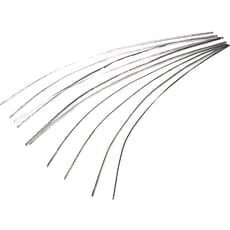
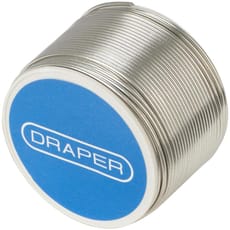
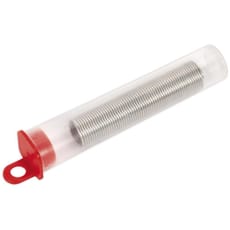
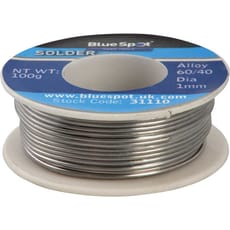
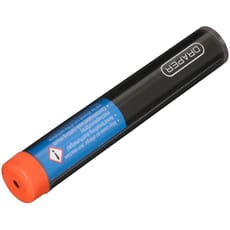
MyToolShed.co.uk stocks soldering wire in two primary categories: traditional tin-lead alloys and lead-free alternatives that comply with current UK and EU environmental regulations. Many varieties feature an integrated flux core that cleans and prepares the metal surface during the soldering process, eliminating the need for separate flux application. Available in convenient dispenser tubes, reels, and bars for specialist applications like blowpipe work, quality soldering wire from brands such as Draper, Sealey, Frys Metals, and Blue Spot delivers consistent results across professional and DIY projects.
Applications
Soldering wire serves a diverse range of trades and applications across professional and DIY sectors:
- Electricians and Sparkies: Creating permanent connections in control panels, junction boxes, and cable terminations that comply with BS 7671 wiring regulations
- Electronics Engineers and Technicians: Assembling circuit boards, repairing consumer electronics, and prototyping electrical devices
- Plumbers and Heating Engineers: Joining copper pipework in central heating systems, water supply installations, and refrigeration units
- Automotive Electricians: Repairing vehicle wiring looms, sensors, and electrical components
- Maintenance Engineers: Conducting repairs on industrial equipment, machinery wiring, and control systems
- Hobbyists and DIY Enthusiasts: Building electronics projects, repairing household appliances, and maintaining home electrical systems
Choosing The Right Soldering Wire
Lead-Free vs Traditional: For electrical and electronics work, lead-free solder is increasingly mandatory to meet RoHS regulations. Whilst traditional 60/40 tin-lead solder offers easier flow characteristics and lower melting points, lead-free alternatives from MyToolShed.co.uk provide excellent performance for most applications.
Diameter Selection: Match wire diameter to your application. Fine work on circuit boards benefits from 0.7mm to 1mm wire for precise control. General electrical connections work well with 1.5mm to 2mm diameter, whilst plumbing and heavy-duty applications may require 3mm or thicker wire.
Flux Type: Flux-cored wire simplifies the soldering process by automatically cleaning surfaces. Rosin flux cores suit electronics applications, whilst more aggressive formulations work better for plumbing joints. Higher flux content provides better cleaning action but may require more thorough residue removal.
Packaging Format: Dispenser tubes offer convenient, portable storage ideal for site work, whilst reels suit workshop environments and high-volume users.
Safety Information
Fume Extraction: Soldering generates flux fumes that can cause respiratory irritation with prolonged exposure. Ensure adequate ventilation or use localised fume extraction for regular soldering work.
Lead Exposure: Traditional tin-lead solder poses health risks. Always wash hands thoroughly after handling and never eat or drink whilst working with leaded solder. Lead-free alternatives eliminate this hazard.
Burn Prevention: Soldering irons reach temperatures exceeding 300°C. Always return hot irons to proper stands and allow adequate cooling time before storage.
Frequently Asked Questions
What's the difference between lead-free and traditional 60/40 solder wire?
Lead-free solder uses tin-copper or tin-silver alloys instead of tin-lead, complying with RoHS environmental regulations. It requires higher temperatures (typically 220-250°C versus 190°C) but eliminates health hazards associated with lead exposure whilst meeting UK and EU compliance requirements.
Do I need flux if my solder wire already has a flux core?
Flux-cored wire contains sufficient flux for most applications. However, supplementary flux paste proves beneficial when soldering particularly oxidised metals, larger joints with significant thermal mass, or challenging plumbing connections.
What diameter soldering wire should I use for electronics work?
Electronics applications typically benefit from 0.7mm to 1mm diameter wire, providing precise control and preventing excess solder that could bridge closely-spaced component pins. For general electrical work with larger terminals, 1.5mm to 2mm diameter offers better efficiency.