
Security Lighting
Pay in 3 interest-free payments on purchases from £30-2000 with  . Learn more.
 Loading...
End of content
Error - No more pages to load
About Security Lighting
Security lighting provides essential illumination for protecting residential and commercial properties, combining deterrent value with practical outdoor lighting. MyToolShed.co.uk supplies professional-grade LED floodlights with PIR motion sensors, designed to activate automatically when movement is detected. These energy-efficient lighting solutions offer powerful illumination whilst minimising running costs, making them ideal for tradespeople installing security systems and property owners seeking reliable protection.
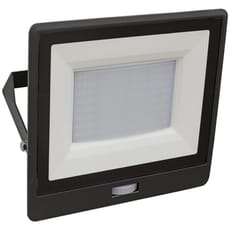
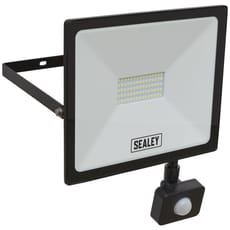
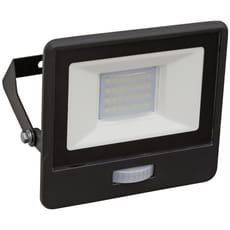
The security lighting range at MyToolShed features Sealey extra slim LED floodlights in multiple wattages (20w, 50w, and 100w), all equipped with passive infrared sensors for automatic operation. These 240v mains-powered units deliver bright, instant illumination with extended LED lifespans, offering superior performance compared to traditional halogen alternatives. The slim profile design ensures discreet installation whilst maintaining professional appearance and weatherproof durability.
Applications
- Electricians and security installers fitting comprehensive property protection systems
- Builders and property developers completing external lighting installations on new builds and renovations
- Maintenance contractors upgrading commercial premises, industrial units, and warehouse facilities
- Homeowners and DIY enthusiasts improving property security and outdoor visibility
- Caravan and motorhome owners enhancing pitch security at static locations
- Illuminating driveways, pathways, entrances, and vehicle parking areas
- Securing gardens, outbuildings, sheds, garages, and storage areas
- Protecting commercial yards, loading bays, and after-hours business premises
Choosing The Right Security Lighting
Wattage and brightness: Consider the area requiring coverage – 20w suits doorways and small spaces, 50w works for standard driveways and pathways, whilst 100w provides maximum illumination for large areas, yards, and commercial applications.
PIR sensor range and adjustment: Look for adjustable detection zones to minimise false triggers from passing traffic or animals. Quality sensors typically offer customisable sensitivity, detection range (usually 8-12 metres), and time delay settings to control how long the light remains active.
IP rating and build quality: Ensure adequate weatherproofing for the installation location. External security lighting requires minimum IP65 rating for protection against dust and water jets. The slim aluminium construction offered by professional ranges provides durability and effective heat dissipation.
Installation requirements: All units require connection to 240v mains supply by a qualified electrician. Consider mounting height, cable routing, and switching arrangements during planning stages.
Frequently Asked Questions
What's the difference between 20w, 50w, and 100w LED security lights?
The wattage determines brightness output and coverage area. A 20w LED floodlight suits porches and doorways, 50w covers typical residential driveways and gardens, whilst 100w provides commercial-grade illumination for larger areas, car parks, and industrial applications. Higher wattage increases both light output and running costs, though LED technology keeps energy consumption significantly lower than older halogen equivalents.
How long do LED security lights typically last?
Quality LED floodlights available from MyToolShed.co.uk typically offer 30,000-50,000 hours operational life, equating to many years of service even with regular activation. This longevity, combined with low energy consumption and minimal maintenance requirements, makes LED security lighting a cost-effective long-term investment compared to traditional lighting technologies.
Can I install security lighting myself?
Security lighting requires connection to 240v mains electricity, which must be installed by a qualified electrician in compliance with BS 7671 wiring regulations. DIY enthusiasts can position and mount the units, but final electrical connection should always be completed by a registered sparky to ensure safety and compliance.