

Round Files
Pay in 3 interest-free payments on purchases from £30-2000 with  . Learn more.
 Loading...
End of content
Error - No more pages to load
About Round Files
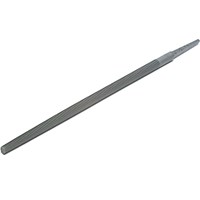
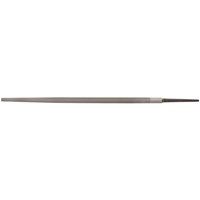
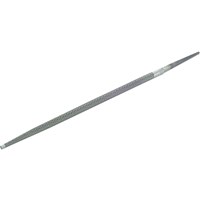
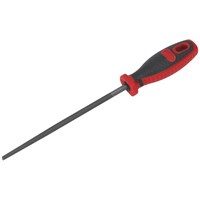
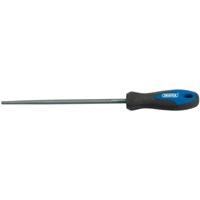
Round files are essential metalworking and woodworking tools designed for enlarging circular holes, smoothing curved surfaces, and filing concave edges. Featuring a cylindrical shape that tapers towards the tip, these files enable precise material removal in applications where flat or triangular files cannot reach. MyToolShed.co.uk stocks a comprehensive range of round files from trusted manufacturers including Bahco, Draper, Faithfull, Nicholson, and Sealey, catering to both professional tradespeople and dedicated DIY enthusiasts.
Available in various lengths, cuts (bastard, second cut, and smooth), and with or without handles, round files at MyToolShed offer versatility for different materials and finishes. Whether you're a metalworker refining engine components, a jeweller shaping intricate pieces, or a general tradesman maintaining tools and equipment, the right round file ensures accurate, efficient work on curved and circular surfaces.
Applications
Round files are invaluable across numerous trades and applications:
- Engineering and Metalwork: Enlarging holes in metal components, deburring drilled holes, and smoothing curved metal surfaces
- Mechanics and Automotive: Filing keyways, adjusting bearing housings, and modifying metal brackets
- Plumbing: Smoothing pipe ends and adjusting fittings for proper seal alignment
- Jewellery Making: Shaping precious metals and refining intricate curved designs
- Woodworking: Smoothing concave curves and enlarging dowel holes in furniture joinery
- Tool Maintenance: Sharpening chainsaw teeth and maintaining garden equipment
- General DIY: Home repairs, hobby projects, and restoration work requiring precision filing
Choosing The Right Round Files
Selecting the appropriate round file depends on several key factors:
- Diameter: Choose a file slightly smaller than the hole or curve you're working on to ensure proper contact and control
- Length: Longer files (250-300mm) suit larger projects, whilst shorter files (100-150mm) offer greater precision for detailed work
- Cut Grade: Bastard cut removes material quickly for initial shaping; second cut provides moderate smoothing; smooth cut delivers fine finishing
- Material Compatibility: Ensure your file is suited to your workpiece—standard files for softer metals, specialist files for hardened steel or non-ferrous materials
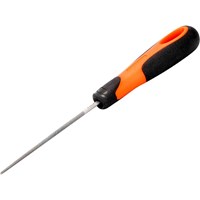
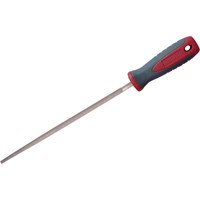
- Handle: Some round files come with fitted handles, whilst others require separate purchase. A comfortable, secure grip improves control and reduces hand fatigue
- Brand Quality: MyToolShed.co.uk offers professional-grade files from established manufacturers ensuring durability and consistent performance
Safety Information
Always fit a proper handle to tang-style files to prevent hand injuries. Wear safety glasses to protect against metal filings, and use a file card or brush regularly to clear debris from the file teeth, maintaining cutting efficiency and preventing workpiece scratching. Never use files as prying tools or hammers, as this can cause the hardened steel to shatter. Store files separately to prevent teeth damage from contact with other tools.
Frequently Asked Questions
What's the difference between a round file and a half-round file?
A round file is completely cylindrical along its length, ideal for circular holes and fully curved surfaces. A half-round file has one flat side and one curved side, offering versatility for both flat and moderately curved work.
How do I prevent my round file from clogging?
File in one direction only (push stroke), lift the file clear on the return stroke, and regularly clean the teeth with a file card brush. Applying chalk to the file teeth can also help reduce metal particle adhesion.
Can round files be resharpened?
Whilst technically possible through acid treatment, it's generally not cost-effective for standard files. Professional tradespeople typically replace worn files to maintain work quality and efficiency.