

Ratchet Clamps
Pay in 3 interest-free payments on purchases from £30-2000 with  . Learn more.
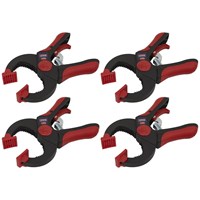
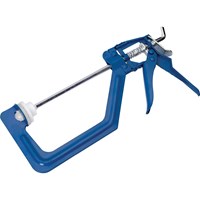
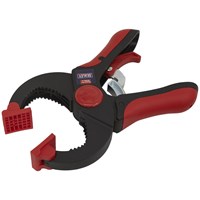
 Loading...
End of content
Error - No more pages to load
About Ratchet Clamps
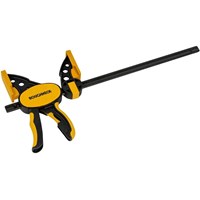
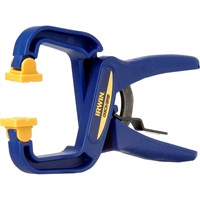
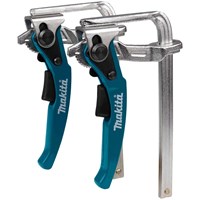
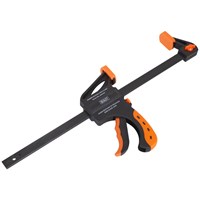
Ratchet clamps are essential workshop tools that use a quick-release ratcheting mechanism to secure workpieces rapidly and efficiently. Unlike traditional screw clamps or G-clamps that require multiple rotations to tighten, ratchet clamps can be operated with a simple trigger squeeze, making them significantly faster to deploy. The most recognisable type is the Quick Grip F-style clamp, though MyToolShed.co.uk stocks various configurations including bar clamps, one-handed clamps, and specialist guide rail clamps from trusted brands like Sealey, Makita, Quick-Grip, and Roughneck.
The key advantage of ratchet clamps is their one-handed operation, allowing tradespeople to position and hold workpieces in place whilst simultaneously applying clamping pressure. Professional-grade models feature durable metal mechanisms built to withstand repeated daily use, whilst budget-friendly plastic varieties offer excellent value for occasional DIY applications. MyToolShed.co.uk offers ratchet clamps in various throat depths and clamping capacities to suit different project requirements, from light assembly work to heavy-duty joinery tasks.
Applications
Ratchet clamps are used across numerous trades and applications, including:
- Carpentry and joinery – holding timber joints during glue-up, assembling cabinets and furniture
- Kitchen fitting – securing worktops and clamping units during installation
- Shopfitting – temporary fixing of display units and shelving
- General building – holding materials in position whilst fixing or cutting
- DIY enthusiasts – home improvement projects, furniture assembly and repairs
- Flooring installation – securing laminate or engineered boards with guide rail clamps
- Metalworking – holding components during fabrication or welding preparation
- Picture framing – assembling frames with accurate corner alignment
Choosing The Right Ratchet Clamps
When selecting ratchet clamps from MyToolShed.co.uk, consider these important factors:
- Clamping capacity – measure the maximum width you need to clamp; common sizes range from 150mm to 900mm throat depth
- Clamping force – professional models typically provide 100-300kg of pressure; ensure sufficient force for your materials
- Build quality – metal jaws and mechanisms offer superior durability for trade use, whilst reinforced plastic suits lighter applications
- Jaw protection – look for padded or replaceable jaw covers to prevent marking delicate surfaces
- Quick-release function – essential for rapid repositioning and removal
- Spreader capability – some models reverse to work as spreaders, adding versatility
- Brand reputation – established manufacturers like Sealey and Makita offer reliable warranties and replacement parts
Frequently Asked Questions
Can ratchet clamps be used as spreaders?
Many ratchet clamps feature reversible jaws that allow them to function as spreaders, pushing components apart rather than pulling them together. Check individual product specifications as not all models offer this functionality.
How much pressure do ratchet clamps provide?
Clamping pressure varies by model and quality. Budget plastic clamps typically provide 50-100kg of force, whilst professional-grade metal ratchet clamps can deliver 150-300kg or more, sufficient for demanding joinery and assembly tasks.
What's the difference between bar clamps and F-clamps?
F-clamps have a fixed head and sliding jaw on a flat bar, ideal for general clamping. Bar clamps feature longer reaches and parallel jaws, better suited for wider workpieces and ensuring even pressure distribution across larger surfaces.