

Palm Routers
Pay in 3 interest-free payments on purchases from £30-2000 with  . Learn more.
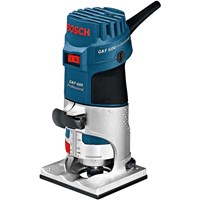
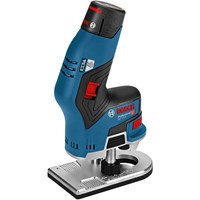
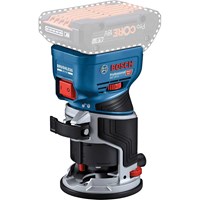
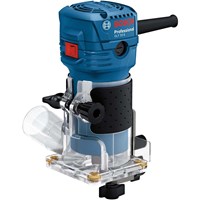
 Loading...
End of content
Error - No more pages to load
About Palm Routers
Palm routers, also known as laminate trimmers or trim routers, are compact routing tools designed for precision work in tight spaces where standard routers prove too cumbersome. Featuring a 1/4" collet and lightweight design typically under 2kg, these versatile power tools excel at edge profiling, hinge recessing, chamfering, and detailed decorative work. Their single-handed operation and excellent visibility make them indispensable for fine woodworking, cabinetry, and joinery applications where control and finesse are paramount.
MyToolShed.co.uk stocks palm routers in both corded 240v and cordless configurations from leading manufacturers like Bosch Professional. Corded models such as the Bosch GKF 600 deliver consistent power for extended workshop use, whilst cordless options running on 12V or 18V batteries offer exceptional manoeuvrability for site work and overhead applications. Modern brushless motors provide impressive performance despite their compact dimensions, combining ergonomic design with precision depth adjustment and variable speed control for professional results across diverse materials.
Applications
Palm routers are essential tools across numerous trades and applications:
- Joiners and Cabinet Makers: Edge profiling, hinge recessing, decorative detailing on furniture and fitted units
- Carpenters and Chippies: Trimming door linings, routing lock housings, chamfering timber edges
- Kitchen Fitters: Trimming laminate worktops, creating precise cutouts, finishing edges and joints
- Shopfitters: Display cabinet work, signage routing, detailed trim work on commercial installations
- Furniture Makers: Decorative edge profiles, inlay work, template routing for consistent reproduction
- DIY Enthusiasts: Home improvement projects, furniture restoration, custom shelving solutions
- Luthiers: Precision routing work on guitars and wooden instruments
Choosing The Right Palm Routers
Power Source: Decide between corded and cordless based on your working environment. Corded 240v models provide consistent power for workshop use, whilst 12V and 18V cordless options offer unmatched portability for site work. Consider your existing battery platform for economical compatibility.
Motor Power: Palm routers typically range from 450W to 650W for corded models. Higher wattage handles demanding materials and larger bits more effectively, though even compact 12V cordless models deliver surprising performance for most trimming and profiling tasks.
Depth Adjustment: Look for micro-adjustment systems allowing precise depth setting in sub-millimetre increments. Clear depth scales and easy-to-operate mechanisms with fine-tuning knobs ensure accurate, repeatable work essential for professional applications.
Base Design: Consider whether you need a fixed base, tilt base, or interchangeable system. Fixed bases suit standard routing, whilst tilt bases enable bevelled and angled cuts for greater versatility.
Speed Control: Variable speed capability (typically 10,000-32,000 RPM) allows optimisation for different materials and bit sizes. Electronic speed control maintains consistent RPM under load for superior finish quality across hardwoods, softwoods, and composite materials.
Safety Information
Always wear safety glasses to protect against flying chips and dust. Hearing protection is recommended during extended use, as router noise levels can exceed HSE exposure limits. Wear a dust mask when routing MDF, treated timber, or hardwoods to prevent inhalation of harmful particles.
Ensure workpieces are securely clamped before routing—never hold small pieces by hand. Always disconnect 240v corded routers or remove batteries before changing bits. Wait for the bit to reach full speed before contact with the workpiece, and allow complete stoppage before setting down. Route against the direction of bit rotation to maintain control. When working on construction sites, ensure compliance with building regulations and use RCD protection on 240v circuits as appropriate.
Frequently Asked Questions
What's the difference between a palm router and a standard router?
Palm routers are significantly smaller and lighter (typically under 2kg) with compact bodies designed for single-handed operation. They use 1/4" bits and excel at light-duty trimming, edge profiling, and detailed work. Standard routers are larger, more powerful tools with 1/2" or 1/4" collets designed for heavier stock removal and demanding applications where palm routers would lack the necessary power.
Should I choose 12V or 18V cordless?
For occasional light trimming and edge work, a 12V model offers excellent portability and reduced weight with adequate performance. For regular use on harder materials, larger bits, or longer runtime requirements, an 18V brushless model provides more power and stamina. MyToolShed.co.uk recommends considering your existing battery platform, as this often determines the most economical choice.
Can I use a palm router in a router table?
Yes, many palm routers can be mounted in small router tables or portable routing stations, converting them into compact spindle moulders. This setup proves particularly useful for routing small components and repetitive edge profiling work, though check your specific model's compatibility with table mounting before purchase.