
Nylon Nuts

Pay in 3 interest-free payments on purchases from £20-£3000 with  . Learn more.
 Loading...
End of content
Error - No more pages to load
About Nylon Nuts
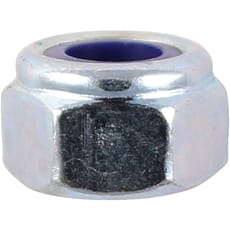
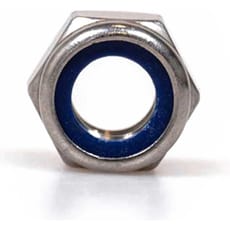
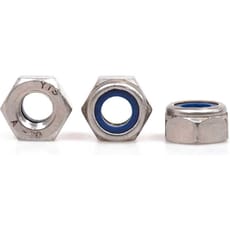
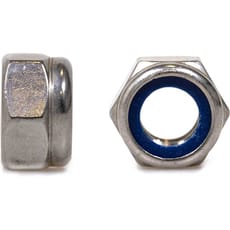
Nylon nuts, also known as nyloc nuts or nylon lock nuts, are self-locking fasteners featuring a nylon insert that creates friction against bolt threads to prevent loosening under vibration. MyToolShed.co.uk stocks a comprehensive range of nylon nuts in various materials and finishes, including bright zinc plated steel, A2 304 stainless steel, and A4 316 stainless steel options from trusted brands like Sirius, Timco, and Sealey. These essential fixings are available in standard hexagon profiles and Type T thin variants to suit different applications.
The nylon insert within these lock nuts grips tightly onto the thread when tightened, creating a secure connection that resists loosening caused by movement, vibration, or thermal expansion. Unlike standard nuts that rely solely on friction from tightening torque, nylon lock nuts provide additional security making them ideal for critical fastenings where reliability is paramount.
Applications
Nylon nuts are widely used across multiple trades and industries, including:
- Automotive and vehicle maintenance – securing components subject to constant vibration
- Mechanical engineering – machinery assembly and equipment maintenance
- Construction and structural work – fixing components where loosening could compromise safety
- Agricultural and farming equipment – outdoor applications requiring corrosion resistance
- HVAC installation – securing ventilation and heating systems
- Marine applications – using stainless steel variants in saltwater environments
- General maintenance and repairs – wherever secure, vibration-resistant fastening is required
Choosing The Right Nylon Nuts
When selecting nylon nuts from MyToolShed.co.uk, consider these key factors:
- Material and finish: Bright zinc plated nuts offer good corrosion resistance for indoor use, A2 304 stainless steel suits general outdoor applications, whilst A4 316 stainless steel provides superior resistance for marine or highly corrosive environments
- Thread size: Ensure the nut matches your bolt diameter and thread pitch exactly – common metric sizes include M6, M8, M10, and M12
- Nut profile: Standard hexagon nuts suit most applications, while Type T thin variants are ideal where space is limited or reduced weight is beneficial
- Temperature rating: Nylon inserts typically operate effectively between -40°C and +120°C; exceeding this range may reduce locking effectiveness
- Reusability: Whilst nylon lock nuts can be reused, the locking effectiveness diminishes with each use – replace for critical applications
- Standards compliance: Look for products manufactured to DIN 982 or equivalent standards for quality assurance
Frequently Asked Questions
Can nylon lock nuts be reused?
Nylon lock nuts can technically be reused, but their locking effectiveness decreases each time they're removed and refitted as the nylon insert wears. For critical applications or where safety is paramount, always fit new nylon nuts rather than reusing old ones.
What's the difference between A2 and A4 stainless steel nylon nuts?
A2 304 stainless steel offers excellent corrosion resistance for general outdoor use and most environments. A4 316 stainless steel contains molybdenum for superior resistance to chlorides and acids, making it essential for marine applications, coastal locations, or chemically aggressive environments.
At what temperature do nylon lock nuts fail?
The nylon insert in standard nyloc nuts remains effective up to approximately 120°C. Beyond this temperature, the nylon begins to soften and lose its locking properties. For high-temperature applications above 120°C, consider all-metal locking nuts as an alternative.