

Mig Welders
Pay in 3 interest-free payments on purchases from £30-2000 with  . Learn more.
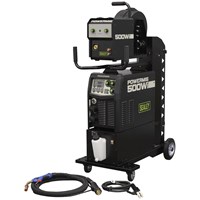
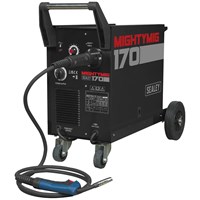
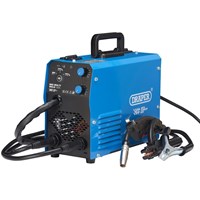
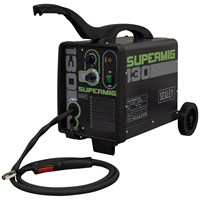
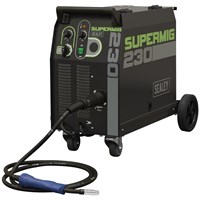
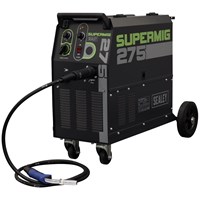
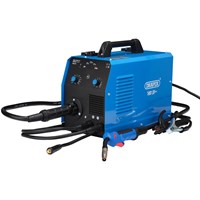
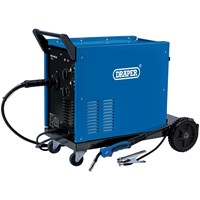
 Loading...
End of content
Error - No more pages to load
About Mig Welders
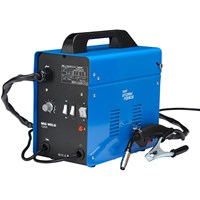
MIG welding (Metal Inert Gas) represents one of the most accessible and versatile welding processes for both professional tradespeople and DIY enthusiasts. A MIG welder uses a continuously-fed solid wire electrode combined with a shielding gas—or flux-cored wire for gasless operation—to create strong, clean welds on mild steel, stainless steel, and aluminium. This semi-automatic process delivers faster results than traditional stick welding whilst maintaining professional-quality joins, making it ideal for fabrication, automotive repair, and general metalwork.
MyToolShed.co.uk stocks a comprehensive range of MIG welders from trusted brands including Sealey and Draper, with amperage outputs from compact 100A models through to robust 260A industrial machines. Modern inverter technology has transformed these welders into lightweight, energy-efficient units that run from standard 240v domestic sockets, whilst advanced features like digital displays, synergic controls, and multi-process capabilities (combining MIG, TIG, and MMA functions) provide exceptional versatility for workshops with varied welding requirements.
Applications
MIG welders serve a diverse range of professional trades and applications:
- Fabrication Engineers: Structural steelwork, architectural metalwork, and custom fabrications in workshops and on construction sites
- Automotive Technicians: Bodywork repairs, chassis modifications, exhaust systems, and classic car restoration projects
- Agricultural Engineers: Repairing farm machinery, trailers, gates, and equipment in outdoor field conditions
- Maintenance Fitters: General repairs and modifications in manufacturing facilities and industrial plants
- Mobile Welding Services: On-site welding requiring portable inverter equipment
- General Builders: Installing steel beams, structural repairs, and site fabrication work
- DIY Enthusiasts: Home workshop projects, garden furniture, trailer repairs, and automotive restoration
- Motorsport Teams: Roll cage fabrication, chassis modifications, and race car preparation
Choosing The Right Mig Welders
Amperage Output and Material Thickness
The welder's maximum amperage determines material capacity: 100-130A models suit materials up to 6mm thick, 150-160A machines handle up to 8mm, 180-200A welders tackle 10mm steel, whilst 230A+ models manage 12mm and above. Always select headroom above your typical requirements to avoid continuous operation at maximum capacity.
Power Supply and Duty Cycle
Most MIG welders operate from standard 240v 13A household sockets, making them accessible for home workshops. Check the duty cycle at your intended working amperage—professional use demands higher duty cycles (60-80%) than occasional DIY work (20-40%). Inverter models offer superior portability, with many weighing under 15kg.
Gas or Gasless Operation
Gas-shielded MIG produces cleaner, stronger welds with minimal spatter, ideal for workshop environments. Gasless flux-cored welding suits outdoor site work where wind disperses shielding gas. Many models at MyToolShed.co.uk provide both options for maximum versatility.
Multi-Process Capability
Multi-process welders combining MIG, TIG, and MMA functions eliminate the cost and space requirements of multiple machines. TIG enables precision work on thin materials, whilst MMA suits outdoor construction applications.
Safety Information
Personal Protection: Always wear an appropriate welding helmet (minimum shade 9-13), welding jacket or leather apron, gauntlets, and safety boots. Never weld wearing synthetic fabrics that can melt.
Ventilation: Under COSHH regulations, adequate ventilation or local exhaust ventilation systems are mandatory. Position your head away from rising fumes and use extraction equipment in confined spaces.
Fire Prevention: Clear the work area of flammable materials, use fire-resistant blankets, and keep appropriate extinguishers accessible. MIG sparks can travel several metres and ignite combustibles.
Electrical Safety: Ensure proper earthing and connection to appropriate 240v supplies meeting UK electrical standards. Never weld in wet conditions and regularly inspect cables for damage.
Frequently Asked Questions
What's the difference between gas and gasless MIG welding?
Gas MIG welding uses separate shielding gas (typically Argon/CO2 mix) with solid wire for cleaner welds with less spatter, ideal for workshops. Gasless welding employs flux-cored wire that generates its own shielding, suitable for outdoor work where wind would disperse gas. Many modern machines offer both capabilities by switching wire type.
Can I run a MIG welder from a domestic socket?
Most MIG welders up to 160-180A operate from standard UK 240v 13A household sockets. Higher amperage machines (200A+) may require 16A or 32A industrial sockets. Check manufacturer specifications and consult a qualified electrician if uncertain about your property's electrical capacity.
Do I need different wire for gas and gasless welding?
Yes, absolutely. Gas-shielded MIG uses solid wire (typically ER70S-6 for mild steel) which requires separate shielding gas. Gasless welding requires special flux-cored wire with internal flux. Using solid wire without gas produces extremely poor welds, whilst flux-cored wire with gas creates excessive spatter.