

Marking Gauges
Pay in 3 interest-free payments on purchases from £30-2000 with  . Learn more.
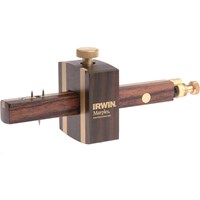
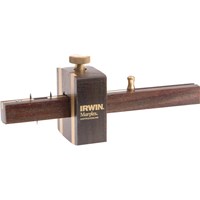
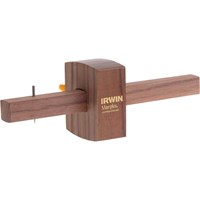
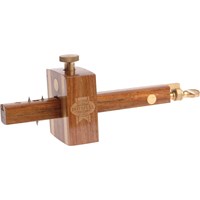


 Loading...
End of content
Error - No more pages to load
About Marking Gauges
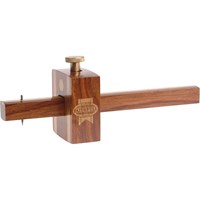
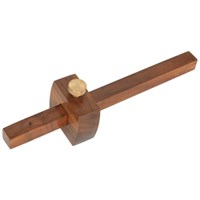
Marking gauges are essential precision tools used in woodworking and joinery to scribe accurate lines parallel to an edge or surface. These traditional hand tools feature an adjustable fence that slides along a beam, with a pin or blade that scores the workpiece at a consistent distance from the reference edge. MyToolShed.co.uk stocks a comprehensive range of marking gauges from trusted brands including Faithfull, Marples, Draper, and Stanley, offering both traditional rosewood models and modern plastic alternatives to suit every budget and preference.
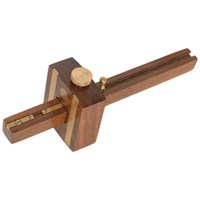
The collection at MyToolShed includes specialist variants such as mortice gauges with dual pins for marking mortise-and-tenon joints, cutting gauges with knife blades for cross-grain work, combination gauges that serve multiple functions, and profile scribing gauges for transferring complex shapes. Whether you're a professional joiner requiring precision rosewood tools or a DIY enthusiast looking for reliable entry-level equipment, our selection caters to all skill levels and applications.
Applications
- Joiners and carpenters: marking out mortise-and-tenon joints, scribing parallel lines for edge work, and setting out dovetails
- Cabinet makers: precise marking for drawer construction, panel work, and veneer application
- Furniture restorers: replicating original joinery and matching existing work with accurate measurements
- Timber framers: marking repetitive joints and beam work on large-scale construction projects
- DIY enthusiasts: home woodworking projects, shelving installation, and general joinery tasks
- Shop fitters: scribing architraves, skirting boards, and fitted furniture to walls
- Set designers and prop makers: creating custom wooden components with precise parallel lines
Choosing The Right Marking Gauges
Consider the gauge type first: standard marking gauges suit general parallel line work, while mortice gauges with two adjustable pins are essential for mortise-and-tenon joints. Cutting gauges feature a knife blade rather than a pin, making them ideal for cross-grain marking and more visible score lines. Combination gauges offer versatility by incorporating multiple functions in one tool.
Material quality significantly affects accuracy and longevity. Traditional rosewood gauges from brands like Faithfull and Marples provide superior durability, stability, and a comfortable feel, whilst plastic models like the Stanley option offer affordability for occasional use. Check that the fence locks securely and slides smoothly along the beam without play. Brass fittings and wedge-lock mechanisms typically provide more reliable adjustment than thumbscrew-only systems.
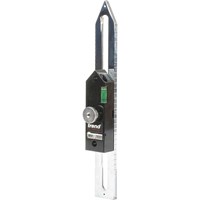
Beam length determines the maximum distance you can mark from an edge – standard gauges offer around 150-200mm capacity, sufficient for most applications. For specialist tasks, profile scribing gauges and trammel heads allow you to transfer complex shapes or scribe larger circles. MyToolShed.co.uk stocks multi-purpose tools like the Trend Multiscribe, which combines several marking functions in one compact unit, ideal for tradespeople working across multiple sites.
Frequently Asked Questions
What's the difference between a marking gauge and a mortice gauge?
A standard marking gauge has a single pin for scribing one parallel line, whilst a mortice gauge features two independently adjustable pins for marking both sides of a mortice simultaneously. Many woodworkers invest in a combination gauge or mortice gauge that can function as both tools.
Should I choose a pin or cutting gauge?
Pin gauges work best for marking with the grain and leaving a fine line, whilst cutting gauges with knife blades are superior for cross-grain work and produce a more visible, cleaner cut. Professional joiners often keep both types for different applications.
How do I maintain my marking gauge?
Keep the fence and beam clean from sawdust and resin buildup. Occasionally treat wooden gauges with linseed oil to prevent drying and cracking. Ensure pins or blades remain sharp – a blunt point will tear fibres rather than cleanly score them. Store in a dry environment to prevent rust on metal components.