

Honing Guides
Pay in 3 interest-free payments on purchases from £30-2000 with  . Learn more.
 Loading...
End of content
Error - No more pages to load
About Honing Guides
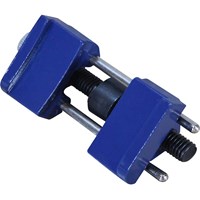
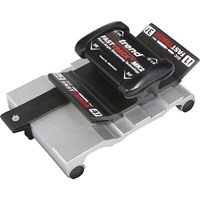
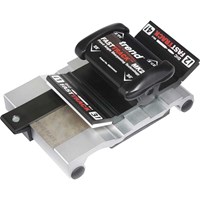
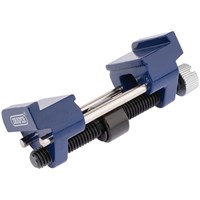
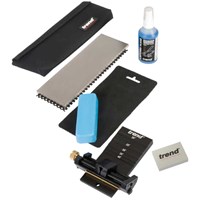
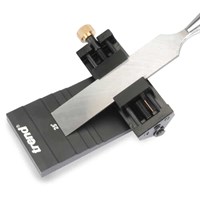
Honing guides are precision sharpening tools designed to maintain consistent bevel angles when sharpening chisels, plane irons, and other edge tools. By holding the blade at a fixed angle against the sharpening stone, these guides eliminate the guesswork involved in freehand sharpening, ensuring professional results every time. MyToolShed.co.uk stocks a comprehensive range from trusted brands including Trend, Draper, and Faithfull, covering everything from basic roller-style guides for occasional use through to advanced systems like the Trend Fast Track MK2 with micro-adjustable settings and integrated diamond stones.
Whether you're a professional joiner maintaining workshop tools or a DIY enthusiast learning traditional woodworking skills, a quality honing guide transforms blade sharpening from a frustrating task into a quick, repeatable process. Many sets available at MyToolShed include diamond whetstones, angle-setting jigs, and storage cases, providing a complete sharpening solution straight out of the box. This precision not only improves sharpening quality but also extends blade life by preventing uneven wear and maintaining correct bevel angles throughout the tool's working lifespan.
Applications
Honing guides are invaluable across numerous trades and skill levels:
- Carpenters and joiners who require sharp chisels for mortise and tenon work, door fitting, and precision trimming
- Cabinet makers and furniture makers needing consistently sharpened tools for joinery and finishing work
- Bench joiners maintaining hand planes for smooth cutting action on timber
- Site carpenters needing to quickly restore edge tools between jobs
- Woodturners using specialist scrapers and skew chisels requiring consistent bevels
- Restoration specialists working with antique furniture using traditional hand tool techniques
- DIY enthusiasts learning woodworking and wanting repeatable sharpening results
- Educational workshops where consistency, repeatability, and safety are paramount
Choosing The Right Honing Guides
Capacity and Compatibility: Check the maximum blade width the guide accommodates. Standard roller guides typically handle blades up to 60-70mm wide, suitable for most chisels and plane irons. Ensure the clamping mechanism grips your widest tools securely.
Angle Setting Method: Basic guides require measuring projection distance to achieve desired angles, whilst sophisticated systems like the Trend Fast Track feature built-in angle stops. For beginners or those prioritising speed, integrated angle-setting proves invaluable.
Build Quality: Look for machined metal components rather than pressed steel or plastic. The roller should run true without wobble, and clamping must hold blades firmly without slipping during use.
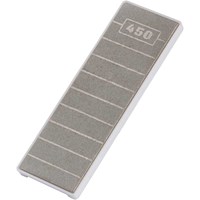
Complete Systems vs Basic Guides: Consider whether you need just the guide or a full sharpening kit. Sets like the Trend Diamond Honing Guide Set include everything needed: guide, diamond stones in various grits, and angle-setting jigs, offering excellent value when establishing a sharpening station.
Portability: Site workers might prefer compact guides for tool bags, whilst workshop users can opt for larger, feature-rich systems with storage cases.
Frequently Asked Questions
What angle should I sharpen chisels and plane irons?
Most bench chisels and plane irons perform best with a primary bevel of 25° and a micro-bevel of 30°. However, paring chisels may use 20-25° for delicate work, whilst mortise chisels benefit from 30-35° for heavy chopping. Quality honing guides allow precise angle setting and repeatability for each sharpening session.
Can I use honing guides with different types of sharpening stones?
Yes, most roller-style honing guides work effectively with water stones, oil stones, and diamond stones. Ensure your stone is large enough for the guide's roller to run on without tipping. Diamond stones pair particularly well with honing guides because they remain flat and provide consistent results without oil mess or water stone maintenance.
How often should I sharpen my tools with a honing guide?
This depends on usage intensity and material being worked. Professional chippies might hone daily when working abrasive timbers, whilst hobbyists may only need weekly or monthly sharpening. Signs tools need attention include increased cutting effort, tear-out on workpieces, or visibly dull edges. Regular light honing maintains edges and prevents aggressive grinding.