
High Performance Anchors

Pay in 3 interest-free payments on purchases from £20-£3000 with  . Learn more.
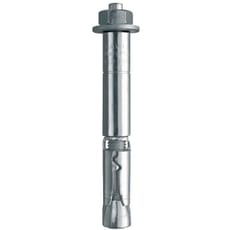
Rawl R-SPL-II Safetyplus Bolt Projecting High Performance Expansion Anchor
in stock
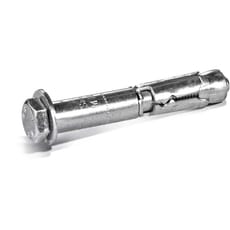
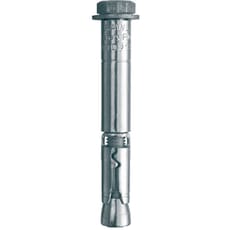
Rawl R-SPL-II Safetyplus 2 Loose Bolt High Performance Expansion Anchor
available
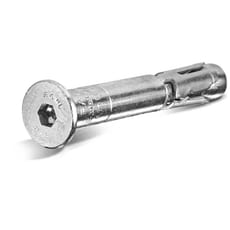
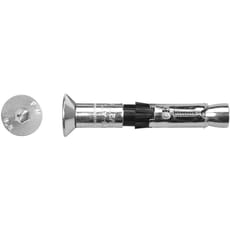
Rawl R-SPL-II Safetyplus 2 Countersunk High Performance Expansion Anchor
available
 Loading...
End of content
Error - No more pages to load
About High Performance Anchors
High performance anchors represent the premium tier of fixing solutions, engineered to deliver exceptional holding power in demanding structural and safety-critical applications. The range at MyToolShed.co.uk features the renowned Rawlplug Safetyplus series, including expansion sleeve anchors with various head configurations – hex head bolts for visible applications, countersunk screws for flush-mounted installations, and projecting bolt options for connecting structural steelwork. These specialist fixings are designed for critical connections where standard anchors simply aren't sufficient, providing certified performance in both cracked and non-cracked concrete.
What distinguishes high performance anchors from conventional fixings is their rigorous testing regime and comprehensive technical documentation, often including European Technical Approval (ETA) certification. MyToolShed stocks anchors manufactured to exacting standards, offering engineers and contractors the confidence and traceability required for structural applications, seismic zones, and high-stress environments. The advanced expansion mechanisms distribute loads effectively throughout the base material, creating secure connections that withstand substantial static and dynamic loads in concrete and dense masonry substrates.
Applications
High performance anchors are essential for professionals working on structural and safety-critical installations:
- Structural Engineers – specifying fixings for steel-to-concrete connections and load-bearing installations
- Contractors and Main Builders – executing structural connections on commercial and industrial projects
- Steelwork Fabricators – securing structural steel frames to concrete foundations and floors
- Mechanical and Electrical Engineers – installing heavy plant, machinery, and 240v electrical infrastructure
- Facilities Maintenance Teams – maintaining industrial and commercial building services
- Bridge and Infrastructure Specialists – civil engineering projects requiring certified fixings
- Façade Installers – securing cladding systems and architectural features to structural substrates
- Shopfitters – installing heavy shelving, racking, and structural retail displays
Choosing The Right High Performance Anchors
Base Material Assessment: Identify your substrate – typically concrete C20/25 or higher for certified performance. Determine whether the concrete is cracked or non-cracked, as this significantly affects anchor selection and load capacity.
Load Requirements: Calculate both tensile (pull-out) and shear (sideways) loads your fixing must withstand. For structural applications, consult engineers and apply appropriate safety factors. Dynamic loads from vibration require additional capacity compared to static loads.
Head Configuration: Select hex head bolts for visible fixings, countersunk options for flush-mounted installations, or projecting bolt variants for connecting brackets or steelwork. The Rawlplug Safetyplus range available at MyToolShed.co.uk offers all these configurations.
Installation Environment: Consider exposure to moisture, chemicals, or corrosive atmospheres. Stainless steel or galvanised anchors provide enhanced corrosion resistance for external applications. Check whether the location experiences seismic activity, necessitating cracked concrete certification.
Certification: For structural applications, ensure anchors come with ETA documentation and load tables for Building Control approval and HSE compliance.
Safety Information
High performance anchors in structural applications must be installed by competent, trained personnel. Never exceed manufacturer's stated load capacities and always apply appropriate safety factors in accordance with BS EN 1992 (Eurocode 2). Follow installation instructions precisely, including specified hole diameters, depths, edge distances, and spacing requirements – deviating compromises anchor capacity and creates dangerous situations.
Use calibrated torque wrenches to achieve correct installation torque; both under-tightening and over-tightening reduce performance. When drilling, wear safety glasses, hearing protection, and dust masks rated for concrete dust. For safety-critical fixings, maintain installation records and incorporate regular inspections into maintenance schedules.
Frequently Asked Questions
What's the difference between standard anchors and high performance anchors?
High performance anchors are engineered to much higher standards, offering certified performance in cracked concrete, higher load capacities, and comprehensive ETA documentation. They're designed for structural and safety-critical applications where standard fixings don't provide sufficient reliability or traceability, with far more rigorous testing regimes meeting strict European standards.
What does 'suitable for cracked concrete' actually mean?
Concrete can develop cracks due to shrinkage, thermal movement, or seismic activity. Standard anchors may lose significant capacity if cracks form at their location. Anchors certified for cracked concrete maintain their holding power even when cracks up to a specified width develop – crucial for seismic zones, dynamic loads, and safety-critical applications.
Do I need special tools to install high performance anchors?
You'll need a suitable rotary hammer or hammer drill for clean, accurate holes, a calibrated torque wrench for correct installation torque, and cleaning equipment (blow-out pump or brush) to remove drilling debris. Quality installation equipment ensures the anchors perform as designed and eliminates costly failures.