

Hand Sanders
Pay in 3 interest-free payments on purchases from £30-2000 with  . Learn more.

 Loading...
End of content
Error - No more pages to load
About Hand Sanders
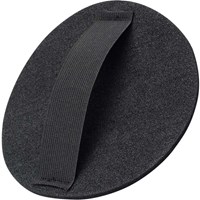
Hand sanders are essential manual tools for smoothing and finishing surfaces in preparation for painting, varnishing, or further treatment. Unlike powered alternatives, hand sanders offer precise control and are ideal for detailed work, small areas, and situations where electricity isn't available or practical. MyToolShed.co.uk stocks a comprehensive range from trusted brands including Marshalltown, Faithfull, Sealey, and Stanley, covering everything from simple sanding blocks to specialised drywall sanders with dust extraction capabilities.
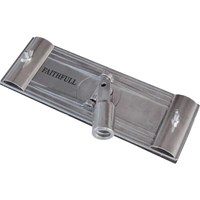
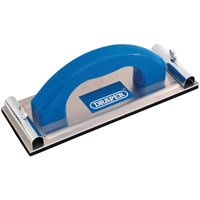
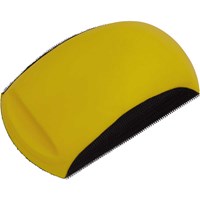
The hand sanders available at MyToolShed.co.uk encompass diverse designs for different applications and materials. Traditional sanding blocks provide firm, flat surfaces for uniform sanding, whilst drywall sanders feature larger heads and extendable pole compatibility for ceiling and wall work. Modern innovations include hook and loop attachment systems for quick abrasive changes, ergonomic soft-grip handles that reduce fatigue during extended use, and flexible blocks designed for contoured surfaces. Whether smoothing plasterboard joints, preparing timber for finishing, or flatting painted surfaces between coats, there's a hand sander specifically designed for your needs.
Applications
Hand sanders are used daily by tradespeople and DIY enthusiasts across numerous applications:
- Painters and Decorators: Surface preparation, flatting between coats, and achieving smooth finishes before painting
- Plasterers and Drywall Installers: Smoothing joints, shaping board edges, and preparing walls and ceilings
- Carpenters and Joiners: Finishing timber work, smoothing joints, and preparing wood for staining or varnishing
- Cabinet Makers: Detailed finishing work requiring precision and fine control
- Bodywork Specialists: Finishing filler and preparing surfaces for painting on vehicles
- Renovation Contractors: General surface preparation across multiple materials
- DIY Enthusiasts: Home improvement projects, furniture restoration, and maintenance work
Choosing The Right Hand Sanders
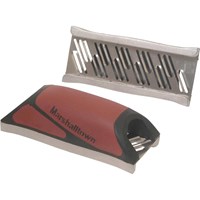
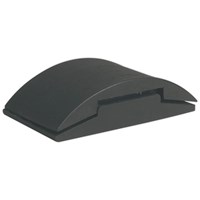
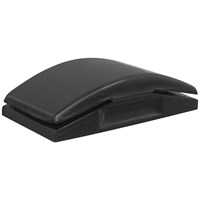
Application Type: Drywall work requires specialised pole sanders or rasp-style tools like the Marshalltown Dry Wall Rasp, whilst general surface preparation is best served by traditional sanding blocks. For curved surfaces, consider flexible or convex designs such as the Sealey Hook and Loop Convex Sanding Block.
Abrasive Attachment System: Hook and loop systems offer superior convenience for frequent abrasive changes, making them ideal for professional use where time is money. Traditional clamp systems or wrap-around designs are more economical for occasional use but slower to change.
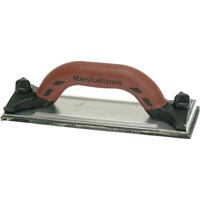
Handle Comfort: If sanding for extended periods, soft-grip handles like those on Marshalltown Durasoft models significantly reduce hand fatigue. The handle design should feel comfortable and provide good control for your hand size and working style.
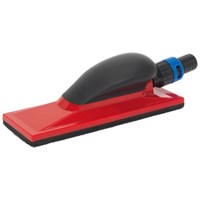
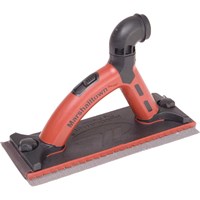
Dust Extraction: Some hand sanders feature dust extraction ports that connect to vacuum systems, essential for maintaining HSE-compliant working conditions. The Sealey Hand Sanding Block with Dust Extraction Port is ideal for cleaner working environments, particularly when working with materials that produce hazardous dust.
Build Quality: Professional-grade sanders from established brands withstand the rigours of daily site use better than economy options. Heavy-duty construction is worth the investment for tradespeople requiring reliable tools.
Safety Information
Always wear appropriate dust masks or respirators when sanding, particularly when working with MDF, treated timber, or old painted surfaces that may contain lead. The HSE provides clear guidance on controlling dust exposure under COSHH regulations. Use adequate ventilation when sanding indoors, and consider connecting dust extraction equipment where available to minimise airborne particles.
Wear safety glasses to protect eyes from dust and debris, especially during overhead work. Take regular breaks to avoid repetitive strain injuries, particularly during extended sanding tasks. When using pole sanders or working at height, ensure you're working from a stable platform and follow proper ladder or scaffold safety procedures.
Frequently Asked Questions
What's the difference between a hand sander and an electric sander?
Hand sanders are manual tools requiring physical effort, offering precise control, zero power requirements, and quieter operation. They're ideal for small areas, detailed work, and situations where powered tools aren't practical. Electric sanders work faster and with less effort but are heavier, require 240v power sources, generate more dust, and offer less fine control for delicate finishing work.
Can I use ordinary sandpaper with a hand sanding block?
Yes, most traditional sanding blocks work with standard sandpaper sheets cut to size. However, if your block features a hook and loop system, you'll need compatible hook and loop abrasive discs or sheets. Pre-cut sheets designed for specific block sizes offer the best fit and most efficient use of abrasive materials.
How do I choose the right sandpaper grit?
Start with coarse grits (40-80) for heavy material removal or stripping old finishes. Move to medium grits (100-150) for general smoothing and removing scratches from coarse sanding. Finish with fine grits (180-240) for final preparation before painting, or extra-fine grits (320+) for between-coat flatting or achieving ultra-smooth finishes on wood before varnishing.