
Hand Mixing Paddles

Pay in 3 interest-free payments on purchases from £20-£3000 with  . Learn more.
 Loading...
End of content
Error - No more pages to load
About Hand Mixing Paddles
Hand mixing paddles are versatile drill attachments that transform standard power drills into efficient mixing tools for construction materials and compounds. These robust accessories feature hexagonal shanks that fit securely into drill chucks, with paddle heads available in various configurations to suit different mixing tasks. From plastering wheels designed for smooth finishing compounds to heavy-duty spiral paddles built for dense mortars and adhesives, MyToolShed.co.uk stocks professional-grade mixing paddles that deliver consistent, lump-free results with minimal physical effort.
Whether you're blending plaster, tile adhesive, grout, paint, cement, or render, quality hand mixing paddles create powerful stirring action that draws material upwards from the bottom of containers, ensuring even distribution without introducing excessive air bubbles. Constructed from galvanised or zinc-plated steel for corrosion resistance, these durable tools offer excellent value by working with power drills you already own, eliminating the need for dedicated paddle mixers for many applications.
Applications
Hand mixing paddles are essential tools across numerous trades and projects:
- Plasterers – preparing wall finishes, skimming compounds, and rendering materials
- Tilers – mixing adhesives, grouts, and levelling compounds for floor and wall installations
- Bricklayers – blending mortar and pointing compounds for masonry work
- Decorators – preparing paint, textured coatings, and wallpaper paste
- General Builders – versatile mixing tasks across diverse construction projects
- Landscapers – mixing cement for paving, rendering for garden walls, and repair compounds
- DIY Enthusiasts – home improvement projects requiring material preparation
- Maintenance Teams – preparing repair materials for property upkeep
Choosing The Right Hand Mixing Paddles
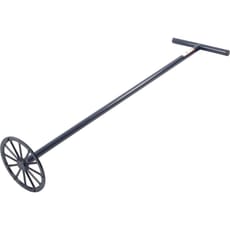
Paddle Design: Match the configuration to your materials. Plastering wheels with disc-style designs excel at smooth finishing compounds, whilst spiral paddles handle thicker mortars and adhesives more effectively. Consider the viscosity range you'll encounter most frequently.
Diameter Selection: Choose a size appropriate for your bucket dimensions. Paddles between 100-120mm suit standard trade buckets, whilst smaller 80mm options work well in confined spaces. Ensure at least 50mm clearance between paddle edge and container walls for proper circulation.
Construction Quality: Galvanised steel paddles from trusted brands like Faithfull resist corrosion from water-based materials and withstand demanding site conditions. Welded construction proves more durable than spot-welded alternatives, particularly under heavy loads.
Drill Compatibility: Verify the hexagonal shank fits your drill chuck capacity. Match paddle size to your drill's power – mixing heavy mortars demands at least 1000W from a corded drill or 18V from a cordless model to prevent stalling or overheating.
Safety Information
Always wear safety goggles or a face shield to protect against splashes, particularly when starting the drill. Dust masks are essential when adding powdered compounds. Use both hands with a side handle for secure control, and start at low RPM before gradually increasing speed to prevent material ejection. Never exceed recommended maximum speeds (typically 600-800 RPM). Ensure electrical connections remain away from water, and consider RCD protection on construction sites. Clean paddles thoroughly after each use and inspect regularly for damage or bent blades that could fail during operation.
Frequently Asked Questions
Can I use a hand mixing paddle with a cordless drill?
Yes, but ensure your cordless drill has sufficient power. An 18V model with at least 50Nm of torque handles most plastering and light adhesive mixing adequately. For heavy mortars or continuous professional use, a corded drill rated 1000W or above proves more reliable and won't suffer battery depletion mid-batch.
What's the difference between a plastering paddle and a general mixing paddle?
Plastering paddles feature disc or wheel designs with radial blades that create gentle circular flow patterns ideal for smooth finishing compounds without introducing air bubbles. General mixing paddles use spiral configurations producing more aggressive flow, better suited to thicker adhesives and mortars requiring vigorous blending action.
How do I prevent material splashing when mixing?
Always start your drill at low RPM to incorporate materials before gradually increasing speed. Keep the paddle fully submerged during operation and maintain speeds between 400-800 RPM for most applications. Position the paddle centrally in your bucket and avoid sudden acceleration that causes material ejection.