

Half Round Files
Pay in 3 interest-free payments on purchases from £30-2000 with  . Learn more.
 Loading...
End of content
Error - No more pages to load
About Half Round Files
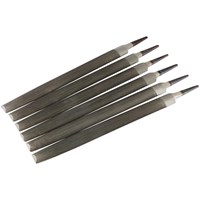
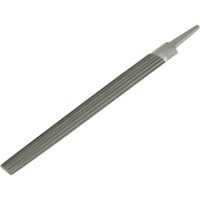
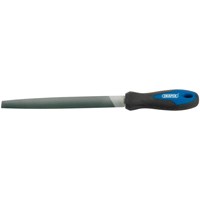
Half round files are versatile hand tools featuring a flat face on one side and a curved face on the other, making them essential for metalworking, woodworking, and general fabrication tasks. This dual-surface design allows tradespeople and DIY enthusiasts to work efficiently on both flat surfaces and concave curves without switching tools. The flat side excels at working on level surfaces and edges, whilst the rounded side is ideal for enlarging holes, filing curved edges, and creating smooth concave profiles in materials including steel, aluminium, brass, plastic, and hardwood.
MyToolShed.co.uk stocks professional-grade half round files from trusted manufacturers including Bahco, Draper, Nicholson, Faithfull, and Sealey, as well as specialised diamond files from DMT for hardened materials. Available in various lengths (typically 100mm to 300mm) and cut grades from coarse bastard cut for rapid material removal to smooth cut for fine finishing work, these essential workshop tools provide the precision and versatility needed to achieve professional results across diverse applications.
Applications
- Metalworkers and Fabricators - deburring, shaping, and finishing metal components
- Automotive Mechanics - modifying brackets, enlarging mounting holes, and general metal shaping
- Plumbers - smoothing pipe cuts and adjusting fittings
- Tool and Die Makers - precision fitting and finishing of dies, jigs, and fixtures
- Maintenance Engineers - general workshop repairs and component modification
- Gunsmiths and Locksmiths - precise metal fitting and adjustments
- Woodworkers and Carpenters - shaping hardwoods and adjusting joints
- Jewellers and Silversmiths - detailed metalwork using finer grades
- Model Makers - detailed shaping across various materials
- DIY Enthusiasts - home workshop tasks requiring both flat and curved filing surfaces
Choosing The Right Half Round Files
File Length: Smaller files (100-150mm) offer greater control for detailed work, whilst longer files (200-300mm) provide more efficient material removal on larger surfaces. For general workshop use, a 200mm file represents an excellent compromise between control and efficiency.
Cut Grade: Bastard cut removes material quickly but leaves rougher finishes, second cut balances speed and finish quality for general metalwork, and smooth cut creates fine finishes ideal for precision work. Many professionals at MyToolShed.co.uk keep multiple grades for different tasks.
Material Compatibility: Standard files work excellently on mild steel, aluminium, brass, and wood. For hardened steel, ceramics, or glass, invest in diamond files like the DMT Half Round Diamond File, which maintains cutting ability on extremely hard materials.
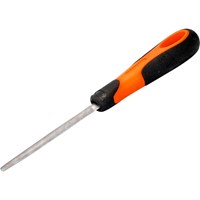
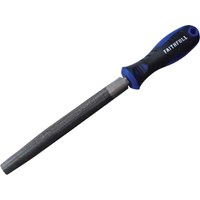
Handle Consideration: Professional brands like Bahco and Nicholson often sell files without handles, assuming tradespeople have their own. The Draper Half Round File and Handle provides a complete ready-to-use solution.
Cut Type: Double cut files remove material faster and suit general metalwork, whilst single cut files produce finer finishes and are better for draw filing techniques and finishing operations.
Safety Information
Handle Usage: Never use a file without a properly fitted handle. The exposed tang can cause serious hand injuries if the file catches or slips during use.
Work Holding: Always secure workpieces firmly in a vice or clamp before filing. Never hold small items in your hand whilst filing, as this creates significant injury risk.
Eye Protection: Wear safety glasses when filing, particularly with metals. Filing produces small particles that can cause eye injury, and hardened materials may produce sharp fragments.
Proper Technique: Apply pressure only on the forward stroke. Dragging a file backwards under pressure damages the teeth and reduces effectiveness.
Frequently Asked Questions
What's the difference between a half round file and a round file?
A half round file features one flat face and one curved face, making it versatile for both flat surfaces and concave curves. A round (or rat tail) file is cylindrical with a completely round profile, designed specifically for enlarging holes and filing tight internal curves. Half round files are generally more versatile for workshop use as they handle a wider variety of tasks.
How do I prevent my file from clogging when working with aluminium?
Aluminium readily clogs file teeth (called pinning). To prevent this, rub file chalk or ordinary blackboard chalk across the file teeth before use. Use a file card frequently to clean accumulated material, and consider using a coarser cut file which has deeper gullets that resist clogging.
Which direction should I file - push or pull?
Files are designed to cut on the forward (push) stroke only. Apply downward pressure whilst pushing the file away from you, then lift slightly and return without pressure. This technique preserves the file teeth and produces the most efficient material removal.