
Flat Nose Pliers

Pay in 3 interest-free payments on purchases from £20-£3000 with  . Learn more.
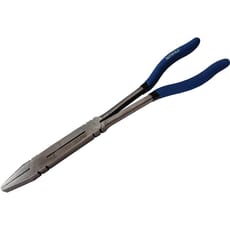
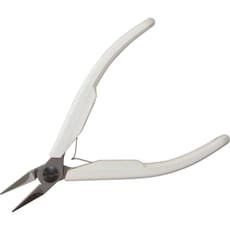
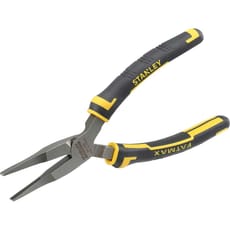
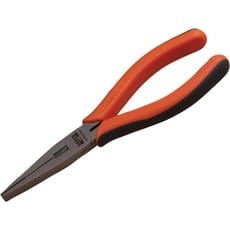
 Loading...
End of content
Error - No more pages to load
About Flat Nose Pliers
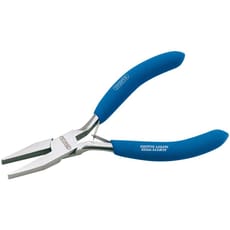
Flat nose pliers are essential precision hand tools characterised by their smooth, flat, parallel jaws that provide an even gripping surface without damaging delicate components. Unlike traditional pliers with serrated or curved jaws, these versatile tools excel at gripping, bending, and manipulating wire, sheet metal, electronics, jewellery components, and small fasteners in tight spaces. The parallel jaw design distributes pressure evenly across materials, making them indispensable for work requiring a firm, non-slip grip that won't leave marks.
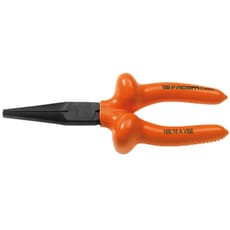
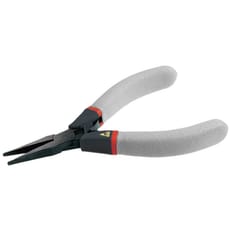
MyToolShed.co.uk stocks professional-grade flat nose pliers from renowned manufacturers including Bahco, Draper, Facom, Stanley, and Lindstrom. Available in sizes typically ranging from 115mm mini pliers for intricate work to 200mm long reach models for confined spaces, our collection includes standard carbon steel options for general workshop tasks, ESD-safe models for electronics work, and VDE-insulated versions rated to 1000V for electrical applications. Many feature ergonomic cushioned grips, return springs for automatic jaw opening, and box joint construction for precise alignment and extended tool life.
Applications
Flat nose pliers are widely used across numerous trades and industries:
- Electricians and Sparkies – Installing terminals, forming wire, holding components during circuit assembly, particularly using insulated models for live work complying with HSE regulations
- Electronics Technicians – PCB assembly, component handling, wire forming in tight spaces, typically specifying ESD-safe versions to protect sensitive circuitry
- Jewellers and Watchmakers – Precision manipulation of delicate metals, wire work, stone setting, and detailed assembly requiring non-marring grip
- Automotive Mechanics – Removing clips, working with split pins, accessing fasteners in confined engine bays
- Model Makers and Hobbyists – Bending wire armatures, holding small parts during gluing, precision assembly work
- Plumbers and Heating Engineers – Gripping compression fittings, working with small fasteners in awkward positions
- Maintenance Engineers – Equipment repair, accessing components in control panels and machinery
Choosing The Right Flat Nose Pliers
Size and Jaw Width: Compact mini pliers (115-130mm) suit intricate electronics and jewellery work, whilst standard sizes (150-160mm) handle general workshop tasks. Long reach models (180-200mm) access deep or confined spaces. Consider the component sizes you'll typically handle when selecting jaw width.
Material and Construction: Carbon steel offers excellent strength for general use, whilst chrome vanadium provides enhanced toughness and corrosion resistance. Box joint construction ensures jaw alignment remains true throughout the tool's life. Premium brands like Lindstrom and Bahco feature precisely machined jaws for professional-grade performance.
Specialised Requirements: For electrical work on live circuits, specify VDE-insulated pliers rated to 1000V meeting EN/IEC 60900 standards to comply with Electricity at Work Regulations 1989. Electronics professionals should choose ESD-safe models to prevent component damage from static discharge. MyToolShed.co.uk stocks both Facom VSE Series insulated and ESD-safe options for these specialist applications.
Handle Design: Ergonomic cushioned grips reduce hand fatigue during extended use. Return springs automatically open jaws between operations, valuable for repetitive tasks.
Safety Information
Electrical Safety: Never use standard pliers on live electrical circuits. Only VDE-insulated pliers tested to EN/IEC 60900 standards and rated to 1000V should be used for live work. Regularly inspect insulation for cracks or damage before use.
Eye Protection: Wear safety glasses when cutting wire or working with materials that may fracture or spring back unexpectedly.
Proper Use: Use pliers only for their intended purpose. Never use as hammers, pry bars, or extend leverage with pipes. Replace worn or damaged pliers rather than continuing to use compromised tools that may slip during use.
Frequently Asked Questions
What's the difference between flat nose pliers and long nose pliers?
Flat nose pliers have wide, flat, parallel jaws providing maximum gripping surface for holding and bending flat materials. Long nose (snipe nose) pliers feature tapered, pointed jaws designed for reaching into confined spaces. Flat nose pliers offer more gripping power, whilst long nose pliers provide superior access to tight areas.
Can I use regular flat nose pliers for electrical work?
Standard flat nose pliers must never be used on live electrical circuits. For safe electrical work, you must use VDE-insulated pliers meeting EN/IEC 60900 standards and rated to 1000V. These feature specially designed insulation protecting against electrical shock and comply with UK electrical safety regulations.
Why do I need ESD-safe flat nose pliers?
ESD (Electrostatic Discharge) safe pliers prevent static electricity build-up that can instantly damage sensitive electronic components like integrated circuits and processors. Though imperceptible to humans, static discharge destroys delicate circuitry. ESD-safe pliers are essential for electronics assembly, repair, and testing work.