

Feeler Gauges & Strips
Pay in 3 interest-free payments on purchases from £30-2000 with  . Learn more.




 Loading...
End of content
Error - No more pages to load
About Feeler Gauges & Strips
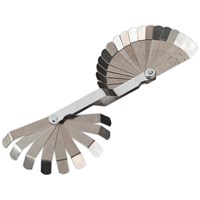
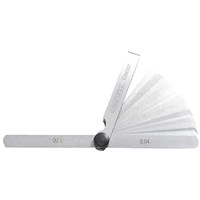
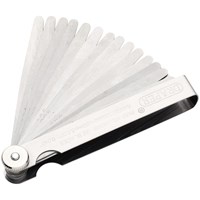
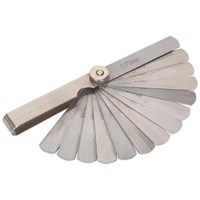
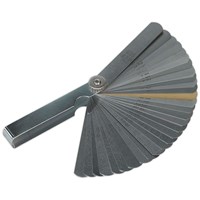
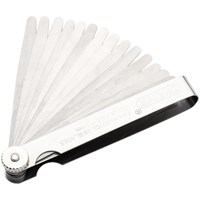
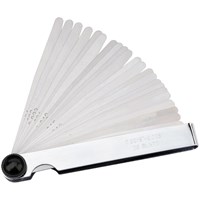
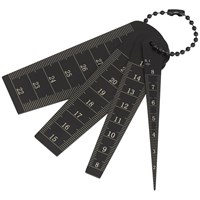
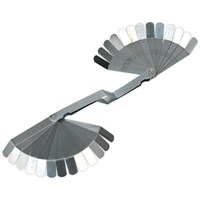
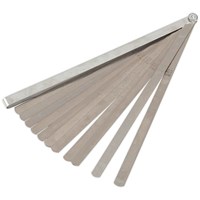
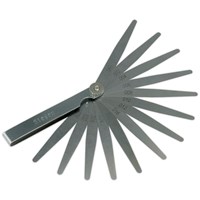
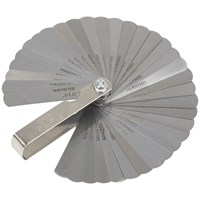
Feeler gauges and strips are precision measuring tools essential for checking gaps, clearances, and tolerances in mechanical assemblies. These thin metal blades, manufactured to exact thicknesses from hardened steel or brass, allow technicians to measure spaces too small for conventional measuring tools. Whether setting spark plug gaps, measuring valve clearances, checking bearing tolerances, or adjusting machinery alignment, feeler gauges provide the accuracy needed for professional automotive, engineering, and maintenance work.
MyToolShed.co.uk stocks feeler gauges from trusted brands including Sealey, Draper, Siegen, Facom, and Starrett. Available in metric and imperial configurations, these tools range from compact 10-blade sets for basic applications through to professional 36-blade combination sets with both steel and brass blades. Options include standard straight blade sets, angled gauges for restricted access, offset designs for awkward spaces, and dual-marked sets displaying both metric and imperial measurements for maximum versatility.
Applications
Feeler gauges are indispensable across numerous trades and industries:
- Automotive Technicians – Setting spark plug gaps, measuring valve clearances, checking piston ring gaps, and adjusting points on classic vehicles
- HGV and Plant Mechanics – Maintaining diesel engines, adjusting injector clearances, and checking tolerances on heavy machinery
- Agricultural Engineers – Servicing tractors, combine harvesters, and farm equipment requiring precise clearance settings
- Motorcycle Mechanics – Adjusting valve shims, setting ignition timing, and measuring chain wear
- Machinists and CNC Operators – Checking machine tool alignment, measuring work holding parallelism, and setting up precision equipment
- Maintenance Engineers – Inspecting industrial machinery, checking bearing clearances, and measuring shaft alignments
- Quality Control Inspectors – Verifying manufacturing tolerances and ensuring components meet specifications
- DIY Enthusiasts – Maintaining classic cars, servicing lawnmowers, and undertaking precision home workshop projects
Choosing The Right Feeler Gauges & Strips
Measurement System: Determine whether you need metric, imperial, or dual-marked gauges. UK and European machinery typically uses metric measurements, whilst American vehicles and older British machinery may require imperial gauges. Dual-marked sets from brands like Sealey offer maximum flexibility.
Blade Count: A 10-blade set suits occasional use, whilst 20 to 26-blade sets provide better coverage for regular automotive work. Professional technicians benefit from comprehensive 32 to 36-blade sets offering the finest increments and widest measurement range.
Blade Configuration: Standard straight gauges handle most applications, but angled or offset sets are essential for confined spaces deep within engine bays or industrial machinery.
Material Specification: Steel blades suit most applications, but combination sets with brass blades prevent scratching precision-machined surfaces and avoid magnetic interference near electronic ignition systems.
Build Quality: Professional-grade gauges from Draper, Facom, and Sealey feature hardened steel construction with etched markings that remain legible throughout the tool's lifetime. MyToolShed.co.uk stocks quality sets with robust holders that protect blades and keep them organised.
Frequently Asked Questions
What's the difference between metric and imperial feeler gauges?
Metric feeler gauges display measurements in millimetres (typically 0.05mm to 1.00mm), whilst imperial gauges use thousandths of an inch (usually 0.002" to 0.040"). Modern European machinery uses metric, whilst American vehicles and older British equipment may require imperial. Dual-marked gauges display both systems for maximum versatility.
Why do some feeler gauge sets include brass blades?
Brass blades are non-magnetic, preventing interference with electronic ignition systems and sensitive equipment. They're also softer than steel, reducing the risk of scratching precision-machined surfaces. Combination sets with both steel and brass blades offer versatility for different applications, with brass ideal for aluminium components and delicate finishes.
Can feeler gauges lose their accuracy over time?
Yes, feeler gauges can lose accuracy if bent, kinked, or corroded. Quality gauges are made from hardened steel to resist deformation, but forcing blades into tight gaps can permanently bend them. Store gauges properly, keep them clean and lightly oiled, and replace any visibly damaged blades to maintain measurement accuracy.