
Emergency Power Packs

Pay in 3 interest-free payments on purchases from £20-£3000 with  . Learn more.
Loading...
End of content
Error - No more pages to load
About Emergency Power Packs
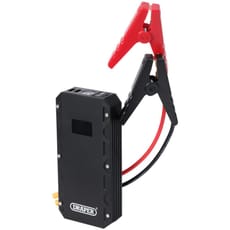
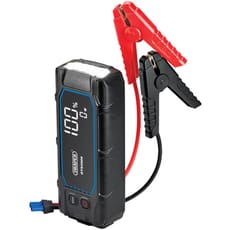
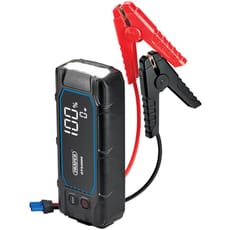
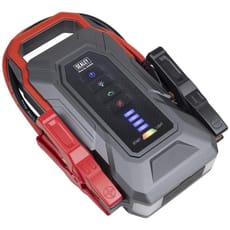
Emergency power packs, also known as jump starters or roadstart units, are portable battery-powered devices designed to jump-start vehicles with flat or depleted batteries without requiring another vehicle. MyToolShed.co.uk stocks a comprehensive range from trusted manufacturers including Sealey, Draper, and Einhell, offering starting currents from 500A up to 4400A to suit everything from small petrol cars to heavy-duty commercial vehicles and plant machinery. Modern emergency power packs combine traditional jump-starting capabilities with additional features such as USB charging ports, LED work lights, and integrated air compressors for inflating tyres.
These compact, self-contained units have become essential equipment for tradespeople, fleet operators, and vehicle owners across the UK, providing a reliable solution when you're stranded with a dead battery on site, at home, or on the roadside. Whether you need a compact lithium-ion unit for occasional use or a heavy-duty professional model for daily workshop or roadside assistance work, MyToolShed.co.uk offers power packs suitable for both 12V and 24V battery systems, with advanced lithium technology making them significantly lighter whilst maintaining impressive cranking power.
Applications
- Mobile mechanics and auto electricians requiring reliable jump-starting equipment for roadside callouts and workshop diagnostics
- Fleet managers and transport companies maintaining multiple vehicles and reducing downtime from battery failures
- Construction site managers and plant operators keeping machinery operational in remote locations without mains electricity access
- Agricultural workers and farmers managing tractors and utility vehicles across large properties
- Breakdown recovery and roadside assistance professionals who jump-start multiple vehicles daily
- Landscape gardeners and grounds maintenance teams operating petrol-powered equipment across various locations
- HGV drivers and haulage firms requiring heavy-duty 24V power packs for large diesel engines
- Caravan and motorhome owners needing backup power for leisure battery charging and emergency starting
- Taxi and courier drivers who cannot afford vehicle downtime and need immediate self-recovery solutions
- DIY enthusiasts and home mechanics maintaining their own vehicles independently
Choosing The Right Emergency Power Packs
Match voltage and capacity to your vehicles: Ensure you select a 12V unit for cars and light vans, or a 24V model for HGVs and heavy plant equipment. Check the power pack's engine displacement rating against your largest vehicle – diesel engines require higher cranking amps than equivalent petrol engines.
Consider peak and cranking amps: Whilst manufacturers prominently display peak amp ratings, the cranking amps figure gives a more realistic indication of starting power. A minimum of 400-600A cranking current suits most small petrol cars, whilst large SUVs, vans, and diesel vehicles benefit from 1000A or higher. Professional mechanics should look at models offering 2000A+ for reliable starting in all conditions.
Evaluate battery technology and portability: Lithium-ion power packs offer exceptional power-to-weight ratios and hold charge for months, making them ideal for keeping in the glovebox or toolkit. Traditional sealed lead-acid power packs remain popular for heavy-duty professional applications, offering higher capacity at lower cost with built-in trolley handles for workshop use.
Assess additional features: Many emergency power packs include USB charging ports, LED work lights, emergency flashers, and integrated air compressors. For tradespeople working on remote sites, these multi-function units eliminate the need to carry separate devices. Look for models with 240v mains charging capability and 12V vehicle charging sockets for recharging between jobs.
Check safety features: Essential safety features include reverse polarity protection, over-charge protection, short-circuit protection, and spark-proof clamps. Professional-grade units feature heavy-duty cases, charge status indicators, and robust clamps with strong springs.
Safety Information
Always follow correct jump-starting procedures: ensure both the power pack and vehicle are switched off before connecting. Attach the positive (red) clamp to the positive battery terminal first, then connect the negative (black) clamp to a suitable earth point on the vehicle's chassis or engine block, away from the battery and fuel system. Once connected, switch on the power pack, attempt to start the vehicle, then immediately disconnect in reverse order.
Keep the unit fully charged when in storage – most manufacturers recommend recharging every 3-6 months to prevent battery degradation. Never attempt to jump-start a visibly damaged, leaking, or frozen battery. Do not exceed the power pack's rated engine size or attempt multiple consecutive starts without allowing cooling time. Always wear appropriate PPE including safety glasses when working with batteries.
Frequently Asked Questions
Can I use a 12V power pack to jump-start a 24V vehicle?
No, you cannot safely use a 12V power pack on a 24V system. HGVs, large agricultural equipment, and some commercial vehicles use 24V electrical systems which require either a dedicated 24V power pack or a switchable unit offering both voltages. Using incorrect voltage risks damaging both the power pack and the vehicle's electrical system.
How long does a fully charged emergency power pack hold its charge?
Modern lithium-ion power packs typically retain charge for 6-12 months when stored properly, whilst traditional sealed lead-acid models generally need recharging every 3 months. Environmental factors affect this – units stored in cold garages or hot vans will self-discharge faster. It's good practice to check and top up charge monthly if the unit is kept for emergency use.
What's the difference between peak amps and cranking amps?
Peak amps represent the absolute maximum current the power pack can deliver for a fraction of a second, whilst cranking amps indicate the sustained current available whilst actually turning the engine over. Cranking amps are the more important figure for real-world starting ability. Always check both specifications, focusing on cranking amps to match your engine requirements.