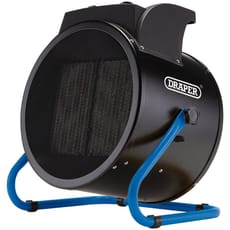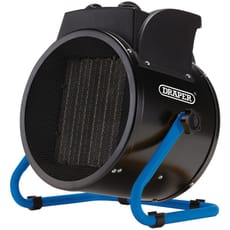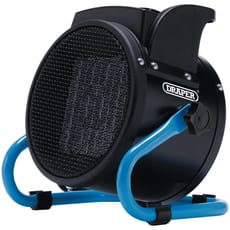
Electric Space Heaters
Pay in 3 interest-free payments on purchases from £30-2000 with
. Learn more.
Loading...
End of content
Error - No more pages to load
About Electric Space Heaters

Electric space heaters are essential heating solutions for workshops, garages, construction sites, warehouses, and commercial premises where temporary or supplementary heating is required. Unlike traditional central heating systems, these portable units provide immediate, localised warmth exactly where it's needed, making them ideal for tradespeople working in unheated spaces or for businesses looking to heat specific zones efficiently. Running on standard 230V mains electricity, electric space heaters offer a clean, fume-free alternative to gas or oil-powered heating equipment, making them suitable for both indoor and outdoor covered applications.
Our range includes both fan-forced and PTC (Positive Temperature Coefficient) ceramic heating technologies from trusted brands like Draper and Sealey. Fan-forced models rapidly circulate warm air throughout medium to large spaces, whilst PTC heaters deliver consistent, self-regulating heat with enhanced safety features. Available in heat outputs ranging from 2kW domestic models through to powerful 9kW industrial units, these heaters are built to withstand the demands of professional site work whilst providing reliable performance in harsh conditions.
Modern electric space heaters feature adjustable thermostats, multiple heat settings, and safety cut-out switches to prevent overheating. Many industrial models come with robust powder-coated steel casings, carrying handles for easy transportation, and splash-proof housings rated to IP24 or higher for use in damp workshop environments. Whether you're a builder requiring temporary heat in a property under renovation, a mechanic needing to warm a cold garage, or a warehouse manager maintaining comfortable working conditions, electric space heaters deliver efficient, controllable warmth without the complexity of fuel storage or ventilation requirements.
Jargon Buster
- PTC (Positive Temperature Coefficient) Ceramic Heating: Advanced self-regulating heating technology using ceramic elements that automatically adjust their resistance as temperature increases, providing consistent heat output whilst reducing fire risk and energy consumption compared to traditional coil heaters.
- Heat Output (kW): The power rating measured in kilowatts that indicates the heater's warming capacity. A 2kW heater suits small workshops up to 20m², whilst 3-5kW models heat larger garages, and 9kW industrial units are designed for warehouses and substantial commercial spaces.
- Thermostat Control: An automatic temperature regulation system that cycles the heater on and off to maintain your desired ambient temperature, improving energy efficiency and preventing overheating whilst ensuring consistent comfort levels throughout your workspace.
- IP Rating (Ingress Protection): A two-digit code (e.g., IP24) indicating protection against solid objects and liquids. The first digit rates dust protection (0-6), the second rates moisture protection (0-8). IP24 offers splash protection suitable for most workshop environments.
- Thermal Cut-Out: An essential safety feature that automatically disconnects power if the heater exceeds safe operating temperatures or if airflow is blocked, preventing fire hazards and extending the lifespan of heating elements.
- Fan-Forced Heating: A heating method that uses an internal fan to distribute warm air rapidly throughout a space, providing quicker heat-up times compared to radiant heaters, making them ideal for larger areas requiring fast temperature increases.
Who Uses Electric Space Heaters?
- Builders and Construction Workers: Heating unfinished properties, drying plaster and paint, and maintaining comfortable working conditions on site during cold weather
- Motor Mechanics and Vehicle Technicians: Warming garages and workshops to improve working comfort and prevent tools and components from becoming uncomfortably cold
- Warehouse and Logistics Managers: Providing localised heating in large storage facilities, loading bays, and distribution centres without heating entire buildings
- Manufacturing and Factory Supervisors: Supplementing heating in production areas, maintaining optimal working temperatures for staff and temperature-sensitive processes
- Painters and Decorators: Accelerating drying times for paint, varnish, and plaster whilst maintaining comfortable application temperatures
- Gardeners and Landscapers: Heating greenhouses, potting sheds, and covered outdoor working areas during winter months
- Event Organisers and Marquee Hirers: Providing temporary heating solutions for outdoor events, exhibitions, and temporary structures
- Property Maintenance Teams: Emergency heating during boiler breakdowns, heating vacant properties to prevent frost damage, and warming spaces before central heating installation
- DIY Enthusiasts and Home Workshop Owners: Heating garages, sheds, and home workshops for comfortable year-round project work
How to Choose the Right Electric Space Heaters
Calculate Required Heat Output: As a general rule, you'll need approximately 100 watts per square metre for a well-insulated space, or 150W/m² for poorly insulated areas. A 2kW heater suits spaces up to 20m², a 3kW model covers 30m², whilst 5-9kW industrial heaters are designed for warehouses and large commercial premises. Consider ceiling height, insulation quality, and draughts when sizing your heater.
Choose Your Heating Technology: PTC ceramic heaters offer self-regulating heat with lower surface temperatures and reduced fire risk, making them ideal for enclosed workshops and areas with restricted ventilation. Fan-forced models provide faster heat distribution and are better suited to larger, open spaces requiring rapid temperature increases. Consider whether you need focused directional heat or general ambient warming.
Consider Power Supply and Portability: Verify your electrical supply can handle the load – a 3kW heater draws approximately 13A from a 230V supply, maxing out a standard 13A socket. Higher-output industrial models may require dedicated 16A or 32A supplies with appropriate cabling. Check for carrying handles, compact designs, and cable storage for site-to-site transportation.
Assess Environmental Protection: For damp workshops, garages, or semi-outdoor covered areas, look for IP24-rated splash-proof housings. Construction sites and dusty environments benefit from robust powder-coated steel casings that resist corrosion and impact damage. Consider models with built-in safety guards to prevent accidental contact with heating elements.
Evaluate Safety Features: Essential safety features include thermal cut-out protection, tip-over switches (for freestanding models), overheat protection, and cool-touch housings where applicable. Models meeting HSE workplace heating guidelines should be prioritised for commercial and industrial applications.
Look for Practical Controls: Adjustable thermostats allow precise temperature control and energy savings. Multiple heat settings (typically 1kW, 2kW, 3kW combinations) provide flexibility for different conditions. Industrial models often feature external control knobs and clear temperature gauges for easy adjustment whilst wearing work gloves.
Popular Accessories
- Industrial Extension Leads: Heavy-duty 13A or 16A rated extension cables with thermal cut-out protection for safely positioning heaters where needed
- Cable Reels: Professional-grade cable management solutions with thermal overload protection and multiple sockets for powering heaters across large sites
- Timer Switches: Programmable timers to control heating schedules, reducing energy costs by warming spaces only when occupied
- Thermometers and Hygrometers: Temperature and humidity monitoring equipment to optimise heater settings and ensure proper environmental conditions
- RCD Adapters: Residual current device protection for additional electrical safety when using heaters in damp or outdoor covered environments
- Heater Stands and Brackets: Mounting solutions for directing heat flow and keeping heaters safely positioned away from flammable materials
- Protective Storage Cases: Durable carrying cases for transporting heaters between sites whilst protecting controls and heating elements from damage
Safety Information
Electrical Safety: Always connect electric space heaters directly to wall sockets or appropriately rated extension leads – never daisy-chain multiple adaptors. Ensure your electrical circuit can handle the heater's amperage draw, and never use damaged cables or plugs. All equipment should be tested and tagged according to HSE portable appliance testing (PAT) requirements, particularly in commercial environments.
Positioning and Clearances: Maintain minimum clearances of 1 metre from combustible materials including timber, cardboard, textiles, and flammable liquids. Never position heaters directly beneath shelving or in confined spaces with restricted airflow. Ensure units are placed on stable, level surfaces away from walkways where they could be knocked over. Never cover heaters or obstruct air intake and exhaust vents.
Ventilation Requirements: Whilst electric heaters produce no combustion fumes, adequate ventilation remains important to prevent excessive dryness and maintain air quality. In sealed workshops or confined spaces, crack a window periodically to introduce fresh air, particularly when using high-output industrial models for extended periods.
Supervision and Shutdown: Never leave electric space heaters operating unattended for extended periods, especially overnight or when premises are vacated. Always switch off and unplug heaters when leaving work sites. Allow units to cool completely before covering or storing. Keep fire extinguishers and appropriate firefighting equipment accessible in accordance with workplace fire safety regulations.
Moisture and Splash Protection: Even splash-proof IP24-rated models should not be used in areas with direct water spray or standing water. Keep heaters away from sinks, wet cutting operations, and pressure washers. If heaters become wet, disconnect power immediately and allow thorough drying before attempting to use again.
Frequently Asked Questions
What size electric space heater do I need for my workshop?
Calculate approximately 100-150 watts per square metre depending on insulation quality. A typical single garage (15-20m²) requires a 2-3kW heater, whilst a double garage or small workshop (30-40m²) needs 3-5kW. Larger warehouses and industrial spaces benefit from multiple strategically placed heaters or single high-output 9kW industrial models. Remember to account for ceiling height, door openings, and draughts which increase heating requirements.
Can I run an electric space heater from a standard 13A socket?
Most domestic and light commercial electric heaters up to 3kW operate safely from standard 13A sockets, though they'll draw the full socket capacity. Higher-output 5-9kW industrial models require dedicated 16A or 32A supplies with appropriate cabling installed by a qualified electrician. Never overload circuits or use underrated extension leads, as this creates serious fire risks.
What's the difference between PTC and fan-forced heaters?
PTC (Positive Temperature Coefficient) ceramic heaters use self-regulating ceramic elements that automatically adjust resistance as temperature increases, providing consistent heat with enhanced safety and energy efficiency. Fan-forced heaters use traditional elements with fans to rapidly distribute heat, offering faster warm-up times for larger spaces. PTC models generally run cooler and safer, whilst fan-forced units provide quicker results in draughty or poorly insulated areas.
Are electric space heaters expensive to run?
Running costs depend on your electricity tariff and usage duration. A 3kW heater running continuously costs approximately £1-1.50 per hour based on typical UK commercial electricity rates. Using built-in thermostats to cycle heating on/off and selecting appropriate heat settings for conditions significantly reduces consumption. Electric heaters convert nearly 100% of energy to heat, making them highly efficient compared to fossil fuel alternatives, with no fuel storage or ventilation infrastructure required.
Can I use electric space heaters on construction sites?
Yes, electric space heaters are ideal for construction sites provided adequate electrical supply is available. Choose robust industrial models with IP24 splash protection, powder-coated steel housings, and built-in safety guards. Ensure proper PAT testing, maintain safe clearances from building materials, and position heaters where they won't be knocked over or create trip hazards. Always comply with site-specific health and safety requirements and HSE workplace heating guidance.