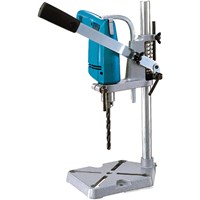
Drill Stands

Pay in 3 interest-free payments on purchases from £30-2000 with PayPal Pay in 3. Learn more.

Showing 5 results

Showing 5 results

Loading Loading...

End of content

Error - No more pages to load

About Drill Stands

Drill stands are precision accessories that transform standard portable drills into accurate, bench-mounted drilling machines, providing the control and consistency of a pillar drill at a fraction of the cost and footprint. By securely mounting your corded drill into a vertical stand, you gain the ability to drill perfectly perpendicular holes with repeatable depth control, making them essential equipment for any workshop where accuracy matters. These versatile tools bridge the gap between handheld drilling and dedicated drill press machinery, offering tradespeople and serious DIY enthusiasts a cost-effective solution for precision work.

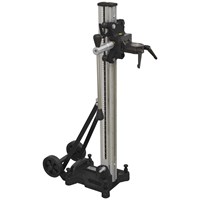
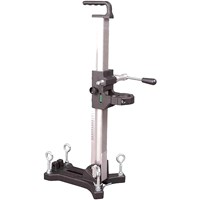
The most common drill stands accommodate corded electric drills with a standard 43mm collar fitting, where the drill's auxiliary handle is removed and the body is secured into the stand's collar mechanism. However, specialist variants are also available, including diamond core drill stands designed specifically for heavy-duty masonry drilling applications, and mixing drill stands engineered to handle the unique demands of power mixers used in construction and decorating. Most models feature a rack-and-pinion or lever-operated mechanism for smooth, controlled descent, along with adjustable depth stops for consistent hole depths.

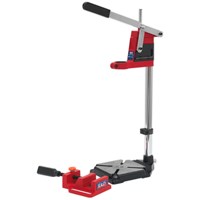
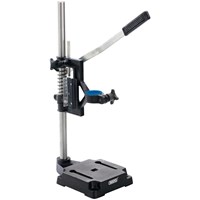
Available from trusted brands including Makita, Sealey, and Draper, drill stands range from portable units that can be clamped to work surfaces or even used on vertical walls, through to heavy-duty bench-mounted models with cast iron bases for maximum stability. Whether you're drilling precise holes for dowel joinery, working with forstner bits for furniture making, or need the accuracy for metalworking applications, a quality drill stand delivers professional results without the expense and space requirements of a full-sized pillar drill.

Jargon Buster

  • 43mm Collar: The standardised diameter mounting system used by most corded drills and drill stands, allowing secure fitment once the drill's side handle is removed. This universal sizing ensures compatibility across different drill brands.
  • Rack and Pinion Mechanism: A gearing system consisting of a toothed rack (straight bar) and pinion (circular gear) that converts the rotational movement of the operating handle into smooth, controlled vertical movement of the drill head, providing precise feed control.
  • Diamond Core Drill Stand: A heavy-duty specialist stand engineered specifically for diamond core drilling through masonry, concrete, and stone. These robust stands typically feature reinforced construction and enhanced stability to handle the substantial forces involved in coring operations.
  • Depth Stop: An adjustable mechanical stop that limits the downward travel of the drill, ensuring all holes are drilled to exactly the same depth. Essential for consistent results in repetitive drilling tasks and preventing drill-through on blind holes.
  • Base Plate: The flat mounting platform at the bottom of the stand, usually featuring pre-drilled holes for permanent bench mounting or slots for clamp attachment. Larger, heavier base plates provide greater stability during operation.
  • Travel/Stroke Length: The maximum vertical distance the drill chuck can move from its highest to lowest position, determining the maximum depth of hole that can be drilled in a single operation.

Who Uses Drill Stands?

Drill stands are valuable precision tools used across various trades and applications:

  • Carpenters and Joiners: For accurate dowel hole drilling, furniture assembly, and precise joinery work requiring perpendicular holes
  • Cabinet Makers: Essential for shelf pin holes, hinge boring with forstner bits, and precision drilling in fine woodwork
  • Metalworkers and Fabricators: For drilling accurate holes in sheet metal, box section, and other metal components where precision is critical
  • Electricians: When drilling through panel boxes, enclosures, and mounting plates requiring perfect 90-degree angles
  • Plumbers: For drilling mounting holes in fixtures and fittings where accuracy prevents misalignment issues
  • Construction Professionals: Using diamond core drill stands for creating service penetrations through concrete and masonry
  • Model Makers and Hobbyists: For precision work on small components where handheld drilling lacks the necessary accuracy
  • Maintenance Engineers: For on-site drilling tasks requiring portable accuracy without transporting heavy pillar drills
  • DIY Enthusiasts: Home workshop users seeking professional-quality results without investing in full-sized machinery

How to Choose the Right Drill Stands

Compatibility and Collar Size: Verify that the stand accepts your drill's collar diameter – most standard stands accommodate 43mm collars, but always check your drill specifications. Consider whether you need a universal stand for standard drills or a specialist model for diamond core drills or mixing applications.

Construction Quality and Stability: Heavier cast iron or steel construction provides superior vibration dampening and accuracy compared to lightweight alternatives. Examine the base plate size and weight – larger, heavier bases deliver better stability, particularly important when drilling metal or using larger diameter bits. Check for quality in the rack-and-pinion mechanism, as smooth operation directly affects drilling precision.

Mounting Options: Decide whether you need permanent bench mounting, clamp-on portability, or the versatility to work on both horizontal and vertical surfaces. Some models include integrated clamping systems, while others require separate purchase of clamps or permanent bolt-down installation.

Travel Distance and Capacity: Consider the maximum drilling depth you'll require – stroke length varies significantly between models, typically ranging from 60mm to 150mm or more. Also check the maximum distance from the column to the chuck centre (throat depth), which determines how far from an edge you can drill.

Depth Stop Functionality: Look for clearly marked, easy-to-adjust depth stops with fine adjustment capability. This feature is crucial for repetitive drilling tasks and consistent results across multiple workpieces.

Brand and Warranty: Established brands like Makita, Sealey, and Draper offer proven reliability and after-sales support. Professional tradespeople should prioritise models with comprehensive warranties and readily available replacement parts.

Popular Accessories

  • Drill Press Vices: Purpose-designed vices that bolt to the drill stand base plate, securely holding workpieces for safe, hands-free drilling operations
  • Clamp Sets: Heavy-duty G-clamps or quick-release clamps for securing portable drill stands to benches, tables, or other work surfaces
  • Drill Bit Sets: HSS twist drill sets, forstner bit sets, and brad point bits for wood – all benefit from the accuracy a drill stand provides
  • Diamond Core Drill Bits: Essential accessories for diamond core drill stands when drilling masonry, concrete, or stone
  • Depth Stop Extensions: Additional or replacement depth stop rods for enhanced versatility
  • Auxiliary Tables: Extended work surfaces that attach to the base plate for supporting larger workpieces
  • Chuck Key Holders: Magnetic or clip-on holders that keep chuck keys within easy reach
  • Cutting Lubricants: Specialist cutting fluids for metalworking applications to extend bit life and improve finish quality

Safety Information

Personal Protective Equipment: Always wear appropriate safety glasses or a face shield when operating a drill stand, as rotating bits can throw debris towards the operator. Hearing protection is advisable for extended use or when drilling metal. Avoid loose clothing, jewellery, and tie back long hair to prevent entanglement with rotating components.

Workpiece Security: Never hold workpieces by hand whilst drilling – always use a drill press vice, clamps, or other securing methods. Inadequately secured work can spin violently if the bit binds, causing serious injury. This is particularly critical when drilling metal or breaking through material where the bit can suddenly grab.

Installation and Stability: Ensure the drill stand is securely mounted or clamped before use. An unstable stand can tip during operation, especially when using larger diameter bits or applying significant feed pressure. Verify that bench-mounted stands are bolted through solid material capable of supporting operational forces.

Electrical Safety: Inspect drill power cables regularly for damage, and ensure connections comply with UK electrical standards. Always disconnect the drill from the mains supply before changing bits, adjusting the stand, or performing any maintenance. Use a residual current device (RCD) when working in damp conditions or on construction sites as recommended by the HSE.

Operational Precautions: Allow the drill to reach full speed before bringing the bit into contact with the workpiece. Apply steady, controlled feed pressure – forcing the drill can cause bit breakage or workpiece movement. When drilling through material, reduce feed pressure as the bit approaches breakthrough to prevent grabbing and splintering.

Frequently Asked Questions

Can I use my cordless drill with a drill stand?

Most standard drill stands are designed specifically for corded drills with 43mm collars and won't accommodate cordless models due to different body shapes and the absence of a collar fitting. However, some manufacturers produce specialist stands designed for specific cordless drill models. If precision drilling is a regular requirement, a corded drill and compatible stand offers the most versatile and cost-effective solution.

What's the difference between a drill stand and a pillar drill?

A drill stand converts your existing portable drill into a bench-mounted drilling machine, whilst a pillar drill is a dedicated, purpose-built machine with an integrated motor. Pillar drills generally offer greater power, larger capacity, variable speed control, and superior rigidity, but cost significantly more and require substantial workshop space. Drill stands provide an economical entry point to precision drilling, ideal for occasional use or space-limited workshops.

Do I need a special drill stand for diamond core drilling?

Yes, diamond core drilling through masonry and concrete generates substantial forces that standard drill stands aren't engineered to handle. Diamond core drill stands feature reinforced construction, more robust mounting systems, and enhanced stability specifically designed for these demanding applications. Using a standard drill stand for core drilling risks damage to the equipment and potential safety hazards.

How do I ensure perfectly vertical holes?

Quality drill stands inherently provide vertical alignment when properly installed. Ensure the stand's base plate is mounted to a flat, level surface – use a spirit level to verify. Check that the drill is securely tightened in the collar with no movement. Regular maintenance of the rack-and-pinion mechanism ensures smooth, true vertical travel. For critical applications, use a square against the drill bit and base plate to verify perpendicularity before drilling.

Can drill stands be used for repetitive production work?

Absolutely – drill stands excel at repetitive drilling tasks thanks to their adjustable depth stops and consistent alignment. Set the depth stop once, and every subsequent hole will be drilled to exactly the same depth. For production work, consider adding a drill press vice with a fence or stop system to position workpieces consistently. However, for high-volume commercial production, a dedicated pillar drill may offer better efficiency and durability.

^ Top