
Dial Indicators

Pay in 3 interest-free payments on purchases from £20-£3000 with  . Learn more.
 Loading...
End of content
Error - No more pages to load
About Dial Indicators
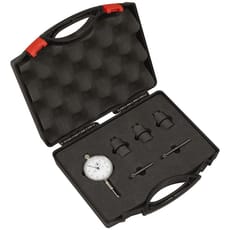
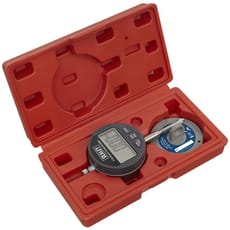
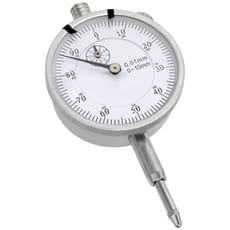
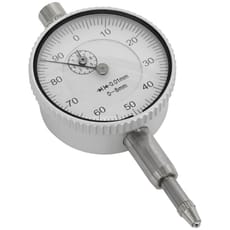
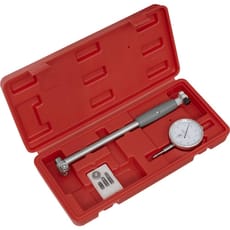
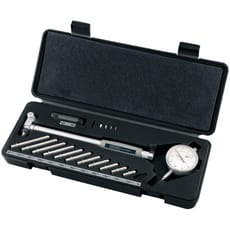
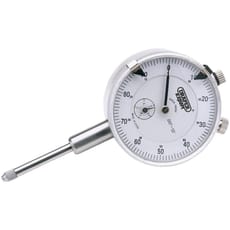
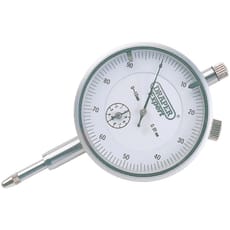
Dial indicators are precision measuring instruments essential for engineering, machining, and quality control applications where accuracy is paramount. These mechanical or digital gauges measure small linear distances with exceptional precision, typically reading down to 0.01mm or 0.001" increments. MyToolShed.co.uk stocks a comprehensive range including metric and imperial dial indicators, dial test indicator kits, bore gauge sets, and complete packages with magnetic bases for versatile positioning on machine tools and inspection equipment.
Whether you're checking component tolerances on a lathe, measuring bearing clearances, setting up CNC machinery, or inspecting manufactured parts for quality assurance, these instruments provide the repeatable accuracy demanded by professional engineering work. Available from trusted brands including Draper Expert, Sealey, and Facom, our dial indicators meet the exacting standards of British manufacturing and precision engineering environments.
Applications
Dial indicators are indispensable tools across numerous precision trades and industries:
- Machinists and CNC Operators: Setting up workpieces, checking component tolerances, and verifying machine accuracy on lathes, mills, and machining centres
- Mechanical Engineers: Quality control inspections, dimensional verification, and prototype testing in manufacturing facilities
- Automotive Technicians: Measuring crankshaft runout, checking brake disc flatness, and verifying engine component tolerances
- Toolmakers and Die Makers: Precision tool setup, mould alignment, and quality inspection of manufactured tooling
- Metrology Technicians: Professional inspection and measurement in quality assurance laboratories
- Maintenance Engineers: Checking bearing clearances, shaft alignment, and machine calibration during preventative maintenance
- Fabricators and Welders: Verifying flatness and alignment of fabricated assemblies before and after welding
Choosing The Right Dial Indicators
Analogue vs Digital: Traditional dial indicators offer robust mechanical reliability with no batteries required and excellent tactile feedback for workshop environments. Digital models provide easier reading, dual unit displays, and better visibility in poor lighting conditions.
Resolution and Accuracy: Standard dial indicators with 0.01mm resolution suit most machining applications. High-precision models offering 0.001mm resolution are necessary for metrology work and extremely tight tolerances.
Measurement Range: Select plunger travel based on typical applications. Shorter travel (10mm) provides greater rigidity for small variations, whilst longer travel (25-50mm) offers versatility for larger dimensional checks.
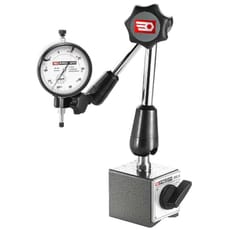
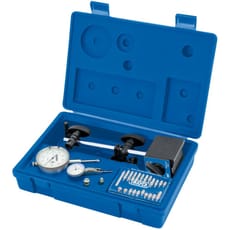
Mounting Requirements: Complete kits with magnetic bases and adjustable arms provide maximum versatility. Bore gauge sets include specialised mounting for internal measurement work.
Metric vs Imperial: UK engineering predominantly uses metric measurements, though some industries require imperial readings. MyToolShed.co.uk stocks both formats, with digital models offering dual-reading convenience.
Frequently Asked Questions
What's the difference between a dial indicator and a dial test indicator?
A standard dial indicator measures linear movement with the plunger perpendicular to the dial face. A dial test indicator (DTI) has a lever arm with the contact point at right angles, making it better suited for measuring surface runout and positioning work on machine tools.
How often should dial indicators be calibrated?
For professional metrology and quality control requiring traceability, annual calibration against certified standards is recommended. In general workshop use, verify accuracy periodically using gauge blocks, and recalibrate after suspected damage or heavy use.
What maintenance do dial indicators require?
Keep the plunger and contact point clean and lightly lubricated with precision instrument oil. Avoid swarf, coolant, or abrasive dust entering the mechanism. Store in protective cases away from magnetic fields and extreme temperatures for optimal longevity.