
Connector Nuts
Pay in 3 interest-free payments on purchases from £30-2000 with  . Learn more.
 Loading...
End of content
Error - No more pages to load
About Connector Nuts
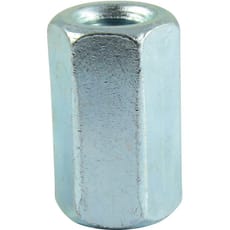
Connector nuts, also known as barrel nuts or coupling nuts, are specialised fastening components designed to join two male-threaded bolts, screws, or threaded rods together in a straight line. Unlike standard hex nuts that close at one end, connector nuts feature internal threads running through their entire length, allowing them to create secure, in-line connections between separate threaded components. MyToolShed.co.uk stocks bright zinc plated connector nuts from trusted manufacturers including TIMCO and SIRIUS, providing excellent corrosion resistance suitable for both indoor and outdoor applications.
These hexagonal fasteners are invaluable for construction, furniture assembly, metalwork, and general engineering projects where standard bolting methods prove impractical. The bright zinc plated finish not only protects against rust and oxidation but also delivers a clean, professional appearance ideal for visible fixings. The hex design enables straightforward installation using standard spanners or socket sets, ensuring efficient work without specialist tools.
Applications
Connector nuts are versatile fasteners used across numerous trades and industries:
- Carpenters and Joiners - Furniture construction, cabinet assembly, and knock-down fittings requiring easy dismantling
- Shopfitters - Installing retail displays, shelving systems, and modular fixtures with in-line threaded connections
- Metal Fabricators - Joining threaded rod in framework construction, balustrades, and structural assemblies
- Construction Workers - Temporary works, scaffolding accessories, and adjustable support systems
- Furniture Makers - Creating professional flat-pack furniture with concealed fixings and secure joints
- Maintenance Engineers - Repairs and modifications where standard bolting isn't accessible
- DIY Enthusiasts - Home workshop projects, garden structures, and custom furniture builds
Choosing The Right Connector Nuts
Thread Size and Pitch: Ensure the internal thread matches your bolts or threaded rod exactly. Metric sizing (M6, M8, M10) is standard in the UK. Forcing mismatched threads will damage components and weaken joints.
Length Requirements: Longer connector nuts provide more thread engagement and stronger connections, whilst shorter versions suit space-restricted installations. Aim for thread engagement equal to at least one times the bolt diameter for secure fixing.
Material and Finish: The bright zinc plated connector nuts available at MyToolShed.co.uk offer good corrosion resistance for most indoor applications and sheltered outdoor use. For marine environments or high moisture exposure, consider stainless steel alternatives.
Hex Size (AF): Consider accessibility when selecting hex size. Ensure adequate clearance and appropriate spanners or sockets are available for installation and future maintenance.
Load Requirements: For structural applications or high-stress joints, verify the connector nut's material grade and size are suitable for expected loads.
Frequently Asked Questions
What's the difference between a connector nut and a standard hex nut?
A standard hex nut has internal threads closed at one end, designed to secure to a single bolt. A connector nut has threads running through its entire length, allowing it to join two separate bolts or threaded rods together in a straight line.
Can connector nuts be used outdoors?
Yes, bright zinc plated connector nuts offer reasonable corrosion resistance for many outdoor applications, particularly in sheltered locations. For coastal areas or constant moisture exposure, stainless steel provides superior long-term durability.
How do I prevent connector nuts from loosening?
Use a standard hex nut on one or both ends as a lock nut, apply thread-locking compound, use spring washers to maintain tension, or slightly deform a thread after installation. The method depends on whether you need the joint to remain adjustable or permanently fixed.