

Compression Testers
Pay in 3 interest-free payments on purchases from £30-2000 with  . Learn more.
 Loading...
End of content
Error - No more pages to load
About Compression Testers
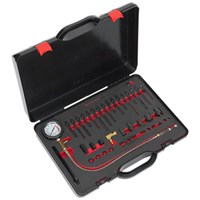
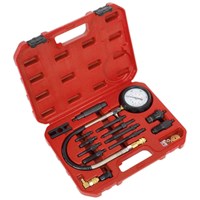
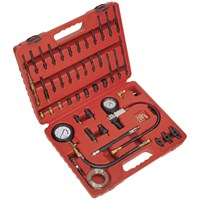
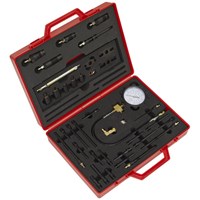
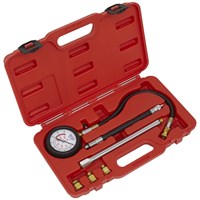
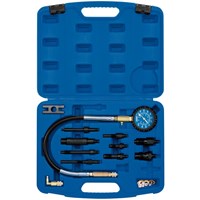
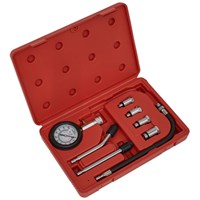
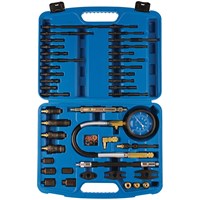
Compression testers are precision diagnostic instruments used to measure cylinder pressure in petrol and diesel engines, helping mechanics and technicians identify worn piston rings, faulty valves, blown head gaskets, and other internal engine problems. By measuring the compression in each cylinder, these tools provide critical data for diagnosing issues such as rough idling, power loss, excessive oil consumption, and poor fuel economy. MyToolShed.co.uk stocks a comprehensive range of compression testing equipment from leading brands including Sealey and Draper, with kits ranging from compact 6-piece sets for mobile mechanics to extensive 37-piece master kits covering both petrol and diesel applications.
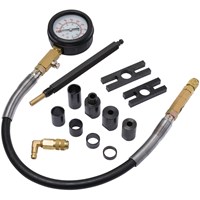
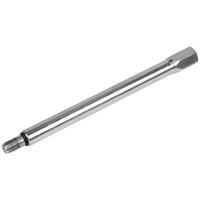
Modern compression test kits include analogue or digital gauges, multiple adaptors for different spark plug and glow plug thread sizes, and extended hoses for accessing recessed cylinders in contemporary engine bays. Professional kits may also feature leakage testing capabilities and Top Dead Centre (TDC) finding tools essential for timing belt replacement work. Whether you're running an independent garage, maintaining a vehicle fleet, or working as a mobile engineer, quality compression testing equipment from MyToolShed.co.uk delivers accurate diagnostics and helps reduce comeback jobs.
Applications
- Independent garage mechanics – essential diagnostic tool for general vehicle servicing across all makes and models
- Mobile mechanics and technicians – portable kits for on-site vehicle assessment and fault diagnosis
- Fleet maintenance engineers – preventative testing to schedule maintenance and avoid breakdowns
- MOT testing stations – investigating emissions failures and power-related issues
- HGV and commercial vehicle technicians – specialist diesel kits for trucks, coaches, and heavy goods vehicles
- Plant and agricultural engineers – maintaining diesel engines in construction equipment, tractors, and machinery
- Marine engineers – testing compression in boat engines for both petrol and diesel variants
- Motorcycle mechanics – diagnosing performance issues in bike engines
- Classic car restorers – assessing engine condition and monitoring rebuilds
- Advanced DIY enthusiasts – home mechanics undertaking their own engine diagnostics and maintenance
Choosing The Right Compression Testers
Engine type: Determine whether you primarily work on petrol engines, diesel engines, or both. Diesel engines generate significantly higher compression (275-400 PSI) and require gauges rated to at least 600 PSI with glow plug adaptors, whilst petrol testers measure up to 300 PSI using spark plug thread adaptors. Master kits covering both engine types offer maximum versatility.
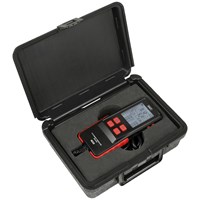
Gauge type: Analogue gauges provide reliable, battery-free operation, whilst digital compression testers offer easier reading in poor lighting, peak hold functions, and sometimes data logging capabilities—particularly useful when testing multiple cylinders.
Adaptor selection: Verify the kit includes thread sizes for your typical applications. Common petrol threads include 10mm, 12mm, 14mm, and 18mm spark plug sizes, whilst diesel kits should cover M8, M10, M12, and larger commercial vehicle glow plug threads. Extended adaptors help with recessed plugs in modern engines.
Build quality: Professional-grade testers from established brands maintain calibration accuracy over thousands of tests. Quality instruments provide reliable readings and durability essential for workshop environments.
Additional features: Consider whether you need leakage testing capability to identify exactly where compression is lost, TDC location tools for timing belt work, or extended hoses (300-500mm) for transverse-mounted engines and hard-to-reach cylinders.
Safety Information
Always ensure the vehicle is in neutral or park with the handbrake applied and wheels chocked before testing. Disconnect the ignition system on petrol engines to prevent sparking during cranking, and disable fuel supply on diesel engines to prevent starting. Wear safety glasses to protect against fuel spray or debris from spark plug apertures. Ensure adequate workshop ventilation to prevent carbon monoxide build-up, following HSE guidance on workplace exposure limits. Allow starter motors to cool between test cycles to prevent overheating, and keep hands clear of moving belts, pulleys, and fans during cranking.
Frequently Asked Questions
What compression reading indicates a healthy engine?
Typical petrol engines produce 120-180 PSI, whilst diesel engines generate 275-400 PSI. More important than absolute values is that all cylinders read within 10% of each other—significant variation indicates mechanical wear or damage. Always consult manufacturer specifications for your specific engine.
Can I use a petrol compression tester on diesel engines?
No. Petrol compression testers typically max out at 250-300 PSI, which is insufficient for diesel engines that commonly produce 300-400 PSI or higher. Always use a dedicated diesel compression tester with appropriate glow plug adaptors and a gauge rated to at least 600 PSI.
Do I need to remove all spark plugs when testing?
Yes, removing all spark plugs is essential for accurate results. This eliminates resistance from compressing air in other cylinders, allowing consistent cranking speed. Testing with only one plug removed produces artificially low readings and strains the starter motor unnecessarily.