

Clips, O Rings, Pins & Springs
Pay in 3 interest-free payments on purchases from £30-2000 with  . Learn more.
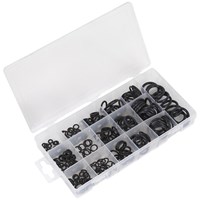
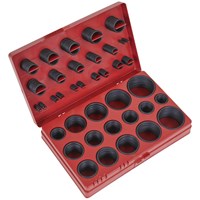
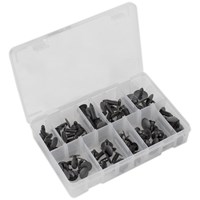
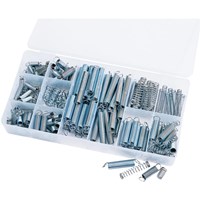
 Loading...
End of content
Error - No more pages to load
About Clips, O Rings, Pins & Springs
Clips, O rings, pins and springs are precision-engineered fastening and sealing components essential for automotive repairs, hydraulic systems, plumbing installations and general engineering maintenance. Though small in size, these components perform critical functions including securing assemblies, creating leak-proof seals, retaining parts in position and providing mechanical tension or compression. MyToolShed.co.uk stocks a comprehensive range suitable for professional tradespeople and DIY enthusiasts alike, from circlips and roll pins to compression springs and trim clips.
This category encompasses various specialist fastening solutions including circlips for shaft and bore retention, O rings for hydraulic and pneumatic sealing, split pins for securing castellated nuts, roll pins for precise alignment, springs for mechanical applications, and trim clips for automotive panel fastening. Quality matters significantly with these components—inferior materials or incorrect sizing can lead to seal failures, component loosening or equipment breakdown. MyToolShed stocks trusted brands like Timco alongside specialist manufacturers, ensuring properly certified components manufactured to exacting tolerances that meet British Standards (BS) and European Norm (EN) specifications.
Applications
Clips, O rings, pins and springs are used across numerous trades and industries:
- Motor mechanics and vehicle technicians for engine rebuilds, transmission repairs, brake system servicing and trim replacement
- Plant and machinery engineers maintaining hydraulic systems, pneumatic equipment and industrial machinery
- Plumbers and heating engineers replacing tap O rings, sealing valve assemblies and repairing pump components
- Agricultural engineers servicing farm machinery, tractors and hydraulic implements
- Manufacturing and production facilities for assembly line work and equipment maintenance
- Marine engineers working on boat engines, hydraulic steering systems and deck equipment
- Bicycle mechanics for suspension servicing and brake calliper maintenance
- Maintenance technicians across commercial and industrial settings
- DIY enthusiasts tackling home repairs, automotive maintenance and restoration projects
Choosing The Right Clips, O Rings, Pins & Springs
Accurate sizing is critical: Measure existing components carefully using digital callipers. For O rings, you'll need both internal diameter and cross-section thickness. Circlips require precise shaft or bore diameter specifications. Even a millimetre difference can prevent proper fitting or function.
Material selection: Consider the operating environment and compatibility requirements. Nitrile O rings suit most hydraulic and automotive applications, whilst high-temperature situations require Viton or silicone. Stainless steel circlips and pins offer superior corrosion resistance for marine or outdoor use, whereas carbon steel suffices for dry, indoor applications.
Application requirements: Different designs suit different purposes. Internal circlips retain bearings within housings, whilst external circlips secure components onto shafts. Split pins provide visible security for critical fastenings, whilst roll pins offer cleaner appearance but require precise hole sizing. Consider whether the application involves vibration, temperature extremes or chemical exposure.
Standards and certification: For critical applications in automotive, aerospace or pressure systems, ensure components meet relevant British Standards. Quality assurance documentation may be required for commercial or insurance purposes, particularly in professional workshop environments.
Safety Information
Eye protection: Always wear safety glasses when installing or removing circlips and split pins. These components are under tension and can spring free unexpectedly, potentially causing serious eye injury.
Spring handling: Compression springs store significant energy. Never place any part of your body in line with a compressed spring. Use appropriate spring compressors, especially when working with vehicle suspension springs or valve springs which can cause severe crushing injuries if released uncontrolled.
Correct tools: Use proper circlip pliers rather than improvising with screwdrivers. Incorrect tools increase the risk of component failure and personal injury. Ensure tools are in good condition with undamaged tips.
Frequently Asked Questions
What's the difference between internal and external circlips?
External circlips fit into grooves on the outside of shafts to retain components like bearings or gears. Internal circlips fit into grooves inside bores or housings, compressing inward to secure. You'll need different circlip pliers for each type as they work in opposite directions.
How do I identify the correct O ring size?
O rings are specified by internal diameter (ID) and cross-section (CS) thickness, both measured in millimetres. Use digital callipers to measure an existing O ring, or measure the groove dimensions. The O ring ID should match the groove diameter, and the cross-section should be approximately 1.5 times the groove depth.
Can I reuse circlips and split pins?
Split pins should never be reused as spreading the legs during installation weakens the material. Circlips can sometimes be reused if undamaged and retaining spring tension, but this isn't recommended for critical applications. Given their low cost, fitting new components is the professional approach for automotive, machinery or safety-critical assemblies.