

Circlips
Pay in 3 interest-free payments on purchases from £30-2000 with  . Learn more.
 Loading...
End of content
Error - No more pages to load
About Circlips
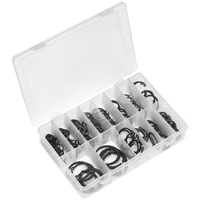
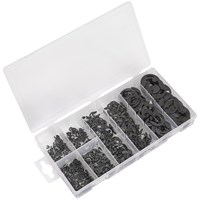
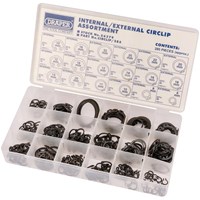
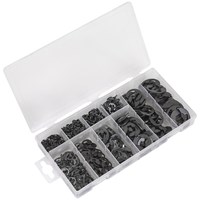
Circlips, also known as retaining rings or snap rings, are precision-engineered spring steel fasteners designed to secure components on shafts or within bored housings. These essential mechanical fasteners feature a resilient design that allows them to compress or expand during installation, then lock securely into machined grooves to prevent axial movement. MyToolShed.co.uk stocks comprehensive circlip assortments from trusted brands including Sealey and Draper, providing tradespeople and DIY enthusiasts with versatile solutions for countless mechanical applications.
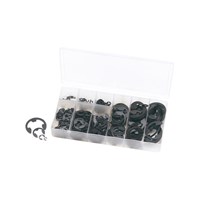
Our circlip range includes internal circlips (designed to fit inside bored holes), external circlips (which fit onto shafts), and E-clips (C-shaped retainers that push onto grooved shafts). These professional-grade assortments contain hundreds of pieces spanning common metric sizes, supplied in organised compartmented storage cases. Whether you're working on gearboxes, pumps, hydraulic equipment, or electric motors, having a comprehensive selection on hand saves valuable time and prevents project delays.
Applications
Circlips are indispensable fasteners used across numerous trades and industries:
- Automotive mechanics – transmission repairs, suspension assemblies, and engine rebuilds
- Plant maintenance engineers – servicing industrial machinery, conveyor systems, and production equipment
- Agricultural engineers – repairing tractors, harvesters, and farm machinery
- Marine mechanics – maintaining boat engines, winches, and marine equipment
- Bicycle and motorcycle technicians – wheel assemblies, gearboxes, and brake systems
- HVAC engineers – servicing fans, compressors, and air conditioning units
- General maintenance technicians – across manufacturing, facilities management, and site work
- DIY enthusiasts – home repairs, garden machinery maintenance, and restoration projects
Choosing The Right Circlips
Internal vs External: Determine whether you need internal circlips (for bores and housings) or external circlips (for shafts). Measure the diameter accurately using digital callipers – internal circlips require the bore diameter, whilst external circlips require the shaft diameter.
Assortment Size: Consider comprehensive assortments rather than individual circlips. Professional tradespeople working on diverse equipment benefit from larger 800-piece assortments, whilst home users may find 200-285 piece sets more economical. MyToolShed.co.uk stocks assortments ranging from 200 to 800 pieces, covering common metric sizes from 3mm upwards.
E-Clips for Convenience: For applications requiring frequent assembly and disassembly, E-clip assortments offer faster installation without specialist pliers. However, they provide lower retention force and are best suited to lower-stress applications.
Storage Organisation: Look for assortments supplied in compartmented cases with clear size markings. This organisation prevents frustration and saves time during repairs and maintenance work.
Safety Information
Always wear safety glasses or goggles when installing or removing circlips, as these spring-loaded components can unexpectedly release and become projectiles causing eye injuries. The HSE recommends appropriate eye protection when working with any spring-loaded fasteners.
Use properly maintained circlip pliers with tips that fit securely into the circlip holes. Worn or damaged pliers can slip during installation, causing the circlip to fly off unpredictably. Never reuse circlips showing signs of deformation, corrosion, or fatigue, as weakened clips may fail in service, potentially causing mechanical failure or component separation.
Frequently Asked Questions
Can I reuse circlips after removal?
Generally yes, provided the circlip shows no signs of deformation, damage, or excessive wear. Inspect carefully for bent sections, corrosion, or reduced spring tension. For critical or safety-related assemblies, it's best practice to install new circlips rather than reusing old ones.
Do I need special pliers to fit circlips?
For traditional internal and external circlips, yes – circlip pliers are essential for safe installation and removal. These pliers have specially shaped tips that fit into the holes on circlips. However, E-clips can be pushed on and prised off without specialist tools, though a small screwdriver is helpful for removal.
How do I measure which size circlip I need?
For external circlips, measure the shaft diameter where the circlip will fit. For internal circlips, measure the bore diameter. Use digital callipers for accuracy, and select a circlip that matches this measurement. The circlip should fit snugly in the groove with minimal radial play whilst maintaining spring tension.