
Chain & String

Pay in 3 interest-free payments on purchases from £20-£3000 with  . Learn more.
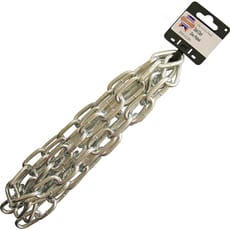
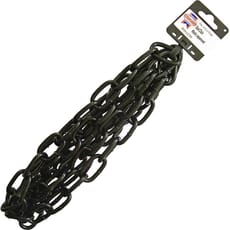
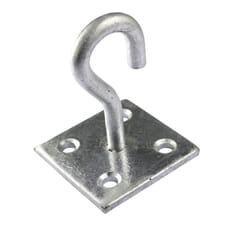
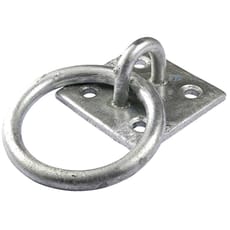
 Loading...
End of content
Error - No more pages to load
About Chain & String
Chain and string are fundamental materials for professional tradespeople and DIY enthusiasts across construction, industrial, agricultural and domestic applications. From heavy-duty galvanised chains for load-bearing and security operations to builder's line for accurate setting out work, MyToolShed.co.uk stocks a comprehensive range manufactured to British and European standards. Chain products span from fine-link decorative options through to industrial-grade lifting chains certified for demanding professional use, whilst string products include mason's twine, barrier line and general-purpose cordage designed for reliable performance in challenging conditions.
Available in various materials including galvanised steel, stainless steel, zinc-plated finishes and synthetic fibres, these versatile products resist corrosion, UV degradation and moisture damage. Whether you're a bricklayer requiring low-stretch mason's line for accurate course setting, a groundworker marking out foundations, or securing gates and barriers on construction sites, selecting the appropriate chain or string ensures both safety and efficiency across your projects.
Applications
Chain and string serve diverse trades and applications including:
- Bricklayers and Masons: Setting courses and checking alignment with builder's line and mason's twine
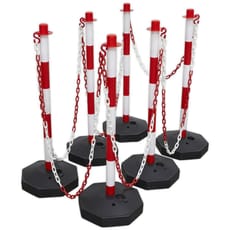
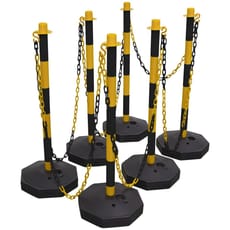
- Construction Site Managers: Barrier chains for site security, hazard marking and access control
- Groundworkers and Landscapers: Setting out foundations, drainage runs, paving levels and garden features
- Farmers and Agricultural Workers: Securing gates, creating temporary barriers and maintaining fencing systems
- Lifting Equipment Operators: Certified lifting chains for hoisting machinery and materials to HSE standards
- Plumbers and Heating Engineers: Securing heavy equipment and supporting pipework during installation
- DIY Enthusiasts: Hanging gates, securing sheds, garden planning and general fastening applications
- Carpenters and Joiners: Establishing straight reference points for decking, fencing and structural work
Choosing The Right Chain & String
Load Requirements: Always select chain with a Working Load Limit (WLL) exceeding your maximum load. For lifting operations, ensure certification to BS EN 818 standards. Never exceed manufacturer specifications, and remember angular loads significantly reduce capacity.
Material and Finish: Galvanised or stainless steel chains offer superior corrosion resistance for outdoor and marine environments, whilst zinc-plated options suit indoor applications. For string, synthetic materials like polyester resist rot better than natural fibres, though traditional cotton remains popular for masonry work.
String Properties: Consider low-stretch properties for accurate setting out (essential for bricklaying), high visibility for safety, and appropriate break strength for your application. Braided lines typically offer less stretch than twisted varieties.
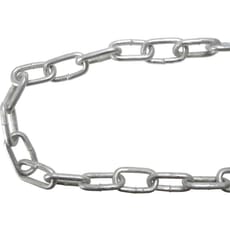
Link Size and Configuration: Chain link diameter affects strength, flexibility and weight. Smaller links provide greater flexibility around irregular shapes, whilst larger chains deliver maximum load capacity. MyToolShed.co.uk offers both short-link and long-link configurations for different applications.
Safety Information
Inspect chains before every use for stretched links, cracks, wear, corrosion or deformation. Damaged chains must be withdrawn immediately. Check string for fraying, cuts and UV degradation. Never exceed stated Working Load Limits, and maintain inspection records for lifting equipment as required by LOLER 1998. Use appropriately rated hardware for all connections, and never modify chains by welding. Wear gloves when handling chains, safety boots with steel toecaps, and high-visibility clothing on active sites.
Frequently Asked Questions
What's the difference between working load limit and break strength?
Working Load Limit (WLL) is the maximum safe load during normal use, typically one-quarter of break strength to provide a 4:1 safety factor. Break strength is the point of actual failure. Always work within the WLL.
Can I use galvanised chain for lifting operations?
Standard galvanised chain suits securing and barrier applications, but lifting operations require chain specifically manufactured and certified to BS EN 818 standards with clear WLL markings and certification documentation.
Why does builder's line keep stretching?
Twisted constructions stretch more than braided types, and lower-quality synthetic materials may lack pre-stretching treatment. Professional mason's lines use low-stretch materials for accuracy. Consider upgrading to premium braided line for precise setting out work.