

Cable, Pipe & Stud Detectors
Pay in 3 interest-free payments on purchases from £30-2000 with  . Learn more.
 Loading...
End of content
Error - No more pages to load
About Cable, Pipe & Stud Detectors
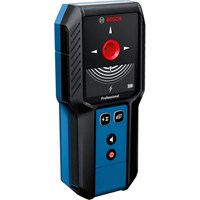
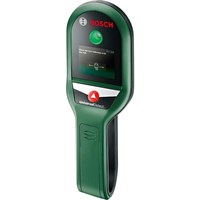
Cable, pipe and stud detectors are essential safety tools that help tradespeople and DIY enthusiasts see what's hidden behind walls, ceilings and floors before drilling. These electronic scanning devices use various detection technologies to locate wooden studs for secure fixing points, identify metal pipes and electrical cables that could be dangerous to penetrate, and map out the internal structure of walls. MyToolShed.co.uk stocks detectors ranging from basic single-function stud finders through to sophisticated multi-scanners that can differentiate between ferrous and non-ferrous metals, detect live AC voltage at 240V, and pinpoint plastic pipes using radar technology.
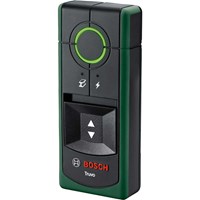
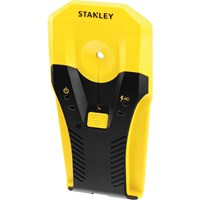
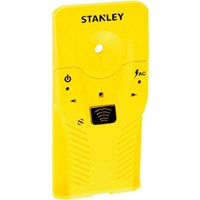
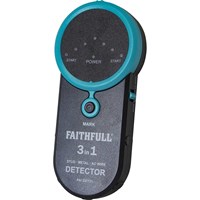
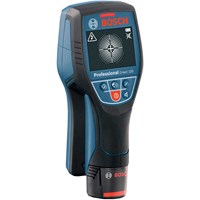
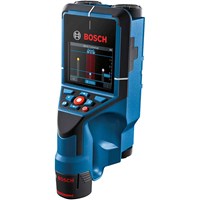
Modern detectors from leading brands including Bosch Professional, Makita, Stanley, Draper and Faithfull offer proven reliability across different price points. Entry-level models like the Bosch TRUVO and Faithfull 3 in 1 detectors provide excellent value for occasional use, whilst professional-grade scanners such as the Bosch D-Tect series deliver advanced features including depth indication up to 200mm, target sizing, material identification and digital displays for accurate readings on complex installations.
Applications
- Electricians and electrical contractors checking for existing cables before drilling cable routes or mounting consumer units and accessories
- Plumbers and heating engineers locating existing pipework to avoid damage when installing new systems or mounting radiators and boilers
- Carpenters and joiners finding studs in partition walls for secure fixing of door frames, skirting and heavy joinery
- Kitchen and bathroom fitters ensuring safe installation of units, tiling and fixtures without damaging hidden services
- General builders and maintenance contractors carrying out renovation work, extensions and property maintenance safely
- Shopfitters and commercial installers mounting shelving systems, displays and heavy equipment safely in retail premises
- TV and satellite installers mounting brackets securely to studs whilst avoiding cables and pipes
- DIY enthusiasts and homeowners hanging pictures, shelves, mirrors and TV brackets safely
Choosing The Right Cable, Pipe & Stud Detectors
Detection capabilities: Consider what materials you need to detect most frequently. Basic models detect wood and ferrous metals, suitable for simple stud finding. Mid-range detectors add non-ferrous metal detection for copper pipes, whilst professional models like the Bosch D-Tect 200 C offer comprehensive detection including plastic pipes using radar technology.
Detection depth requirements: Match the depth capability to your typical wall types. Shallow detection (20-40mm) suffices for modern stud walls, but older properties or commercial premises may require 80-120mm depth capabilities to locate services buried under thick plaster or running through dense masonry.
Live voltage detection: Essential if working near electrical installations. UK mains voltage at 240V can be fatal, so detecting live cables before drilling provides critical safety. Look for models that clearly differentiate between dead metal and live cables with distinct audio and visual warnings.
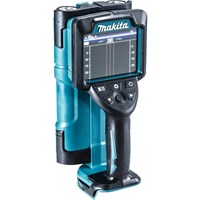
Frequency of use: Occasional users can opt for battery-powered models from Draper, Faithfull or Einhell offering excellent value. Professional tradespeople benefit from investing in robust scanners from Bosch Professional or Makita, including cordless models that integrate with existing battery platforms like Makita's 18V LXT system.
Safety Information
Never rely solely on electronic detection. Whilst modern detectors are sophisticated, they cannot guarantee 100% accuracy in all conditions. Wall composition, moisture content and overlapping services can affect readings. Always scan the same area multiple times from different angles, mark all detected targets clearly, and drill exploratory pilot holes carefully when precision is critical. If your detector indicates live voltage, do not proceed until the circuit is isolated and tested dead using a properly calibrated voltage tester. Test your detector on known pipe or cable locations before relying on its readings, and replace batteries regularly to ensure reliable performance.
Frequently Asked Questions
How accurate are cable, pipe and stud detectors?
Accuracy varies by model and conditions. Basic stud detectors are generally reliable on standard plasterboard partition walls, typically accurate to within 10-20mm. Professional multi-scanners like those available at MyToolShed.co.uk can pinpoint targets to within a few millimetres in ideal conditions. However, all detectors can be affected by wall material, moisture and interference, so always scan multiple times and mark suspected service locations clearly.
Can these detectors find plastic pipes?
Basic and mid-range detectors generally cannot detect plastic pipes directly. However, high-end professional models using radar technology, such as the Bosch D-Tect range, can identify plastic pipes by detecting the density difference they create within walls. If you regularly need to locate plastic waste pipes or modern plastic supply pipes, invest in a professional-grade scanner with this capability clearly specified.
Will my detector work on solid brick or concrete walls?
Detection through solid masonry is more challenging than through hollow stud walls, and maximum depth is typically reduced. Basic detectors may struggle entirely on very dense materials. Professional models with higher power sensors perform better, but even these have limitations—typically 80-100mm maximum in concrete versus 120mm+ in plasterboard. Check your model's specifications for masonry performance before purchasing.