

Bricklayers Tape Measure
Pay in 3 interest-free payments on purchases from £30-2000 with  . Learn more.
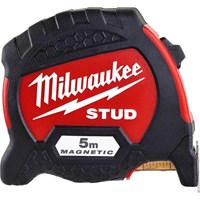
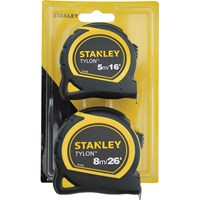
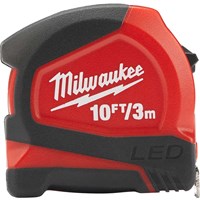
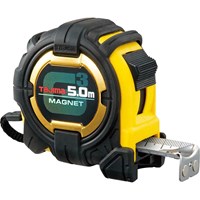
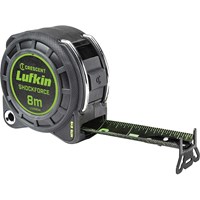
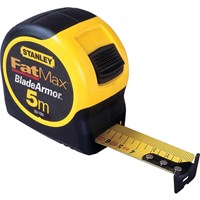
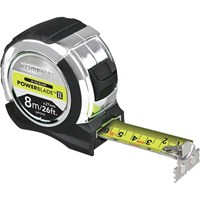
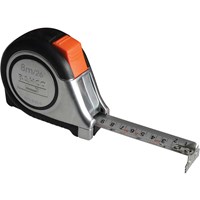
 Loading...
End of content
Error - No more pages to load
About Bricklayers Tape Measure
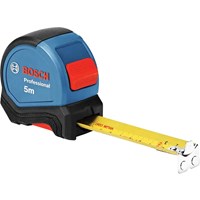
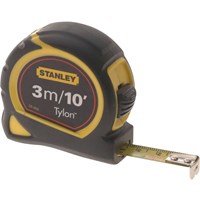
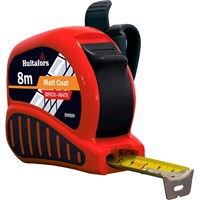
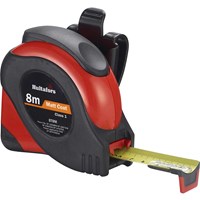
Bricklayers tape measures are specialist measuring tools designed specifically for masonry work, featuring brick course markings alongside standard metric measurements. These purpose-built tapes allow bricklayers to quickly calculate the number of courses needed for a given wall height without manual arithmetic, with most models displaying the cumulative height for standard brick courses (typically 75mm per course including mortar joint). MyToolShed.co.uk stocks an extensive range from trusted manufacturers including Milwaukee, Stanley, Hultafors, Draper, and Faithfull, offering everything from compact 5-metre models to heavy-duty 8-metre professional options.
Modern bricklayers tape measures incorporate numerous practical features tailored to construction environments, including magnetic tips for hands-free operation, dual-sided printing for readability from any angle, and reinforced cases that withstand drops on hard surfaces. Many professional models feature Class I or Class II accuracy ratings to meet building regulations, whilst protective blade coatings resist wear from brick dust and mortar. Whether you're a professional mason pricing commercial projects or a DIY enthusiast building garden walls, selecting the right tape measure significantly improves accuracy and efficiency on site.
Applications
Bricklayers tape measures are essential tools for various trades and applications:
- Bricklayers and Masons: Primary users relying on brick course markings for rapid wall height calculations and ensuring accurate course spacing
- Groundworkers: Setting out foundations, measuring DPC heights, and establishing correct levels before bricklaying commences
- General Builders: Multi-trade professionals incorporating brickwork into broader construction projects
- Landscapers: Building garden walls, raised beds, and decorative brick features requiring precise course calculations
- Building Surveyors: Taking accurate measurements during site surveys and materials calculations
- Construction Apprentices: Learning accurate measuring and setting out techniques for brickwork
- DIY Enthusiasts: Homeowners undertaking ambitious projects such as garden walls, brick barbecues, or extensions
Choosing The Right Bricklayers Tape Measure
Tape Length: Select based on project scale—5-metre tapes suit most residential work and garden projects, whilst 8-metre models are preferable for commercial work or larger walls. Longer tapes offer greater standout but add weight to your tool belt.
Blade Width: Wider blades (25-32mm) provide better standout and easier readability. A 25mm blade offers excellent balance between rigidity and portability for most bricklaying applications.
Accuracy Class: Professional tradespeople should choose Class I accuracy for critical structural work and building regulation compliance. Class II remains suitable for general purposes and DIY projects.
Marking Features: Dual-sided printing proves invaluable when measuring vertically or in awkward positions. Look for models showing both 65mm and 75mm course markings to accommodate different brick sizes and joint thicknesses.
Durability: Prioritise models with reinforced cases, protective blade coatings, and shock-absorption features. MyToolShed.co.uk stocks robust options from Milwaukee, Stanley, and Hultafors that withstand harsh construction environments.
Visibility: High-contrast markings in yellow or orange backgrounds improve readability in typical site lighting conditions. Premium models feature enhanced visibility markings for early morning starts or poorly lit areas.
Frequently Asked Questions
What's the difference between a bricklayers tape measure and a standard tape measure?
Bricklayers tape measures feature additional markings showing brick course heights (typically 75mm intervals including mortar joints), allowing rapid calculation of courses needed for a given wall height. Many also include dual-sided printing and enhanced durability features suited to masonry work environments, whereas standard tapes show only linear measurements.
Why do some tape measures show two different brick course scales?
Different brick sizes and mortar joint thicknesses result in varying course heights. Standard UK bricks with 10mm joints typically measure 75mm per course, whilst 65mm blocks or bricks with thinner joints require different spacing. Dual scales accommodate both common measurements without calculation.
Are magnetic tips strong enough for professional use?
Quality magnetic tips from reputable brands provide sufficient holding power for most professional applications. They're particularly useful when working alone, allowing hands-free operation. However, avoid relying on magnetic tips for critical safety applications—they're measuring aids rather than load-bearing devices.