
Trend Marking Tools

Loading...
End of content
Error - No more pages to load
Trend Marking Tools at MyToolShed.co.uk
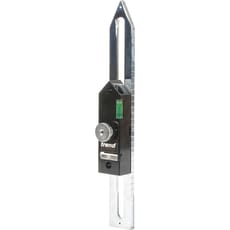
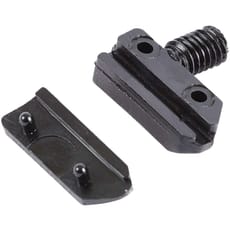
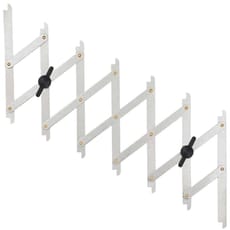
Trend Marking Tools cover the layout and setting-out jobs that come before every cut, joint and fixing. The range is built around three types of tool: carpenters pencils, marking gauges and scribers. Each one helps you transfer measurements to the workpiece accurately, whether you are fitting a door, cutting joints or scribing a worktop to an uneven wall.
These tools suit joiners, carpenters, cabinet makers, site carpenters and serious DIYers. Browse the Trend Marking Tools at MyToolShed.co.uk to find the right marking tool for your material and your trade.
Trend Marking Tools Features and Benefits
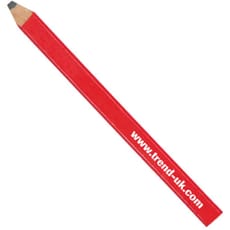
- Flat-profile carpenters pencils: The oval or rectangular body resists rolling off roofs, benches and joists, and it can be sharpened to a chisel point for fine, repeatable lines.
- Graduated marking gauges: Scaled beams and a locking fence let you set a measurement once and repeat it along the full length of a board, so parallel lines stay consistent.
- Hardened scribing points: A fine, durable tip leaves a crisp line that is easy to cut to, which is more accurate than a pencil on joinery work.
- Hand-sized designs: Comfortable grips and compact bodies reduce fatigue over a full day of setting out.
- Tool-bag friendly: Pencils, gauges and scribers are light enough to keep in a pocket or pouch, so they are always to hand.
Popular Trend Marking Tools
Carpenters Pencils
Used for general site marking on timber, sheet materials and masonry. They are a sensible item to keep stocked in any toolbox.
Marking Gauges
Suited to marking tenons, rebates, hinge recesses and consistent edge lines when you want a measurement transferred repeatedly.
Scribers
Ideal for fine layout lines on timber, metal and plastics, and for scribing skirting, worktops and panels to uneven surfaces.
Frequently Asked Questions
Should I use a pencil, gauge or scriber for marking out?
Use a carpenters pencil for fast, visible lines on rough carpentry and site work. Choose a marking gauge when you need repeatable parallel lines along an edge, and a scriber when the cut must be as precise as possible, such as on fine joinery or metal.
How do I get the best results from a marking gauge?
Set the fence to your measurement, lock it firmly and keep the fence pressed against the true edge of the timber. Pull or push the gauge in one smooth pass with light pressure, working with the grain to avoid tearing the surface.