
Sealey Chucks

Loading...
End of content
Error - No more pages to load
Sealey Chucks at MyToolShed.co.uk
Sealey chucks cover the jobs where you need to hold a drill bit, cutter or collet securely, from cordless drills and air tools to pillar drills, magnetic drilling machines and mini mills. Whether you are replacing a worn chuck or fitting a different size, there are options for site, workshop and engineering use.
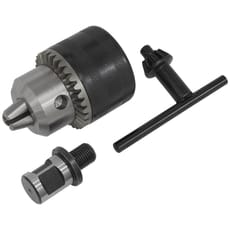
Both keyless and keyed designs are available, with fittings made for specific Sealey machines as well as universal thread sizes.
Sealey Chucks Features and Benefits
- Keyless operation: tighten by hand for quick bit changes, with no chuck key to lose.
- Keyed twist chucks: a firm grip for heavier drilling, such as on magnetic drilling machines.
- Self-locking designs: help keep bits held securely while you work.
- Machine-specific fit: chuck and collet sets match mini mills and pillar drills, so fitting is simpler.
- Universal threads: the 3/8" x 24UNF connection suits a wide range of cordless and air tools.
Popular Sealey Chucks
Keyless Drill Chucks
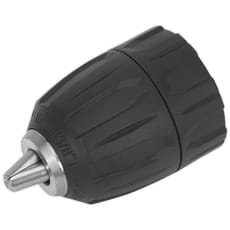
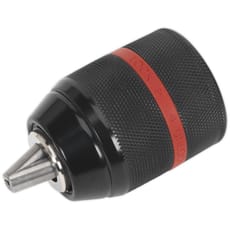
The Sealey DC003 10mm Keyless Drill Chuck accepts bits from 0.8mm to 10mm and suits cordless power tools, air tools and drill presses. The Self Locking Keyless Drill Chuck is another option for quick changes.
Pillar Drill Chucks
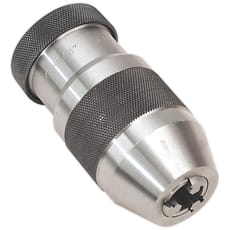
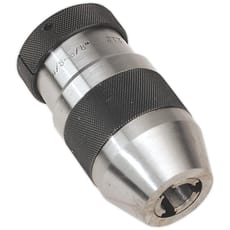
Choose the PDM/KC Keyless Pillar Drill Chuck 16mm or the Keyless Pillar Drill Chuck for GDM120B and GDM150B for bench and floor-standing drills.
Mill and Magnetic Drill Chucks
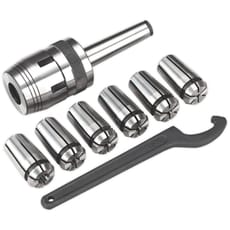
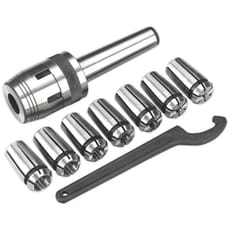
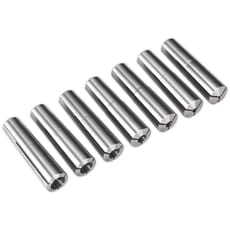
The MT2-M10 Mill Chuck Set suits the SM2503 Mini Mill, while the MT3-M12 Chuck Set and MT3-M12 Collet Set suit the SM2502. The Keyed 16mm Twist Chuck is made for MAG60 Magnetic Drilling Machines.
Frequently Asked Questions
Should I choose a keyed or keyless chuck?
Keyless chucks give faster bit changes and are ideal for general drilling. Keyed chucks usually grip more firmly, so they suit heavier or more demanding work.
How do I know which Sealey chuck will fit my machine?
Check your machine model and its spindle or thread type, such as 3/8" x 24UNF, MT2 or MT3. Then pick a chuck or collet set listed for that machine, and make sure the bit sizes you use are within the chuck's capacity.