
Blue Spot Squares & Bevels

Loading...
End of content
Error - No more pages to load
Blue Spot Squares & Bevels at MyToolShed.co.uk
Blue Spot squares and bevels are marking-out and checking tools for carpenters, joiners, roofers and keen DIYers. They help you mark accurate right angles and mitres, and check that work is square before you cut or fix. Good marking out saves time and reduces wasted material.
This section covers two types of Blue Spot square: combination squares for general workshop and site marking, and roofing squares for rafter and stair layout.
Blue Spot Squares & Bevels Features and Benefits
- Clear graduated scales: Metric markings make it quick to measure, transfer and repeat dimensions without second-guessing a reading.
- Fixed angles for fast marking: Set 90° and 45° references let you scribe square lines and mitres in one movement, which is useful when you are repeating cuts.
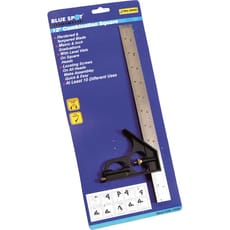
- Sliding stock on combination squares: Set a depth or height once, then run the stock along an edge to mark parallel lines or check a rebate.
- Durable construction: Metal blades and bodies are made to cope with the knocks of a toolbag or workshop bench.
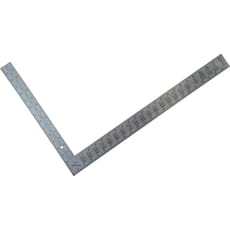
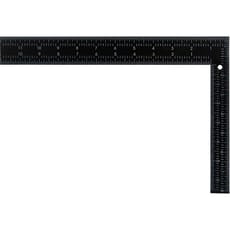
- Roofing square layout: The large, flat form with long arms helps you set out rafter cuts, stair stringers and other angled work.
Popular Blue Spot Squares & Bevels
Combination Squares
A combination square is among the most versatile marking tools you can own. Use it as a try square, a mitre square, a depth gauge or a marking gauge. It suits joinery, cabinet making, metalwork set-up and general site carpentry.
Roofing Squares
Roofing squares, also known as rafter squares, are designed for larger layout jobs. They suit roof framing, staircase construction and any task where you need to mark repeated angles across timber.
Frequently Asked Questions
Should I choose a combination square or a roofing square?
Choose a combination square for everyday marking, checking squareness and setting depths on smaller work. Choose a roofing square if you are cutting rafters, laying out stairs or marking large timber sections where a longer reference edge is needed.
How do I check that my square is accurate?
Draw a line against a straight board edge, then flip the square over and draw a second line from the same point. If the two lines match exactly, the square is true. If they diverge, the square is out and should not be used for precise work.