
Blue Spot Soldering


Loading...
End of content
Error - No more pages to load
Blue Spot Soldering at MyToolShed.co.uk
Blue Spot Soldering brings together practical joining tools and consumables for electrical repairs, electronics work, plumbing jobs and general workshop projects. The category is split into Soldering Irons and Soldering Wire, so you can pick the heat source and the solder you need in one place.
Whether you are repairing a wiring connection, fitting a component to a circuit board or tackling a hobby project at home, Blue Spot soldering products are designed to be simple to use and dependable on everyday jobs.
Blue Spot Soldering Features and Benefits
- Simple, easy-to-use designs: straightforward controls and handling make these tools approachable for beginners, while still suiting regular use by tradesmen.
- Soldering irons for different tasks: choose an iron that suits the size of the joint, from fine electronic connections to heavier general-purpose work.
- Soldering wire for clean joints: the right wire helps solder flow smoothly, giving neat, secure connections with less rework.
- Mains-powered convenience: where an iron runs from 240v mains, you get consistent heat for longer sessions without worrying about batteries.
- Workshop-friendly value: practical tools and consumables suit DIY users, hobbyists and anyone needing a dependable soldering kit.
Popular Blue Spot Soldering
Soldering Irons
Blue Spot soldering irons are used for electrical repairs, wiring, circuit board work, model making and general metal joining. They are a useful addition to a toolbox for anyone who needs to make or repair small soldered connections.
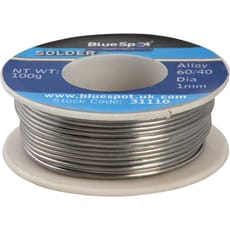
Soldering Wire
Blue Spot soldering wire is the essential consumable for any soldering job. It is suited to electronics, electrical connections and light repair work, and it is worth keeping a spare reel with your iron so you are never caught short.
Frequently Asked Questions
How do I choose the right Blue Spot soldering iron?
Consider the work you will be doing. Fine electronics need a lightweight iron with a small tip for precision, while heavier wiring and general repairs benefit from an iron that holds enough heat for larger joints. Check the power rating and tip type before you buy.
What should I do to get a good soldered joint?
Make sure the surfaces are clean, heat the joint rather than the solder, then feed the soldering wire onto the heated parts so it flows evenly. Keep the joint still while it cools, and wipe the tip regularly to keep it working well.