
Blue Spot Ratchet Spanners

Loading...
End of content
Error - No more pages to load
Blue Spot Ratchet Spanners at MyToolShed.co.uk
Blue Spot ratchet spanners are professional-grade hand tools for fastening and loosening metric fixings where a standard spanner is slow or awkward to use. A ratchet ring head lets you keep the spanner on the nut or bolt and turn it repeatedly without lifting it off and refitting it.
The selection includes flexible head spanners, double ring ratchet spanners and complete sets. They suit mechanics, fitters, plumbers and keen DIYers who work in confined spaces.
Blue Spot Ratchet Spanners Features and Benefits
- 180° pivoting ratchet head: lets you adjust the working angle to the job, so you can reach fixings in engine bays and around pipework.
- Ratchet ring action: turns the fixing without repositioning the spanner, which saves time on repetitive tasks.
- Metric sizing: the sets cover common metric fixings, so you can use them on everyday automotive and workshop jobs.
- Set options: keep the sizes you use most together in one place.
Popular Blue Spot Ratchet Spanners
Flexible Head Sets
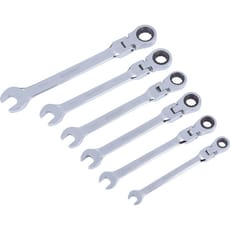
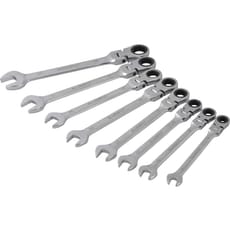
The Blue Spot 6 Piece Flexible Head Ratchet Spanner Set and the 8 Piece Flexible Ratchet Spanner Set Metric have pivoting heads for tight or awkward spots.
Standard Ratchet Spanner Sets
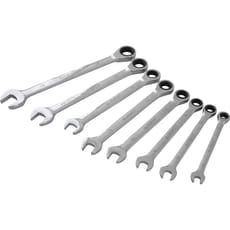
The Blue Spot 8 Piece Ratchet Spanner Set gives you a range of sizes for general workshop and maintenance use.
Individual Spanners
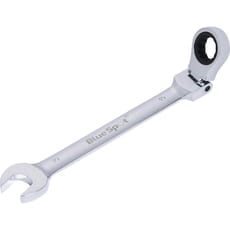
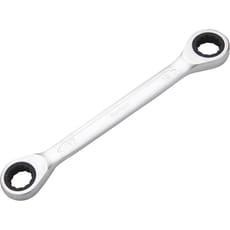
The Blue Spot Double Ring Ratchet Spanner and the Flexible Head Ratchet Spanner are useful if you need to add to a set or replace a single size.
Frequently Asked Questions
Should I choose a flexible head or a standard ratchet spanner?
Choose a flexible head if you often work in restricted areas such as engine bays or around pipework, as the pivoting head lets you change the angle. A standard ratchet spanner set suits more open, general-purpose work.
What are ratchet spanners best used for?
They suit repetitive tightening and loosening of metric nuts and bolts where there is little room to swing a conventional spanner. For the final tightening or first break of a very tight fixing, make sure the spanner is fully seated on the fastener.