

Automotive Thermometers
Pay in 3 interest-free payments on purchases from £30-2000 with  . Learn more.
 Loading...
End of content
Error - No more pages to load
About Automotive Thermometers
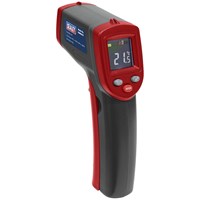
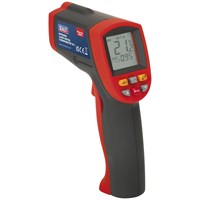
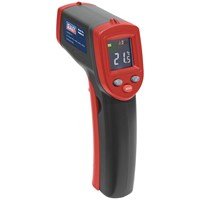
Automotive thermometers are essential diagnostic instruments that enable accurate, non-contact temperature measurement across vehicle components and systems. The range at MyToolShed.co.uk features professional-grade infrared laser digital thermometers from Sealey, designed specifically for mechanics, technicians, and serious DIY enthusiasts. These precision tools use infrared technology to measure surface temperatures safely from a distance, making them invaluable for diagnosing overheating issues, checking brake performance, monitoring engine components, and detecting air conditioning problems without risk of burns or damage.
Modern automotive thermometers typically offer temperature ranges from -50°C to +550°C or higher, with laser targeting for precise measurement of specific components in confined engine bays. The digital displays provide instant, clear readings that help identify hotspots, temperature differentials, and potential issues before they become costly failures. Whether you're working in a professional workshop or home garage, these versatile diagnostic tools have become indispensable for vehicle maintenance and repair.
Applications
- Professional Mechanics: Comprehensive vehicle diagnostics, fault-finding, and preventative maintenance in workshops and garages
- MOT Testers: Checking brake temperatures, exhaust system performance, and identifying potential safety concerns during inspections
- Mobile Mechanics: Portable diagnostic equipment for on-site troubleshooting at customers' locations
- Racing Teams and Motorsport Engineers: Monitoring tyre temperatures, brake performance, and engine cooling systems for optimal performance
- Fleet Maintenance Technicians: Regular temperature checks across multiple vehicles to prevent breakdowns and maintain efficiency
- Air Conditioning Specialists: Measuring temperature differentials in climate control systems to diagnose refrigerant issues
- DIY Enthusiasts: Troubleshooting overheating problems, checking cooling system efficiency, and performing routine maintenance
- Vehicle Restoration Specialists: Ensuring proper engine running temperatures in rebuilt or modified systems
Choosing The Right Automotive Thermometers
Temperature Range: Consider your typical applications. Basic models covering -50°C to +380°C suit most automotive work, whilst professional-grade units extending to +550°C or higher are essential for exhaust system and turbocharger diagnostics.
Accuracy and Resolution: Professional diagnostics demand precision. Look for accuracy within ±1.5°C or better, with 0.1°C resolution for detecting subtle temperature differentials in cooling systems or identifying early warning signs of component failure.
Distance-to-Spot Ratio: Higher D:S ratios (12:1 or above) allow accurate measurement of smaller components from safer distances, particularly useful for targeting specific sensors, hoses, or components in confined engine bays.
Response Time and Features: Fast response times (500 milliseconds or less) enable quick scanning of multiple components. Consider models with adjustable emissivity for different surface materials, backlit displays for dimly lit workshops, and max/min/average recording for tracking temperature trends. MyToolShed.co.uk stocks Sealey thermometers with robust construction and protective housings suitable for demanding workshop environments.
Safety Information
Never look directly into the laser beam, as this can cause eye damage – the laser is for targeting only. When measuring extremely hot surfaces such as exhaust manifolds or turbochargers, maintain a safe distance and be aware that components may be significantly hotter than expected. Always follow the manufacturer's specified measurement distance and angle for accurate readings. Reflective surfaces like polished metal can give false readings; adjust emissivity settings or use masking tape on the measurement spot for more accurate results. Be cautious around running engines – keep hands, tools, and clothing clear of moving parts, belts, and fans. Remember that infrared thermometers measure surface temperature only; internal component temperatures may be considerably different.
Frequently Asked Questions
Can I use an automotive thermometer to check my engine coolant temperature?
Yes, but infrared thermometers measure surface temperature of the radiator hose or engine block, not internal coolant temperature directly. For accurate readings, measure the upper radiator hose when the engine is at operating temperature, though results will be slightly lower than actual coolant temperature. For precise internal measurements, use a contact probe thermometer.
Why do I get different readings from different angles or distances?
This relates to the distance-to-spot ratio – at greater distances, you're measuring a larger surface area that may include multiple components at different temperatures. The angle also affects readings on reflective surfaces. For consistency, always measure from the same distance and angle, perpendicular to the surface when possible, and within the manufacturer's specified measurement distance.
How accurate are infrared thermometers compared to contact thermometers?
Quality infrared thermometers are highly accurate (typically ±1-2% or ±1.5°C) when used correctly with proper emissivity settings. They measure surface temperature only, whilst contact thermometers measure the temperature of whatever they touch. For automotive diagnostics, infrared thermometers excel at quick comparative measurements and safely scanning multiple points, making them ideal for identifying temperature differentials and hotspots across vehicle systems.