
Air Riveters

Pay in 3 interest-free payments on purchases from £20-£3000 with  . Learn more.
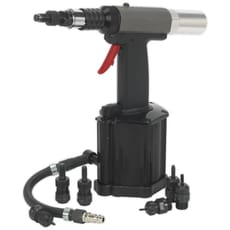

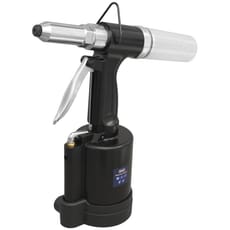


 Loading...
End of content
Error - No more pages to load
About Air Riveters
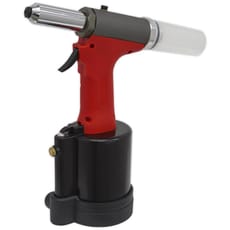
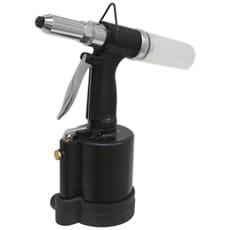
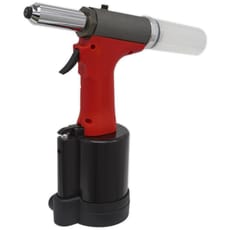
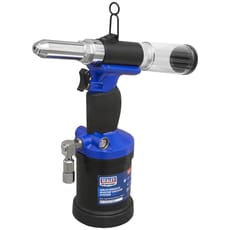
Air riveters, also known as pneumatic rivet guns, are essential power tools for tradespeople who need to join metal sheets, panels and components quickly and reliably. Unlike manual riveting tools that require significant hand strength, air riveters harness compressed air to deliver powerful, consistent force that sets blind rivets in seconds. MyToolShed.co.uk stocks professional-grade air riveting tools from trusted brands including Sealey and Draper, designed to handle everything from light fabrication work to heavy-duty industrial applications.
Modern air riveters work with various rivet sizes, typically ranging from 2.4mm to 6.4mm, making them versatile tools for sheet metal fabrication, vehicle body repair, HVAC installation and general construction work. The range at MyToolShed includes standard pneumatic models for everyday riveting tasks as well as heavy-duty air/hydraulic variants that combine pneumatic power with hydraulic force multiplication for setting larger rivets or working with harder materials like stainless steel. Many models feature vacuum collection systems that capture spent mandrels, keeping your workspace clean and safe.
Applications
Air riveters are relied upon by a wide range of trades and industries where permanent metal joining is required:
- Vehicle Body Repair Technicians – repairing car panels, wheelarches and structural components
- Fabricators and Metal Workers – assembling metal frameworks, enclosures and custom fabrications
- HVAC Engineers – installing ductwork, ventilation panels and air conditioning units
- Roofing Contractors – fixing metal roofing sheets, flashing and guttering systems
- Shopfitters – installing metal fixtures, shelving systems and display units
- Aircraft and Marine Engineers – working on aluminium structures where riveting is preferred
- Agricultural Engineers – repairing farm machinery, trailers and livestock equipment
- Maintenance Teams – repairs and installations across industrial premises
- DIY Enthusiasts – vehicle restoration projects and metal fabrication hobbies
Choosing The Right Air Riveters
Rivet Size Capacity: Standard air riveters typically handle rivets from 2.4mm to 4.8mm, whilst heavy-duty models accommodate up to 6.4mm. For larger structural rivets, consider air/hydraulic models like the Sealey SA316 or SA317.
Pulling Force: Higher pulling force allows you to set larger rivets and work with harder materials. For aluminium, standard models suffice, but stainless steel rivets require heavy-duty tools with greater force capacity.
Vacuum Collection: Models with integrated vacuum systems significantly reduce clean-up time and improve workplace safety by collecting spent mandrels automatically.
Air Consumption: Check the tool's CFM rating and operating pressure (typically 90 PSI or 6.3 bar) against your compressor's specifications to ensure adequate air volume for continuous operation.
Build Quality: Professional-grade tools from Sealey and Draper feature robust construction that withstands daily workshop use. Complete kits like the Draper DAT-ARK include nose pieces for various rivet sizes and carry cases for better value.
Safety Information
Always wear safety glasses when operating an air riveter, as spent mandrels can eject unexpectedly. Ensure all air hoses are in good condition and never exceed the manufacturer's recommended operating pressure. Always disconnect the air supply before changing nose pieces or performing maintenance. Regularly lubricate your air riveter according to manufacturer guidelines to prevent premature wear. If not using a vacuum collection system, regularly clear spent mandrels from your work area to prevent slip hazards.
Frequently Asked Questions
What size air compressor do I need for an air riveter?
Most air riveters require a compressor capable of delivering 90 PSI (6.3 bar) with air consumption of around 4-6 CFM. A 24-litre compressor with at least a 2HP motor suits intermittent use, whilst professional applications benefit from 50-litre or larger compressors for consistent pressure during extended riveting sessions.
What's the difference between standard and air/hydraulic riveters?
Standard air riveters use compressed air directly to pull the rivet mandrel, whilst air/hydraulic models use compressed air to power a hydraulic cylinder that multiplies the pulling force. Air/hydraulic riveters can set larger rivets (up to 6.4mm) and work with harder materials like stainless steel.
Why does my air riveter keep jamming?
Common causes include insufficient air pressure, lack of lubrication, worn nose pieces, or using rivets that exceed the tool's capacity. Ensure your compressor maintains adequate pressure, regularly oil the tool's air inlet, and check that nose pieces are clean and properly fitted.