
Air Grease Guns

Pay in 3 interest-free payments on purchases from £20-£3000 with  . Learn more.
 Loading...
End of content
Error - No more pages to load
About Air Grease Guns
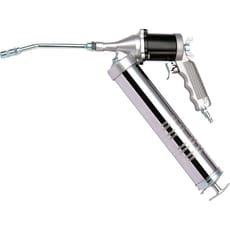
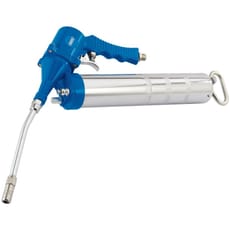
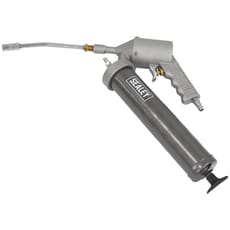
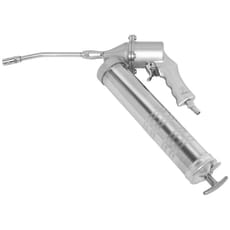
Air grease guns are pneumatic lubrication tools that connect to workshop compressed air systems to deliver grease quickly and efficiently to machinery, vehicles, and equipment. Unlike manual grease guns requiring physical pumping effort, air-operated models use compressed air to generate consistent high-pressure grease delivery—typically between 6,000 and 10,000 PSI—making them ideal for garages, workshops, and industrial environments where multiple greasing points require regular maintenance. These professional tools significantly reduce operator fatigue during high-volume lubrication tasks whilst ensuring proper grease penetration into bearings, joints, and moving parts.
The air grease gun range at MyToolShed.co.uk includes pistol grip models for comfortable one-handed operation and continuous flow designs for uninterrupted grease delivery when servicing equipment with numerous lubrication points. Most accept standard 400g grease cartridges, though professional bulk-fill versions accommodate direct filling from larger containers for cost-effective high-volume use. Leading brands including Sealey, Draper, and Lumatic provide robust air grease guns engineered for daily commercial workshop demands, requiring typical operating pressures of 90 PSI and 4-6 CFM air consumption from standard workshop compressor systems.
Applications
Air grease guns are essential tools across numerous professional trades and industries:
- Vehicle Mechanics – servicing suspension components, steering linkages, universal joints, and chassis grease points on cars, vans, and light commercials
- HGV and Commercial Vehicle Technicians – maintaining heavy goods vehicles, lorries, and buses with extensive greasing schedules
- Agricultural Engineers – lubricating tractors, combine harvesters, balers, and farm machinery operating in demanding dusty conditions
- Plant Mechanics – servicing excavators, telehandlers, bulldozers, cranes, and construction equipment with multiple lubrication points
- Fleet Maintenance Teams – conducting efficient scheduled lubrication across commercial vehicle fleets
- Industrial Maintenance – maintaining factory machinery, conveyor systems, and production line equipment
- Plant Hire Companies – performing routine maintenance on rental equipment between hires
- MOT Testing Stations – ensuring proper lubrication of steering and suspension components for roadworthiness standards
Choosing The Right Air Grease Guns
Compressor Compatibility: Verify your workshop air compressor delivers the required specifications. Most air grease guns operate at 90 PSI with 4-6 CFM consumption. A standard 50-litre workshop compressor handles intermittent use, whilst busy workshops benefit from 100-litre or larger compressors for continuous operation.
Loading Method: Cartridge-fed models accept standard 400g grease cartridges for convenient, clean loading—ideal for workshops using various grease types. Bulk-fill designs allow direct loading from larger containers, significantly reducing consumable costs for high-volume users.
Trigger Design: Pistol grip models provide comfortable one-handed operation with precise trigger control for general workshop use. Continuous flow designs deliver uninterrupted grease without repeatedly releasing trigger pressure, making them faster for servicing agricultural machinery or plant equipment with numerous greasing points.
Hose Length: Standard delivery hoses (300-400mm) suit general automotive work, whilst longer hoses (500-600mm) provide better reach for large plant machinery, HGVs, and agricultural equipment. Choose flexible, kink-resistant hoses maintaining consistent grease flow.
Build Quality: MyToolShed.co.uk stocks professional-grade air grease guns featuring robust metal construction, sealed mechanisms preventing contamination, and corrosion-resistant finishes engineered for daily commercial use.
Safety Information
High-Pressure Injection Hazards: Never point an air grease gun at yourself or colleagues. Delivery pressures exceeding 6,000 PSI can inject grease under skin, causing severe tissue damage requiring emergency medical treatment. Always relieve system pressure before disconnecting hoses or changing cartridges.
Personal Protection: Wear safety glasses when operating air grease guns, as high-pressure grease can cause serious eye injuries if fittings disconnect. Use nitrile gloves to protect skin from prolonged grease contact.
Equipment Inspection: Regularly inspect delivery hoses, air line connections, and seals for wear or damage before use. Replace worn components immediately with manufacturer-approved parts and never exceed specified maximum operating pressures.
Frequently Asked Questions
What size air compressor do I need for an air grease gun?
Most air grease guns require 90 PSI operating pressure with 4-6 CFM air consumption. A standard 50-litre workshop compressor with a 2-3 HP motor handles intermittent use effectively. For continuous operation in busy workshops or when running multiple pneumatic tools simultaneously, consider a larger 100-litre compressor with higher CFM output (14+ CFM) to maintain consistent pressure.
Why won't my air grease gun deliver grease properly?
Common issues include insufficient compressor pressure (requires 90 PSI minimum), air trapped in the grease chamber (bleed by removing nozzle and pumping until consistent grease appears), blocked delivery nozzles requiring cleaning, incorrectly installed grease cartridges with end seals not removed, or seized grease nipples on equipment needing manual cleaning or replacement.
Are air grease guns better than manual or battery-powered models?
Air grease guns excel in fixed workshop environments with existing compressed air infrastructure, offering continuous operation without battery charging or manual pumping fatigue. They're significantly faster for high-volume work and more economical than battery models for constant daily use. However, they lack portability compared to cordless versions and require air line connections, making them best suited to garage workshops, service centres, and industrial maintenance facilities rather than mobile or remote site work.