
Hollow Wall Plugs

Pay in 3 interest-free payments on purchases from £20-£3000 with  . Learn more.
 Loading...
End of content
Error - No more pages to load
About Hollow Wall Plugs
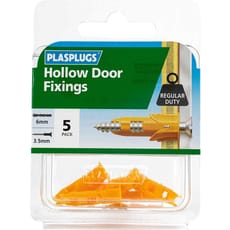
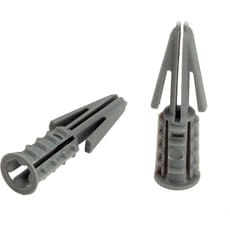
Hollow wall plugs are specialist fixings engineered to provide secure anchoring in plasterboard, cavity walls, and hollow doors where traditional wall plugs cannot grip effectively. Unlike solid masonry walls, hollow walls require fixings that expand or toggle behind the board surface to distribute loads and prevent pull-through. MyToolShed.co.uk stocks reliable hollow wall fixings from trusted brands like Plasplugs, designed specifically for UK building standards and modern stud wall construction.
Available in various designs including spring toggles, self-drilling anchors, and expansion fixings, these versatile fasteners accommodate different plasterboard thicknesses and load requirements. Whether you're mounting kitchen cabinets, bathroom accessories, shelving systems, or electrical back boxes, the right hollow wall plug ensures professional, secure installations in residential and commercial properties throughout the UK.
Applications
Hollow wall plugs are essential for tradespeople and DIY enthusiasts working with modern partition wall construction:
- Carpenters and joiners fitting kitchen units, wardrobes, and bespoke joinery to plasterboard walls
- Electricians securing back boxes, consumer units, and cable management systems in cavity walls
- Plumbers mounting radiators, boilers, and bathroom fixtures to stud partitions
- Kitchen and bathroom fitters installing wall units and accessories where solid wall fixings aren't suitable
- Shop fitters securing retail displays, shelving, and signage on commercial partition walls
- Decorators hanging mirrors, artwork, and curtain rails in plasterboard construction
- Property maintenance professionals carrying out repairs and installations in residential and commercial buildings
- DIY enthusiasts undertaking home improvements in properties with stud wall construction
Choosing The Right Hollow Wall Plugs
Wall thickness: Measure your plasterboard accurately before purchasing. Standard UK plasterboard is typically 9.5mm or 12.5mm thick. Hollow door fixings require shorter plugs for thinner panels, whilst cavity wall fixings need sufficient length to pass through and expand properly behind the board.
Load capacity: Calculate the total weight you need to support, including a safety margin. Light-duty fixings suit picture frames and small shelves, whilst heavy-duty toggles are necessary for wall-mounted televisions or kitchen cabinets. Always consult manufacturer specifications.
Installation method: Self-drilling fixings save time on site but offer less precise positioning. Traditional plugs requiring pilot holes provide greater control over exact placement. Consider which approach suits your project requirements.
Cavity clearance: Spring toggle fixings require rear access space for wings to open properly. If your cavity contains insulation, pipes, or cables, choose alternative fixing types that don't need as much clearance behind the plasterboard.
Frequently Asked Questions
What's the difference between hollow wall plugs and standard wall plugs?
Standard wall plugs expand within solid materials like brick or concrete. Hollow wall plugs are specifically designed for plasterboard and cavity walls, working by spreading the load across the back of the board or using expansion mechanisms suited to thin panel materials where there's no solid substrate behind.
How much weight can hollow wall plugs support?
Load capacity varies significantly by fixing type and plasterboard condition. Light-duty fixings typically hold 5-10kg, whilst heavy-duty spring toggles can support 25-40kg per fixing in good quality 12.5mm plasterboard. MyToolShed.co.uk recommends checking manufacturer specifications and using multiple fixings to distribute weight for heavier items.
Can I fix anywhere on plasterboard or must I find the stud?
Fixing directly into timber or metal studs with appropriate screws always provides maximum strength. However, quality hollow wall plugs allow secure fixing between studs where necessary, provided you choose fixings with adequate load ratings and the plasterboard is in good condition.