
Continuity & Circuit Testers

Pay in 3 interest-free payments on purchases from £20-£3000 with  . Learn more.
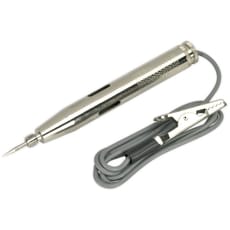
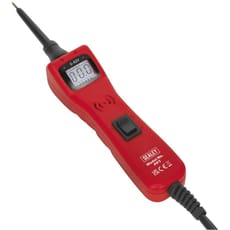
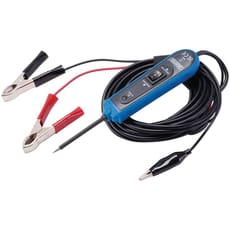
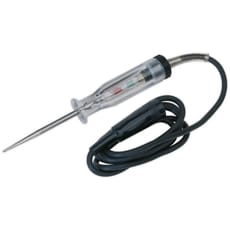
 Loading...
End of content
Error - No more pages to load
About Continuity & Circuit Testers
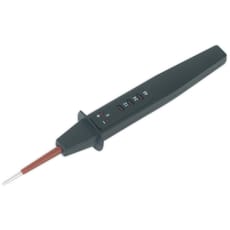
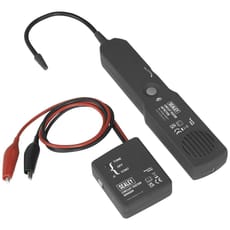
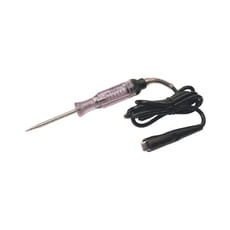
Continuity and circuit testers are essential diagnostic tools for anyone working with automotive and low-voltage electrical systems. These compact, handheld devices enable quick identification of live circuits, continuity testing, wire break location, and earth connection verification. Whether troubleshooting faulty automotive lighting, tracing wiring faults, or checking fuses and switches, a reliable circuit tester provides instant visual or audible feedback for efficient and safe electrical diagnostics.
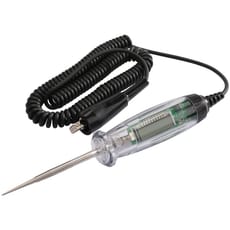
MyToolShed.co.uk stocks continuity and circuit testers from leading brands including Sealey and Draper, ranging from basic automotive test probes to advanced digital circuit testers. Most automotive models operate within 6-24V DC ranges, ideal for cars, vans, motorcycles, and commercial vehicles, whilst digital testers capable of handling 6-48V systems offer greater versatility with LCD displays for precise voltage readings. These tools feature robust construction, ergonomic handles, and bright LED indicators or audible buzzers for easy fault detection, with many incorporating screwdriver-style formats that combine testing and adjustment capabilities in one convenient tool.
Applications
- Auto Electricians – Diagnosing electrical faults from bulb failures to complex wiring problems
- Mobile Mechanics – Roadside diagnostics and electrical troubleshooting on vehicles
- MOT Testers – Checking lighting circuits and electrical components during inspections
- Fleet Maintenance Engineers – Regular electrical system checks across company vehicle fleets
- Agricultural Mechanics – Testing electrical systems on tractors and farm machinery
- Motorcycle Mechanics – Diagnosing electrical issues on bikes and small engine vehicles
- Caravan and Motorhome Technicians – Testing 12V DC automotive and leisure vehicle circuits
- DIY Enthusiasts – Home vehicle maintenance and classic car restoration
- Plant and HGV Mechanics – Working with 24V electrical systems on commercial vehicles
Choosing The Right Continuity & Circuit Testers
Voltage Range: Select a tester appropriate for your electrical systems. Standard 6-12V testers suit most passenger cars, whilst 6-24V models are essential for commercial vehicles and HGVs. Digital testers offering 6-48V capability provide maximum versatility for diverse automotive and industrial applications.
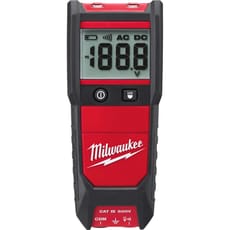
Display Type: Basic circuit testers use LED lights or bulbs for quick live circuit indication, whilst digital models with LCD displays provide actual voltage readings for detailed diagnostics and precise voltage drop measurements.
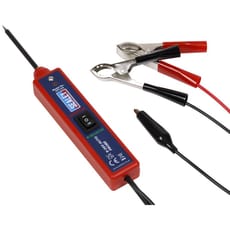
Indication Method: LED indicators are most common, but audible buzzers are invaluable in confined spaces where visual feedback is difficult. Some advanced models offer both visual and audible feedback for all working conditions.
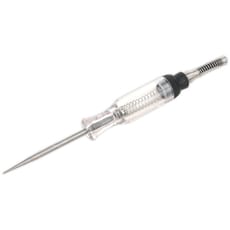
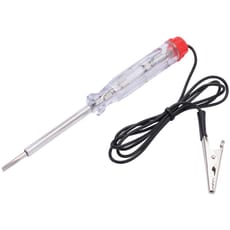
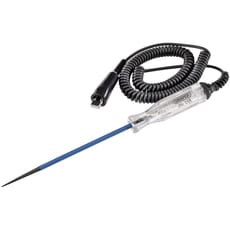
Probe Design: Sharp-tipped probes can pierce wire insulation for testing without stripping cables. Screwdriver-style circuit testers combine testing with fastener adjustment. Consider ergonomics and grip comfort for frequent use.
Build Quality: MyToolShed.co.uk stocks robust circuit testers from Sealey and Draper with impact-resistant housings and secure earth clips, offering superior durability for professional workshop environments.
Safety Information
Automotive circuit testers are designed exclusively for low-voltage DC systems. Never use these testers on mains 240V AC electrical systems – they are not rated for this purpose and doing so presents serious electrocution risk. Always use appropriate mains voltage testing equipment for household or industrial AC electrical work.
When testing automotive circuits, ensure secure earth clip connection to a good vehicle earth point before probing. Take care when using sharp-tipped probes to pierce insulation, and seal any pierce points with electrical tape afterwards to prevent corrosion or short circuits. Regularly inspect testers for damaged probes, frayed leads, or cracked housings that could compromise safety or accuracy.
Frequently Asked Questions
What's the difference between a circuit tester and a multimeter?
A circuit tester is a simple tool that indicates whether voltage is present using an LED or buzzer for quick diagnostics. A multimeter provides numerical measurements of voltage, current, and resistance, offering more detailed information but requiring more interpretation. For basic automotive fault-finding, circuit testers are often faster and more convenient, whilst multimeters suit precise measurements and complex diagnostics.
Can I use a 12V circuit tester on a 24V vehicle system?
No, you must use a circuit tester rated for the voltage of the system you're testing. Using a 12V-rated tester on a 24V system may damage the tester and give false readings. Commercial vehicles, agricultural machinery, and HGVs typically use 24V systems, so always select a tester rated for at least 6-24V or higher for these applications.
Do I need a digital circuit tester or is a basic LED version sufficient?
For routine automotive diagnostics – checking live circuits, testing bulbs, verifying earth connections – a basic LED circuit tester is perfectly adequate and often quicker to use. Digital models are beneficial when you need exact voltage values, diagnose voltage drop issues, or work with a wider range of electrical systems. Professional auto electricians often carry both types for different situations.